
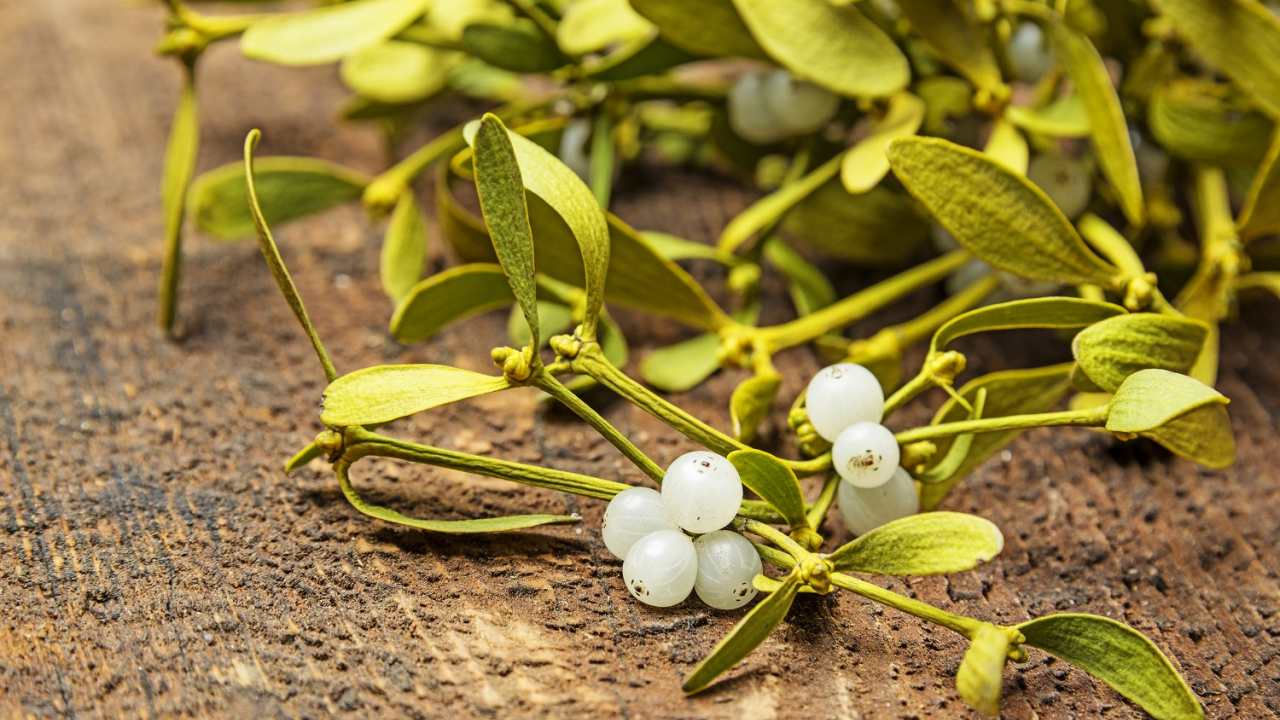
European mistletoe, known among specialists as Viscum album, is a one-of-a-kind plant with a rich history and a great many traditional uses. This evergreen parasitic plant forms striking clusters of waxy white berries along its leafy branches. It lends a touch of magic to trees, especially in the forests and along the rivers of Europe and Asia. White mistletoe has been revered since ancient times for all it has to offer and for its place in folklore and tradition.
European mistletoe and its traditional uses
- mistletoe has traditionally been used to lower blood pressure in hypertension
- it is said to slow the heartbeat
- it has traditionally been used with uterine bleeding and nosebleeds
- with a long-lasting period and bleeding haemorrhoids
- it is said to ease the feeling of blood rushing to the head, especially during menopause
- it has traditionally been used with an overactive thyroid
- it has been used as an antispasmodic herb with epilepsy, conditions of the nervous system, atherosclerosis, arthrosis, spondylosis and long-term joint complaints, and it is a helpful companion when parting with troublesome snoring
- it is traditionally recommended to those living with epilepsy, diabetes and jaundice
- it is said to lower blood pressure and settle heart arrhythmia
- it has traditionally been used with arthritis
- it has traditionally been used as a complement in cancer care
- it is said to strengthen bones and teeth
- it has traditionally been used with menstrual troubles, to bring on contractions and to help stop post-natal bleeding
- it is said to ease headaches
- it is said to support circulation
European mistletoe in herbal tradition
Uncover the secrets of white mistletoe and welcome all it has to give. Traditionally known for its place in herbal medicine, mistletoe is valued for qualities said to support immunity and for its antioxidant and soothing character, offering gentle support for many aspects of overall wellbeing. Its history as a sacred plant lends it a quiet dignity. European mistletoe is a versatile plant, and it grows abundantly all across Slovakia.
European mistletoe tincture
If the wonders of herbal remedies speak to you, European mistletoe tincture gives you a concentrated elixir of this remarkable plant. A tincture is a simple way to welcome the qualities of white mistletoe. Just a few drops a day and mistletoe has the chance to show all it can be. European mistletoe tincture can become part of your own journey towards wellbeing. Care for your overall wellbeing with these herbal drops. All PANAKEIA tinctures are made in Slovakia to strict quality standards, so you can be sure of the 100% quality and purity of every tincture.
European mistletoe — frequently asked questions
Can European mistletoe be used daily?
Mistletoe has been part of herbal tradition since time immemorial, yet like many potent plants it deserves to be used thoughtfully. Some of the compounds in mistletoe have been studied for their potential effects, and the way it is used may differ depending on the preparation. While some traditional herbalists have woven it into long-term routines, others prefer not to use it regularly.
European mistletoe and alternative herbs
Mistletoe is often compared with hawthorn, valerian or passionflower, as these herbs have traditionally been used in similar ways. What sets mistletoe apart is its unusual way of growing. It thrives as a parasitic plant on trees while keeping its own unique botanical character. Unlike many herbs that are cultivated, mistletoe is usually gathered in the wild, which only adds to its air of mystery.
What is the loveliest way to use mistletoe?
Throughout history, mistletoe has been prepared in many different ways. Traditionally the most common forms were tinctures, teas and extracts, each with its own gifts. Many herbalists favour tinctures for their higher concentration and easy use, while teas remain a much-loved choice for those who enjoy the slower ritual of steeping.
Can European mistletoe be combined with other herbs?
Mistletoe is often found in herbal blends alongside nettle, lemon balm or horsetail, creating a beautifully balanced synergy. In many historical herbal texts, mistletoe was described as a herb that blends well.
European mistletoe — little curiosities
- Mistletoe is one of the few parasitic plants that stay evergreen all year round.
- The ancient Druids considered mistletoe a sacred plant, believing it held magical qualities.
- The name „mistletoe“ comes from Old English words meaning „dung twig“, because the plant spreads through bird droppings.
- Despite its romantic associations today, mistletoe was once used as a symbol of protection in medieval homes.
- Unlike most plants, mistletoe relies on birds rather than wind or insects to spread its seeds.
- Mistletoe has appeared in European folklore and mythology for centuries, often linked with peace and good fortune.