
Let's put our hands on our hearts together right at the start. How many times have you bought an expensive serum in the hope that it would sort out the blemishes on your chin, the flakiness on your forehead or a dull cast to your skin, while you knew perfectly well that your drinking regime and your lunch ended at toast and a third espresso? You have probably already guessed where I was going with that question. Even though nature is all-powerful and can often work wonders with our skin, the greatest strength still lies in the food we take in. And if over a long time we don't give our body what it needs, it is only a matter of time before it starts to show. So if you long not only for beautiful but also for healthy skin, it is worth realising that the firmest foundation of all begins in your habits and in your kitchen.
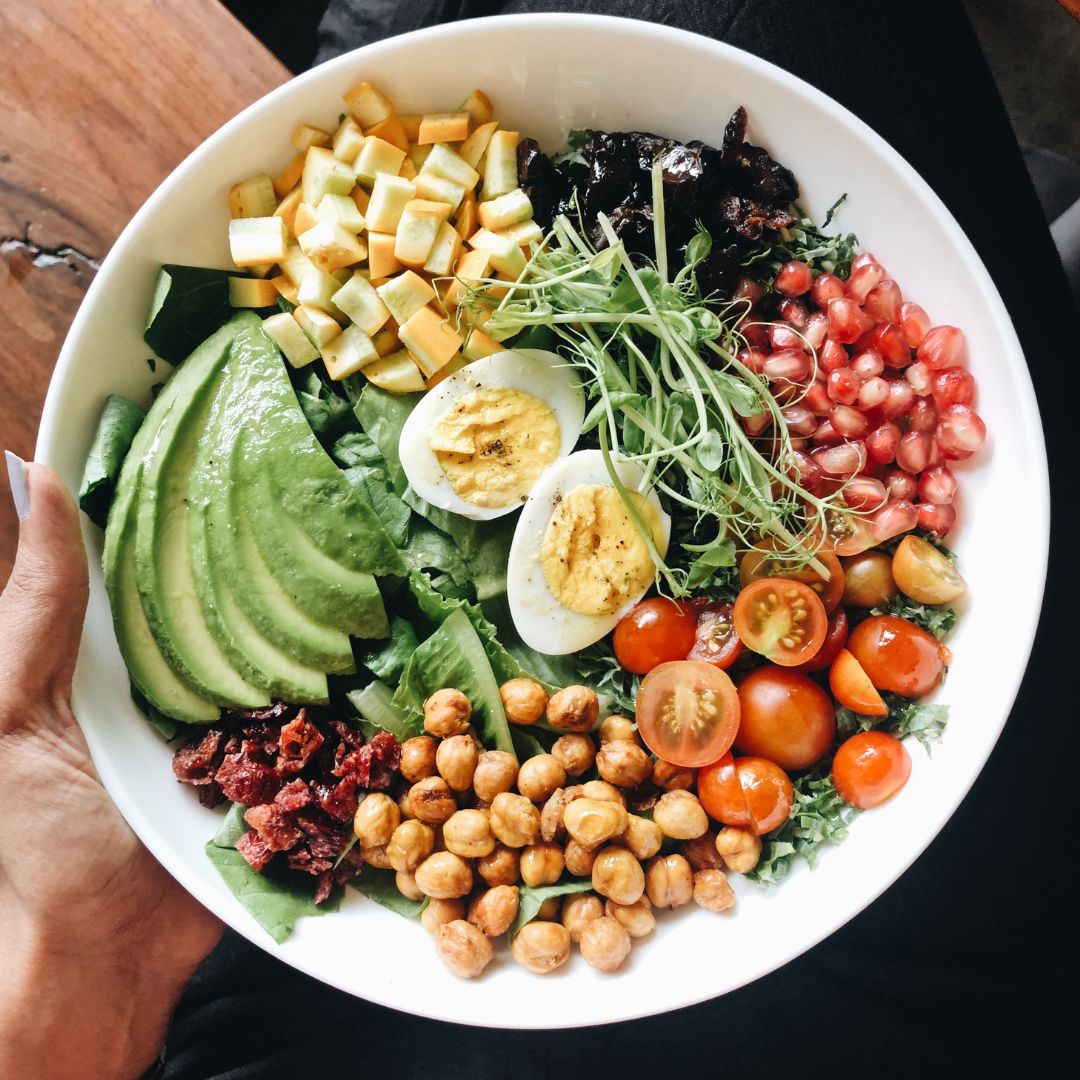
Sugar as the invisible thief of collagen
As we know well by now, sugar is a quiet troublemaker with a great influence on our weight and the state of our teeth, and it fundamentally affects the state of our skin too. For the skin it is a sweet white poison that acts as a kind of fuse for systemic inflammation in the body. When you eat something sweet, or foods made from white flour, the sugar level in your blood shoots up. The body responds by releasing insulin, and it is this insulin shock that sets off a cascade of hormonal changes. Your sebaceous glands start working overtime, pores become clogged, and inflammatory acne is suddenly here.
Sugar can even, in lay terms, break the collagen in the skin, in a process called glycation. What does that mean in human language? Sugar molecules bind to the protein fibres, collagen and elastin, which then stiffen and afterwards become brittle. The result tends to be wrinkles that appear before their time and skin that loses its natural youthful suppleness.
So next time you feel like that familiar chocolate ritual, try to picture how that enormous amount of sugar is making your collagen less supple. Try reaching instead for berries, blueberries for example, which are not only full of anthocyanins but, on the contrary, look after your collagen fibres.
Your skin needs healthy fats!
Many women, in their wish for a slim figure, are still afraid of fats, which is just another myth and an enormous mistake. Your skin needs fat, above all to keep its hydration. If your skin is flaky, dull and itchy, it may be caused by exactly this – your cells are going hungry.
Focus especially on Omega-3. These aren't just the ordinary, often-mentioned supplements from the pharmacy; they are the building blocks of your cell membrane.
- Free-range eggs: They contain lecithin and biotin. Biotin is quite literally fuel for the skin and hair, while lecithin helps repair damaged cells and keeps their walls firm.
- Quality butter or Ghee: They contain vitamin A in its most absorbable form (retinol). Yes, that famous retinol you look for in serums can be given to your body naturally too.
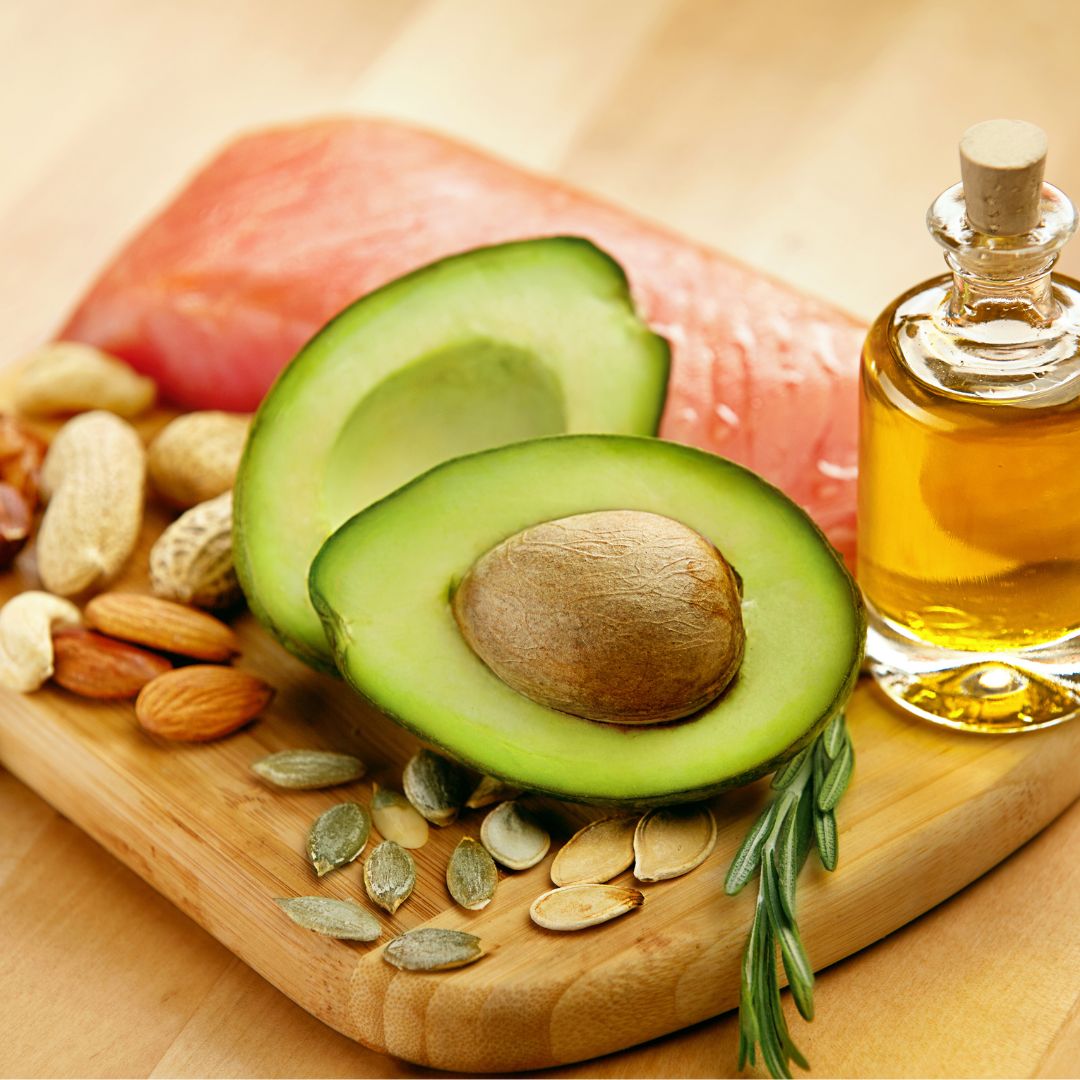
- Pumpkin seed and flaxseed oil: Pumpkin seed oil is full of zinc, traditionally described as a natural helper for skin troubled by blemishes. Flaxseed oil, in turn, contains high amounts of Omega-3, which soothe dry, irritated patches and redness.
- Oily sea fish (salmon, mackerel): They contain DMAE (dimethylaminoethanol). This substance helps maintain the muscle tone beneath the skin, so the complexion looks firmer and fresher.
- Avocado and nuts: A classic that mustn't be missing, thanks to vitamin E, the main antioxidant that shields the skin from oxidative stress.
What happens in the gut, you'll see on your forehead
It may not sound very appealing, but a healthy gut is the foundation of clear skin. If your digestion is sluggish, the body tries to let go of toxins by another route – through the skin. Those are the unexplainable breakouts that keep coming back like a boomerang.
Fermented foods are the absolute basics. Sauerkraut, kefir or kombucha matter more for your face than any chemical peel. When your microbiome is in order, the skin stops being over-sensitive and finally begins to shine like a star.
What to put on your plate?
So that we don't stay only with theory, here is a short shopping list for every healthy complexion:
- Eggs: They contain biotin, which is quite literally fuel for the skin and hair.
- Tomatoes (ideally cooked): The lycopene in them works like an inner support against sunlight. Of course, it won't replace sun cream, but it helps the skin cope with UV light considerably.
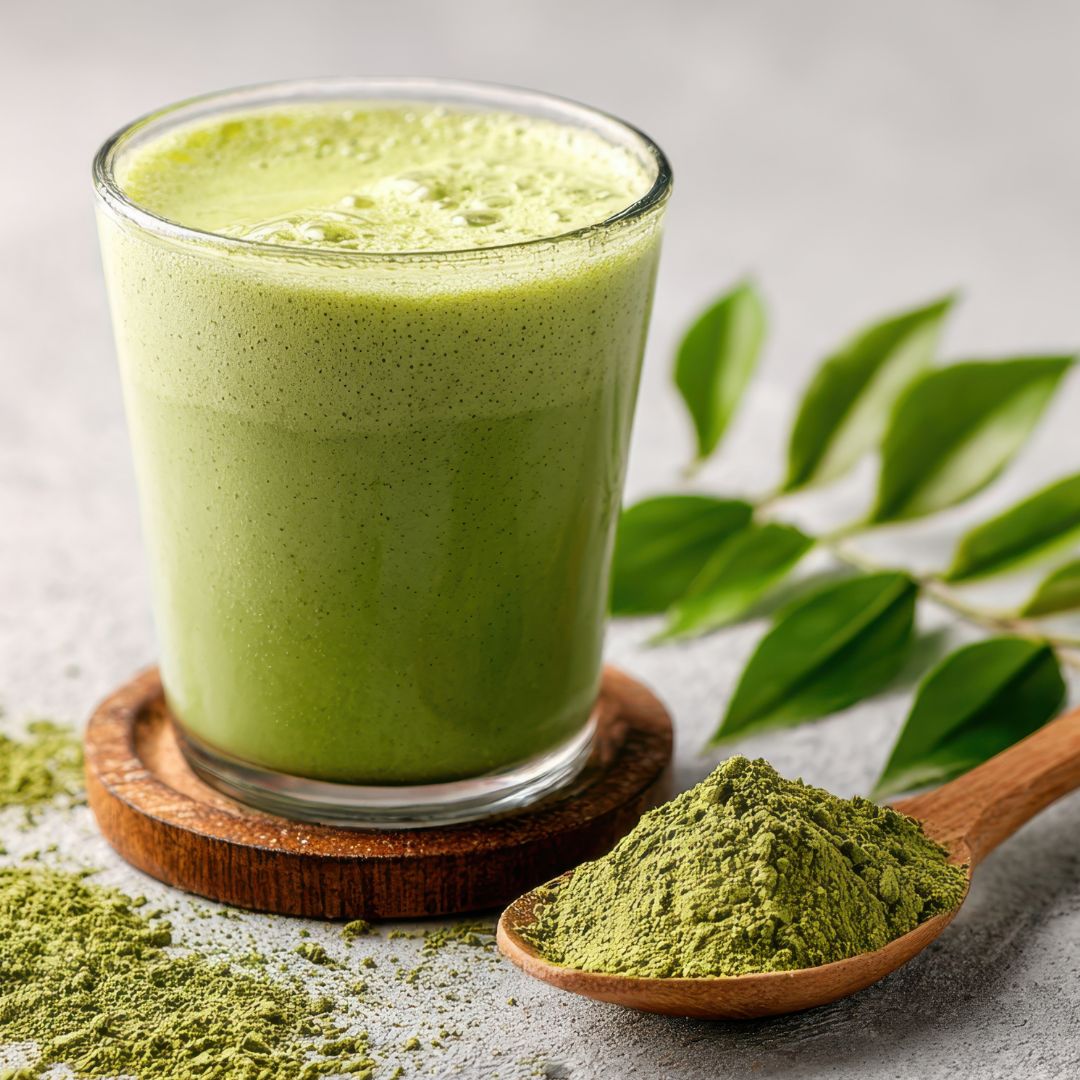
- Green tea (Matcha): Forget caffeine shocks. The catechins in green tea calm redness and help keep bacteria in balance.
- Oily fish or flaxseed oil: It gives the skin the juiciness it needs and relieves that unwanted, uncomfortable feeling of tightness.
- Sauerkraut and kimchi: Both are queens of probiotics. Their greatest gift is that, in the gut, they directly help calm irritation on the face.
- Broccoli and savoy cabbage: They contain sulforaphane, which helps the liver process hormones (oestrogen). If hormonal acne along the jawline is bothering you, this is the loveliest natural helper of all.
- Rocket and dandelion leaves: Their bitterness stimulates the gallbladder, which is key for digesting fats and absorbing vitamins A, D, E and K.
We haven't forgotten a few healthy tips for your beauty kitchen either
The Green Restart smoothie
Ideal in the morning, when you feel your skin is dull and could use a little lift
Ingredients: 1 handful of baby spinach, 1/2 a green apple, a piece of fresh ginger (about 1 cm), the juice of half a lemon, 1 tsp of chlorella or barley grass and water.
Why it works: Ginger and lemon get the digestion going, while the chlorophyll from the green leaves helps oxygenate the skin.
A bowl full of hydration
Ingredients: Full-fat Greek yoghurt or coconut kefir, 2 tbsp of ground flaxseed, a handful of blueberries, 3 walnuts and a pinch of cinnamon.
Why it works: The combination of probiotics from the yoghurt and Omega-3 from the flax creates an unbeatable barrier against the skin drying out.
The Adios acne cleansing salad
Ingredients: Grated raw beetroot, carrot, apple, drizzled with apple cider vinegar and olive oil.
Why it works: Beetroot is traditionally said to cleanse the blood and the liver, apple cider vinegar balances the pH in the stomach, and olive oil brings vitamin E for the renewal of tissue.
You ask, we answer
„Is chocolate really behind my acne?“
It isn't the cocoa itself that doesn't suit you – quality dark chocolate (80 %+) is, on the contrary, full of antioxidants. The trouble is classic milk chocolate, which is full of refined sugar and milk powder. If you break out after something sweet, the culprit is your body's insulin response to sugar, not the cocoa bean itself.
„I drink plenty of water, but my skin is still dry. Where am I going wrong?“
Hydration isn't only about the amount of water, but about whether your cells can hold on to it. If you eat too few healthy fats (Omega-3), your protective skin barrier is weakened and the water simply evaporates. Try adding flaxseed oil or avocado to your food and watch the change.
„Is there a food that works like natural botox? “
If we had to choose one thing, it would be a strong bone broth or quality marine collagen. They contain amino acids (proline and glycine), which are direct building units for your own collagen fibres. Thanks to them the skin is firmer and juicier.
„I'm 30+ and I still get acne along my jaw. Is it the food?“
Acne on the lower part of the face is often connected with hormonal imbalance and the state of your gut. Try leaving out conventional dairy products for a month and adding foods that support the liver (such as broccoli, rocket or milk thistle). The liver helps the body break down excess hormones.
„Will coffee with lemon in the morning help my skin?“
Coffee with lemon is more of an internet myth. If you would like a real result, put lemon into lukewarm water right after waking - without coffee! Caffeine dehydrates and raises the level of the stress hormone cortisol, which is rather unkind to the skin. Lemon water, on the other hand, gets the cleansing of the liver going.
„Why do I wake up with a puffy face in the morning, even when I don't sleep much?“
Puffiness (especially around the eyes) is often the calling card of a sluggish lymphatic system and too much sodium. If you have something salty or processed in the evening (cheeses or smoked meats, for example), your body holds on to water in order to dilute the salt. Quick help: Add potassium to your food (bananas, potatoes, spinach), which helps flush out excess water, and try leaving out heavy meals at least 3 hours before sleep. Your lymph will thank you in the morning with clearer facial contours.
„Is caffeine behind my under-eye circles and dry skin?“
Honestly? Caffeine is a double-edged sword. On the one hand it keeps us going, on the other it is a diuretic that takes water away from you. If you drink coffee on an empty stomach, you raise the level of cortisol (the stress hormone), which breaks down collagen and can make irritation worse.
Beauty rule: For every cup of coffee, drink two glasses of clean water, and have your coffee only after breakfast.
„Will collagen supplements help me, or is it just a marketing move?“
Collagen powder can help, but only if the body has enough vitamin C and zinc to be able to process it and build it in where it belongs. If you take collagen but your food is poor in nutrients, the body will use it rather to repair joints or tendons than to smooth the lines on your forehead.
Tip: Always combine collagen with foods rich in vitamin C (rosehips, sea buckthorn, peppers, for example). Without it, topping up collagen is as if you had the bricks but no mortar to join them with.