
Winter is not at all an easy season for the skin and brings it a number of demanding tests: frost, wind, moving between warm and cold, more layers of clothing and less sunshine. Our skin works harder in this period than in other months to keep its hydration, its balance and its comfort. And while in summer light textures are enough for it, in winter it needs something quite different — nourishment, protection, gentleness and a slightly richer „coat“. That is exactly why it is lovely to know the basics of winter skin care and to make things easier for your skin during the demanding cold season. Let's look together at what skin needs in winter and what is worth remembering.
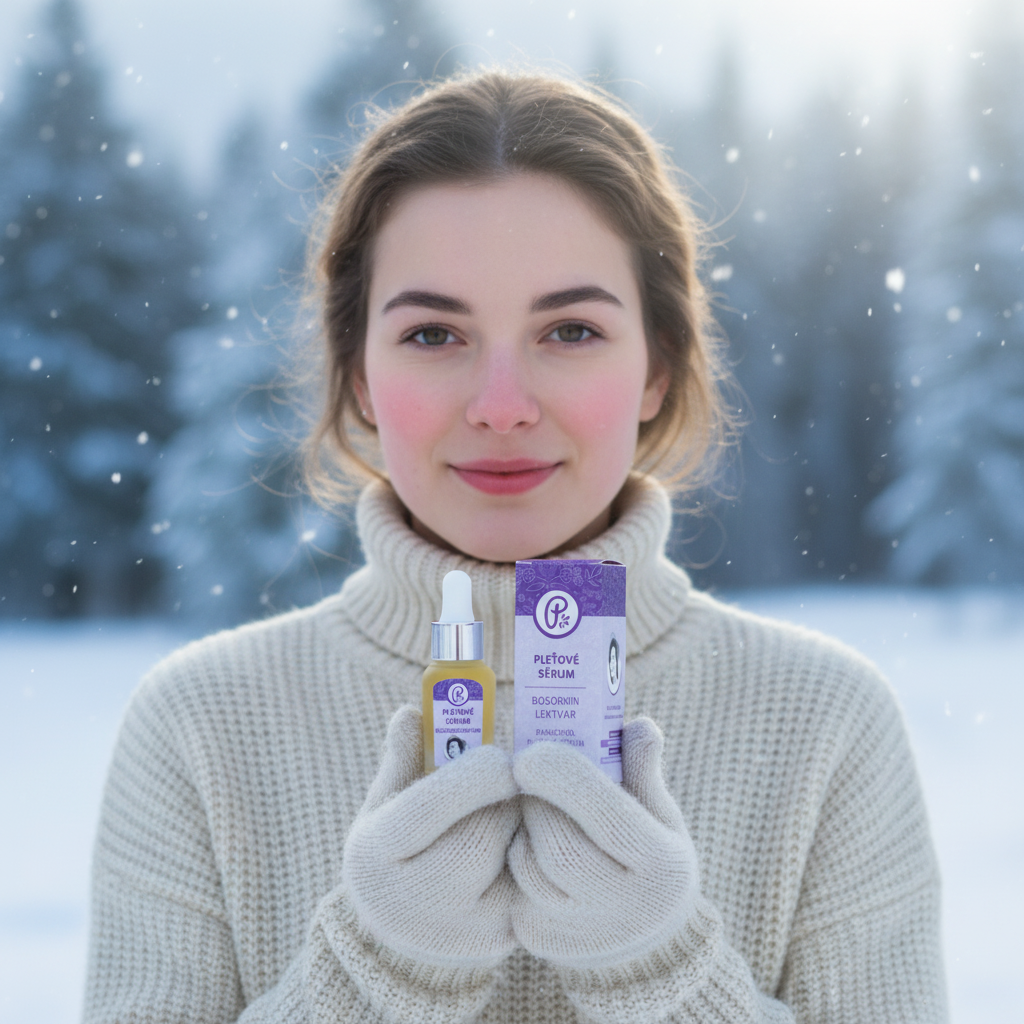
What happens to skin during winter
Dry air and heating – a strong double blow to the skin barrier
Air humidity is genuinely low in winter. Outside there is frost, indoors we run the radiators at full power, and all of this then creates overly dry air, which isn't kind to our body or to our skin.
We start to notice on our face:
- tightness after washing,
- dry patches,
- flakiness, especially around the nose and on the cheeks,
- the feeling that cream soaks in quickly without any hydration at all.
The result tends to be a weakened skin barrier which, when it isn't working properly, isn't able to hold on to hydration the way it should.
Moving between warm and cold
When you often move from a heated room out into the cold, the skin experiences temperature shock. Capillaries contract and expand, the barrier takes a beating, and more sensitive skin types signal the trouble straight away: the skin is red, tight and stinging. Winter is often what sets off rosacea, irritation or over-sensitivity.
How to adjust your skincare routine
A winter skincare routine doesn't mean changing absolutely everything. It is just a few small adjustments with which you support your skin in demanding conditions.
Gentler cleansing
In winter, skin doesn't need harsh cleansers, but above all products that are gentle and kind to it. If you feel tightness and pulling after cleansing, your skin is telling you clearly that those products aren't the right ones for it at the moment.
Winter cleansing should mainly include:
- creamy, gentle emulsions,
- oil or balm cleansers,
- micellar water as an addition (not as the only, main step).
This is the foundation that helps considerably in keeping the skin barrier in a calm state.

Exfoliation – less often and more gently
In winter dead cells do build up faster, but that doesn't immediately mean more peels are needed — quite the opposite.
Choose products that contain:
- lactate (lactic acid),
- PHA acids,
- fruit enzymes.
Exfoliating 1–2× a week is enough. The skin will then be brightened and free of irritation.
Oil serums
Winter is the ideal time to bring oil serums into your routine. They work like a soft, nourishing blanket for the skin, helping it hold hydration far longer than water or gel serums do. An oil serum does have one important rule worth remembering, and that is that it is always applied last in the routine. Wondering why? Oils create a fine protective film on the skin that keeps hydration from escaping, supports the barrier, softens the skin's texture and gives it nourishment. If you were to apply the oil before a hydrating serum or cream, the products applied afterwards would reach the skin only minimally, or not at all.
The right order for applying serums:
- water serum (hydrating, soothing),
- nourishing cream,
- oil serum as the last step.
This way the skin receives the maximum of both hydration and nourishment.
Hydration and nourishment – give preference to richer textures
Rich textures are the foundation of winter skin care. While lighter consistencies work beautifully in summer, in winter they disappear from the skin faster than they manage to give it what it needs. In the cold, products that replenish lipids — the natural fats the skin barrier is built from — work better.
Look especially for ingredients such as:
- ceramides and cholesterol – they strengthen the barrier,
- hyaluronic acid and glycerine – they bind water,
- squalane, shea butter, oils – they add protective nourishment,
- niacinamide – it soothes and supports renewal.
A wonderful choice are also oil balms and the PANALUX balms, which give the skin plenty of nourishment during cold days.
Night cream in the daytime? In winter, absolutely!
Perhaps you have heard this already and perhaps not yet, but in winter a night cream worn in the daytime can be the loveliest decision you make for your skin. Wondering why? Night creams are designed to nourish, repair and strengthen the skin overnight. They are richer, more oily, full of lipids and with a smaller proportion of water.
This is exactly the kind of composition skin loves in winter. It needs a protective film that shields it from wind, frost and dry air, and light day creams often can't give it that help in full measure. Night creams based on oil or butter also seal the skin, so it stays beautifully hydrated even in the cold.

Day creams contain a lot of water, which can cause trouble
Day creams are often water-based. That is ideal in summer, yet in harsh winter it can create a number of problems.
When the temperature falls below –5 °C and lower, the water in a cream can behave on the surface of the skin like a conductor of cold. No, the cream won't freeze on your face, but if it doesn't absorb properly and a thin watery layer stays behind, the skin can remain too sensitive, it may start to sting, and after coming back into the warmth you may also notice more redness and dryness.
Panakeia tip: You don't have to put your favourite day cream away, though — there is a little trick that lets you use your favourite all year round. Simply add 1 to 2 drops of a quality single-ingredient oil to it every morning during winter.
An excellent choice is:
- prickly pear oil – luxurious, highly renewing, suitable for sensitive skin too,
- argan oil – nourishing, firming, ideal against dryness,
- apricot oil – gentle, suitable for irritated skin,
- jojoba oil – very similar to the skin's own sebum, it stabilises the barrier beautifully,
- raspberry oil – rich in antioxidants, it supports renewal.
A cream enriched this way shields better against hydration escaping, helps calm redness and irritation, and also strengthens the skin barrier and supports the skin's renewal even in the demanding cold season.
Winter skin care in the mountains
If you go skiing or spend time in the mountains, your skin has completely different needs. Up there the combination of wind, frost and UV light is even harsher.
What we recommend for skin before heading out into the frost:
- a rich nourishing cream or balm,
- night cream in the daytime,
- SPF (snow reflects up to 80 % of UV light),
- a lip balm, if it is very windy,
- covering your cheeks with a scarf or a neck warmer.
Don't forget the eye area and lips
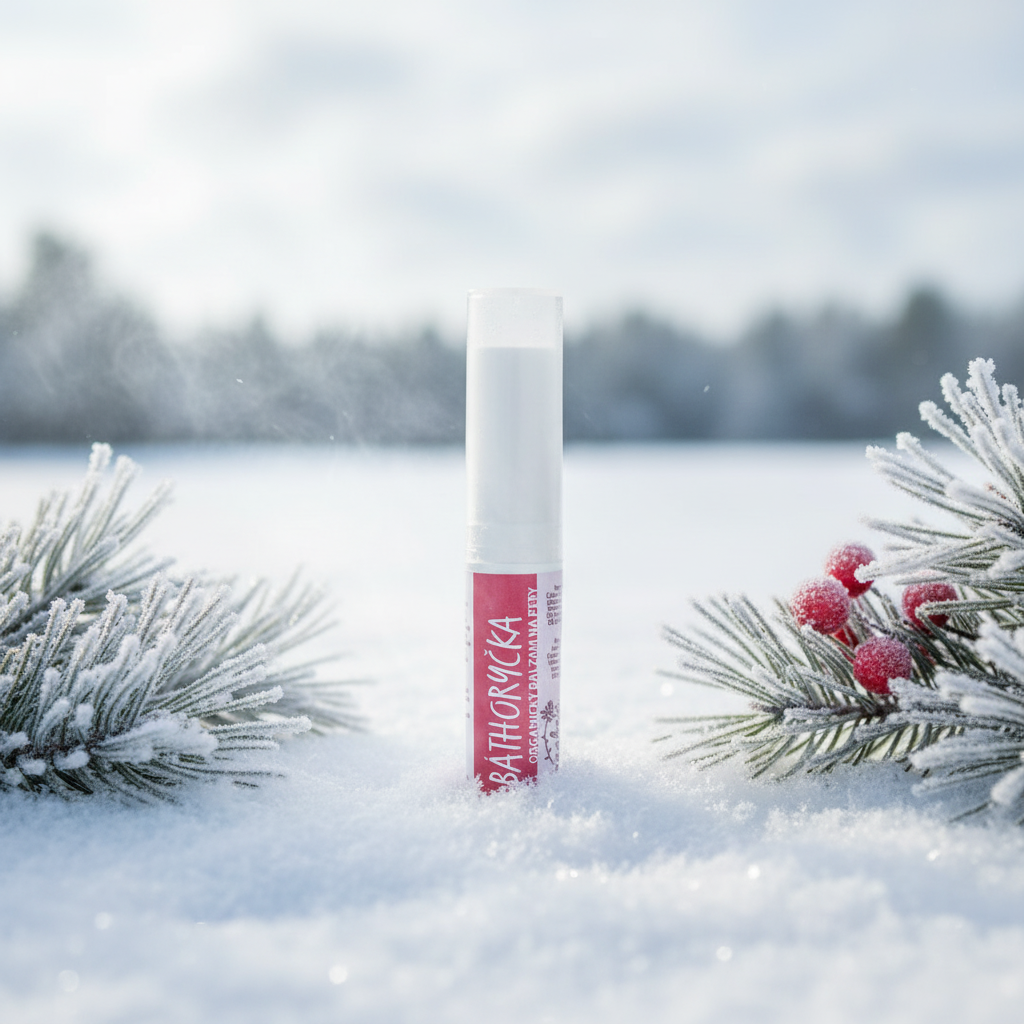
In winter the skin around the eyes and the lips tend to be the most vulnerable. They are thinner, they lose moisture faster, they have no sebaceous glands of their own and they react to wind and sun immediately. In winter weather the eye area is often the first to show tiredness and sensitivity – it tends to feel tight, dry or irritated. That is why it is wonderful to apply a nourishing eye cream or a roll-on eye serum before going out into the frost, giving that delicate skin a protective layer and keeping it from drying out. And lips are just as important — they suffer most in the frost. They crack quickly, they flake, they hurt, and while skiing they are constantly exposed to the wind on top of that. Before spending time outdoors it is therefore worth applying a thicker layer of lip balm containing butters or oils.
Winter skin care doesn't have to be complicated once you understand what skin really needs in winter — protection, nourishment, hydration and gentleness. If you give it products with a higher lipid content, gentle cleansing and a slightly adjusted routine, winter won't be a season of suffering for it, but simply another season that it comes through with ease and without any trouble at all.