
We have entered a period that experts call the era of facial architecture. Where once basic surface care in the form of creams was enough for women, today it is about something far more important. The modern woman of 2026 understands that the face is a complex biological system in which skin, muscles and bones form one interconnected whole. Facial massage has stopped being seen as some unnecessary bonus in skincare and has become an important tool for the biological hacking of ageing.
Today we will give you a deeper explanation of what happens beneath your skin when you pick up a massage tool, and why the right technique, backed by science, is the key to lasting results.
To understand the power of massage, we need to understand a process called mechanotransduction. It is the mechanism by which cells turn mechanical stimuli into biochemical signals.

Stimulating fibroblasts and the extracellular matrix
In the deeper layer of the skin, called the dermis, there are fibroblasts. They are the factories for collagen and elastin. Studies published in respected dermatological journals (for example PLOS ONE) suggest that regular mechanical stimulation increases the expression of proteins in the extracellular matrix. Put simply, when you stretch the skin correctly, you give the cells a signal that the tissue needs to firm up, which naturally increases the production of collagen.
Microcirculation and angiogenesis
Massage brings about local hyperaemia, that is increased blood flow. As it might seem at first glance, this is not only about temporary redness. Improved blood flow in the capillaries means a more effective supply of oxygen and glucose to the cells and faster regeneration of damaged tissue. Long-term regular massage may even stimulate angiogenesis – the creation of tiny new vessels, which gives the skin that famous youthful glow.
Fascia and muscle tension
Most people focus on wrinkles as a concern of the skin's surface. Science, however, says that wrinkles are often the result of myofascial tension.
Fascia is the connective tissue that wraps every muscle and organ. Imagine it as a close-fitting web-like suit beneath the skin. When fascia is healthy, it is hydrated and supple. When we are stressed, dehydrated or have poor posture, the fascia stiffens and sticks to the muscles and bone. This creates fixed wrinkles that a cream alone will not resolve. Techniques such as Gua Sha work precisely on the principle of releasing these adhesions. When you glide the stone across the face, you are not acting only on the skin, you are combing through the fascial network and returning mobility to the tissues.
Muscle memory and hypertonus
On the face we have muscles that are constantly under tension, for example between the eyebrows or in the jaw. Chronic hypertonus of these muscles literally pulls the skin above them into folds. Massage works like physiotherapy for the face – it teaches the muscles to let go, which naturally smooths expression lines without the need for botox.
The lymphatic system
The lymphatic system is a kind of cleansing station for our body. Unlike blood, lymph has no pump. Its movement in the face depends on breathing, muscle movement and external pressure.
The anatomy of the lymph nodes
To achieve visible results, it is key to know the natural detoxifying points of your face. The most important lymph nodes in the face and neck are found:
- In front of and behind the ears (parotid and retroauricular nodes).
- Under the jaw (submandibular nodes).
- Above the collarbones (supraclavicular nodes) – this is the final station for all the lymph from the face.
A scientific tip: If you massage the face without first opening the nodes on the neck, you create a jam in the system. The lymph has nowhere to drain, which can paradoxically lead to more swelling or even to breakouts from accumulated toxins.
A guide to the tools
Choosing the right tool is not only a question of aesthetics, but also of function based on the physics of the materials.
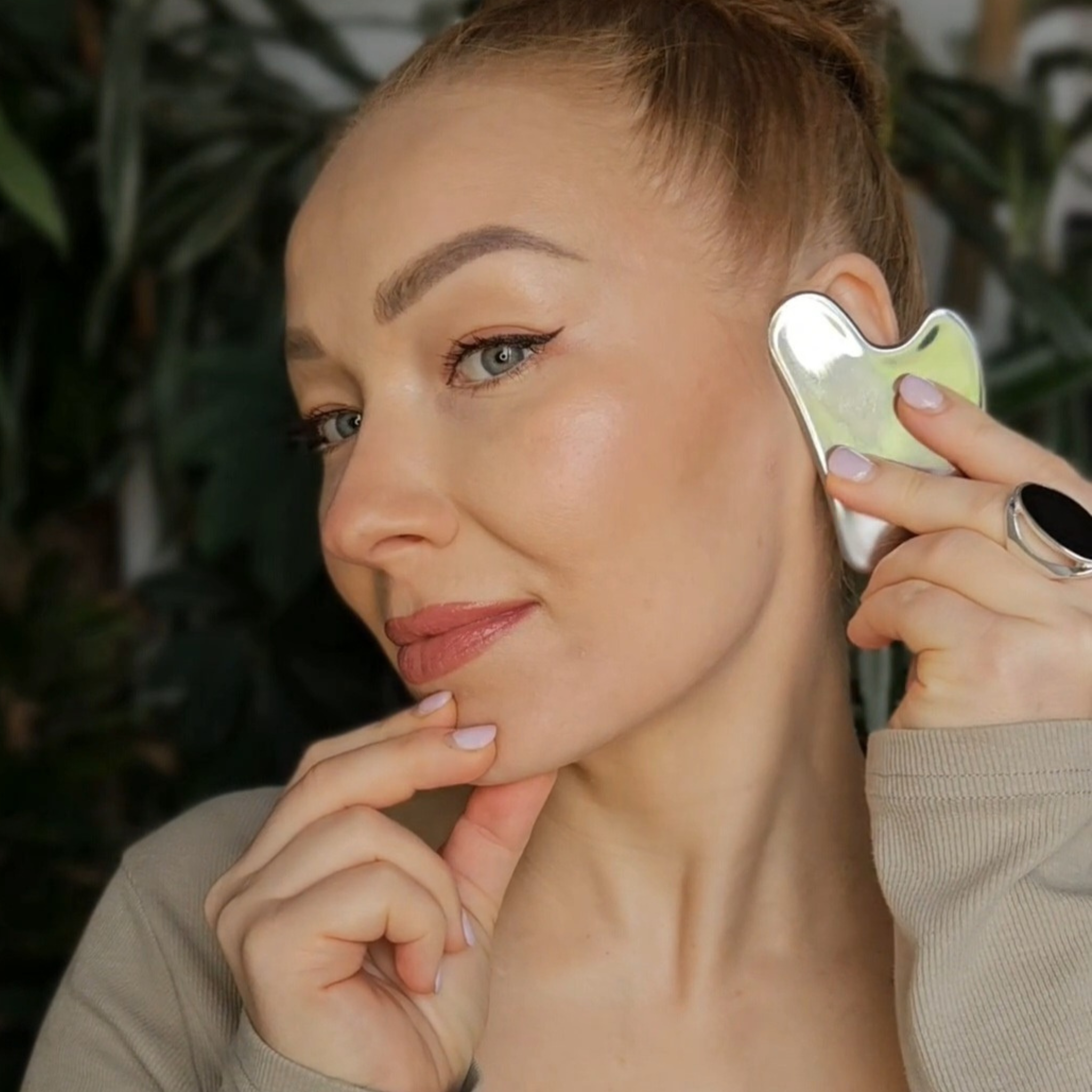
Stainless steel Gua Sha
In 2026, stainless steel is the gold standard for professionals and home use alike. Steel is non-porous, which means that bacteria do not survive in microscopic cracks (common with natural stones). It has higher thermal conductivity, so it immediately draws heat away from irritated areas of the skin. It is ideal for deep fascial release and shaping the contours.
Cryo tools
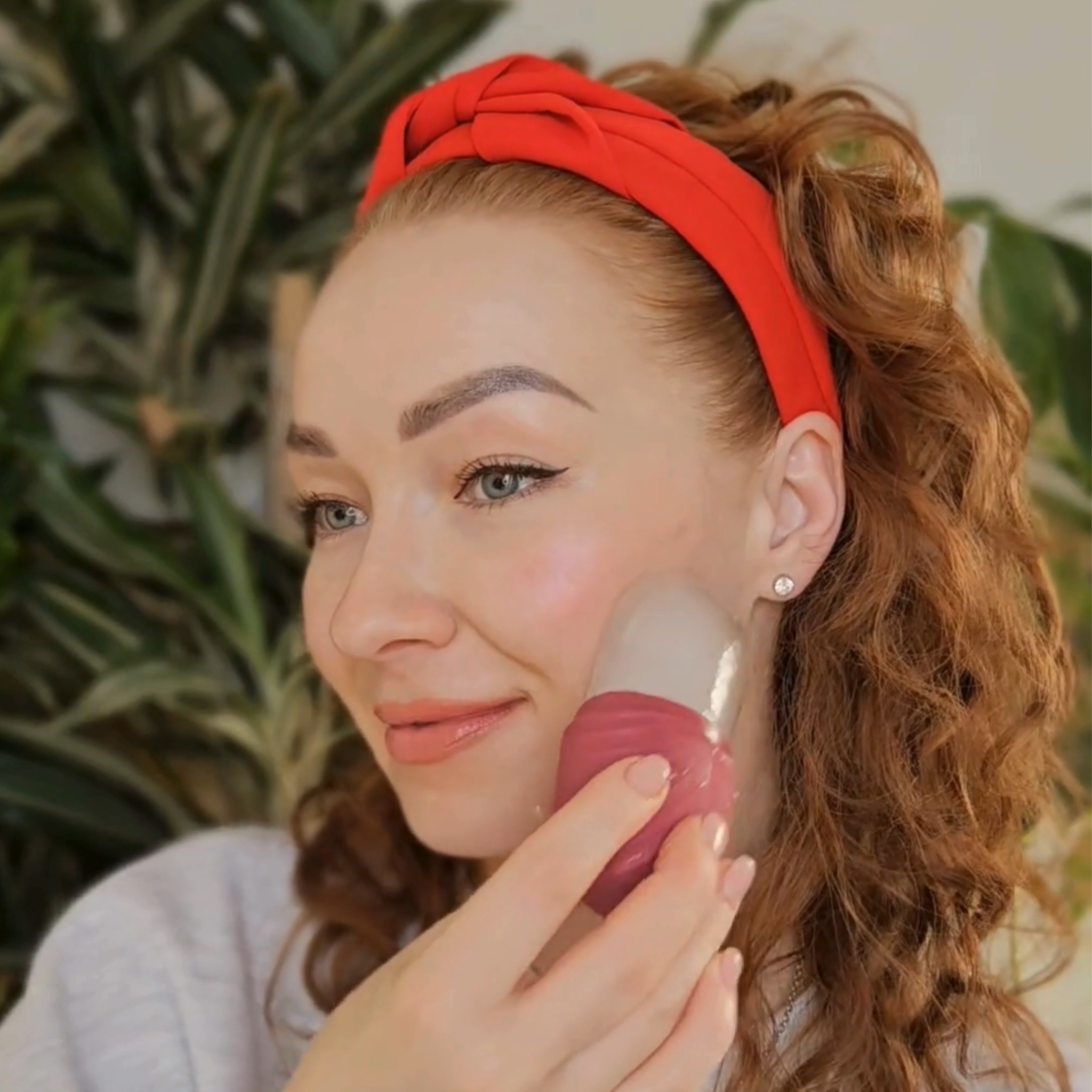
Cold brings about vasoconstriction. When the vessels contract sharply and then release, there is a rush of fresh blood. This process helps to tighten enlarged pores and soothe neurogenic irritation of the skin.
Microcurrent devices
This is fitness for the face backed by research. Microcurrent stimulates the production of ATP (adenosine triphosphate) – the molecule that carries energy within cells. An increase in ATP of up to 500%, according to some studies, speeds up tissue repair and firms muscle fibres.
How to massage for visible results?
So that the massage becomes a ritual that teaches you something, follow this scientifically grounded order:
- Preparation: Begin with gentle pumping in the hollows above the collarbones (10 times). Then stroke the side of the neck downwards.
- Lubrication: Never massage without a medium. Friction without slip damages the top layer of the skin. Choose an oil rich in antioxidants that will sink in deeper during the massage.
- Drainage (Middle part): From the nose towards the ears. Use minimal pressure. The aim is to move fluid, not muscles.
- Lifting (Deep part): Here you can increase the pressure. Work on the jawline, the cheekbones and the brows. Always direct upwards and outwards.
- Finishing: End every stroke on the face by guiding the tool in front of the ear, down the neck and all the way to the collarbone.
Massage as a way of regulating the nervous system
The science of the vagus nerve reveals why facial massage is so addictive. Stimulating certain points on the face activates the parasympathetic nervous system. When you massage your face, you send a signal to the brain that you are safe. Lowering cortisol levels has a direct effect on the skin: irritation calms down, stress-related breakouts ease and the barrier function of the skin improves.
The future is in your hands
Facial massage in 2026 is about a deep understanding of your own biology. When a woman understands how her lymph works, where she holds tension and how her cells respond to touch, she becomes independent of expensive and often unnecessary procedures. Investing in a quality gua sha tool or a microcurrent device is an investment in the long-term health of the tissues. Your face is not a static picture, it is a living, changing structure. With the right touch you can guide this process towards vitality, health and natural grace.