
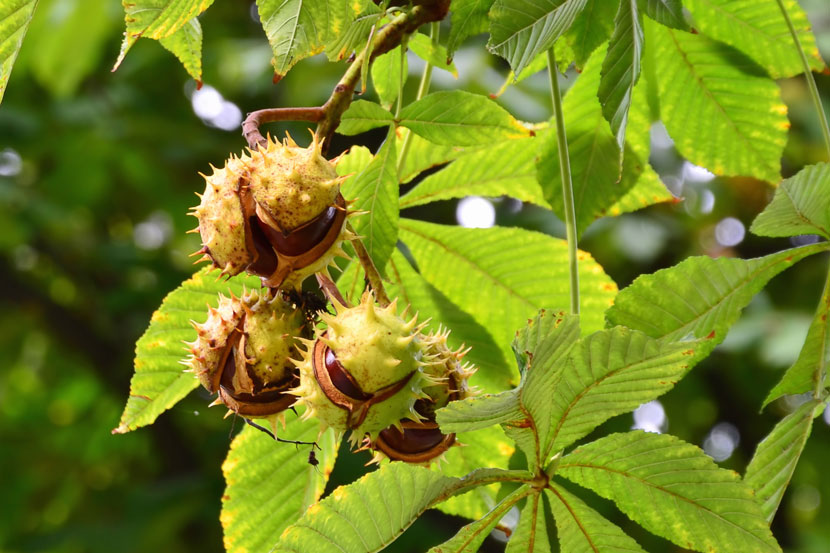
The horse chestnut (in Latin Aesculus hippocastanum) is a majestic tree known for its ornamental beauty and for several benefits to health. You will recognise it by its large, striking palmate leaves and by its spiny round fruits, which hold glossy brown seeds - conkers. It comes from the Balkans, yet today it grows commonly all across Europe and North America as a city and park tree.
Horse chestnut and its effects
- strengthens the blood vessels and supports their elasticity
- helps ease the signs of rheumatism and gout
- supports the circulation in the hands and feet
- has a favourable effect on varicose veins, thread veins, chronic venous insufficiency and haemorrhoids
- has a favourable effect where blood clots are concerned
- improves the condition of the retina and of the back of the eye
- an excellent anti-rheumatic and anti-inflammatory effect
- helps with pain in the joints
- helps lower the level of cholesterol
- helps with an unsettled stomach and with cramps
- helpful in caring for eczema
Horse chestnut helps with the health of the blood vessels
The horse chestnut is well known for the way it supports the health of the blood vessels. Its seeds contain a compound called aescin, which is thought to bring benefits to the circulatory system. Horse chestnut has long been explored for its ability to support a healthy blood flow and to ease the discomfort connected with venous insufficiency, such as swollen legs and varicose veins. Beyond these vascular benefits, horse chestnut is also recognised for its anti-inflammatory properties. Some traditional practices suggest that it may help to calm inflammation and to bring comfort to the joints and muscles.
Horse chestnut tincture
Horse chestnut supports the health of the skin and can soothe irritation. Anyone drawn to herbal remedies can enjoy its benefits, for example through a horse chestnut tincture. Horse chestnut tinctures concentrate its beneficial compounds and offer a convenient, effective way to receive everything it has to give.