
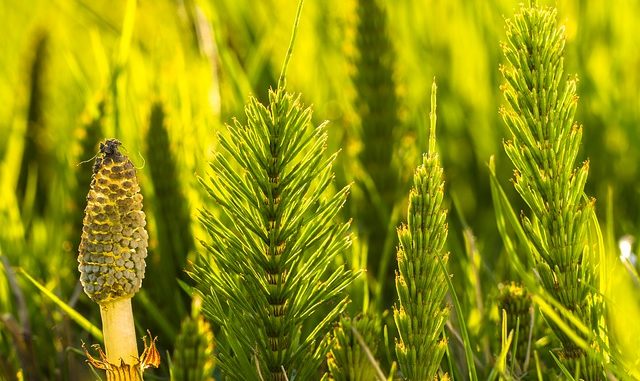
Field horsetail, or Equisetum arvense, is an ancient plant known both for its unusual appearance and for the many ways it has traditionally been valued. This herb is recognisable by its hollow, jointed stems that resemble a horse's tail, which is where its common English name, Field Horsetail, comes from. Field horsetail often grows in damp, marshy places, along riverbanks and in meadows, and generally favours moist, sandy soils.
Field horsetail and its traditionally described effects
- is said to support the body's antioxidant protection:
- traditionally associated with fewer free radicals, which can affect healthy cells
- is said to support antioxidant enzymes (SOD and glutathione)
- traditionally linked with lower fat peroxidation, which contributes to many long-term conditions
- is said to support PPAR alpha and PPAR gamma
- traditionally associated with reducing 5a-reductase: an enzyme important for testosterone production and for hair loss in men
- is said to help the body take in and absorb calcium, supporting the remineralisation of bones and teeth
- is said to support collagen production, which strengthens and improves the elasticity of skin, joints and blood vessels
- traditionally used to calm bleeding and support the healing of wounds
- traditionally described as slowing the multiplication of bacteria, viruses and yeasts by disrupting their cell walls and energy production
- is said to soothe inflammation and inflammatory processes in the body:
- traditionally associated with more anti-inflammatory molecules
- is said to lower the formation of inflammatory molecules
- traditionally linked with lowering other substances that cause pain and inflammation in the body (prostaglandins and leukotrienes)
- traditionally mentioned in connection with cell health: it is said to support the proteins involved in the natural renewal of cells, while leaving healthy cells untouched
Field horsetail is a gentle companion for healthy bones
One of the most remarkable qualities associated with field horsetail is its traditional use in supporting the health of the urinary tract. The plant has long been valued for its diuretic properties, which encourage the body to release excess fluid and so contribute to a healthy urinary system. Beyond the urinary tract, field horsetail is also appreciated for its potential to support bone health. It is rich in silica, a mineral that matters for bone formation and for the strength of connective tissue, and it has traditionally been used to support the skeleton.
Field horsetail tincture
Field horsetail has also been used for centuries in skincare. That same generous silica content contributes to the health of the skin, supports its suppleness and the body's own natural collagen production. One of the loveliest ways to enjoy the qualities of this admirable herb is in a tincture. Field horsetail tincture is a concentrate that brings you the benefits of this plant. Whether you are looking for gentle support for your bones, your urinary tract or another concern, field horsetail may be just what you have been searching for.