
For many of us the sun is a symbol of summer, of rest, holidays and good spirits. A few warm rays on the skin are enough and we feel reborn. Sunny days naturally tempt us to spend more time outdoors, by the water, in the garden or at the seaside – yet not every skin responds to the sun in the same way. While for one person the sunlight brings a soft tan and a feeling of vitality, for another it can bring unpleasant itching, redness, burning or a rash.
Perhaps you have already noticed that after time in the sun tiny bumps appeared on your décolletage, shoulders, arms or legs. The skin may have itched, stung or felt irritated, even though you may not have burned noticeably at all. That is the moment when many people ask themselves whether this might be an allergy to the sun, often also called a sun allergy. In reality, several different types of skin reaction to sunlight can hide behind this name.
Most often people speak of the so-called polymorphic light eruption, which can show itself as an itchy rash after time in the sun. For an ordinary person, though, it is not always easy to tell whether it is a sun allergy, sunburn, heat rash, irritation from cosmetics or another skin reaction. That is why it is good to notice not only how the skin looks, but also when the signs appear, how long they last and whether they return with every exposure to the sun.
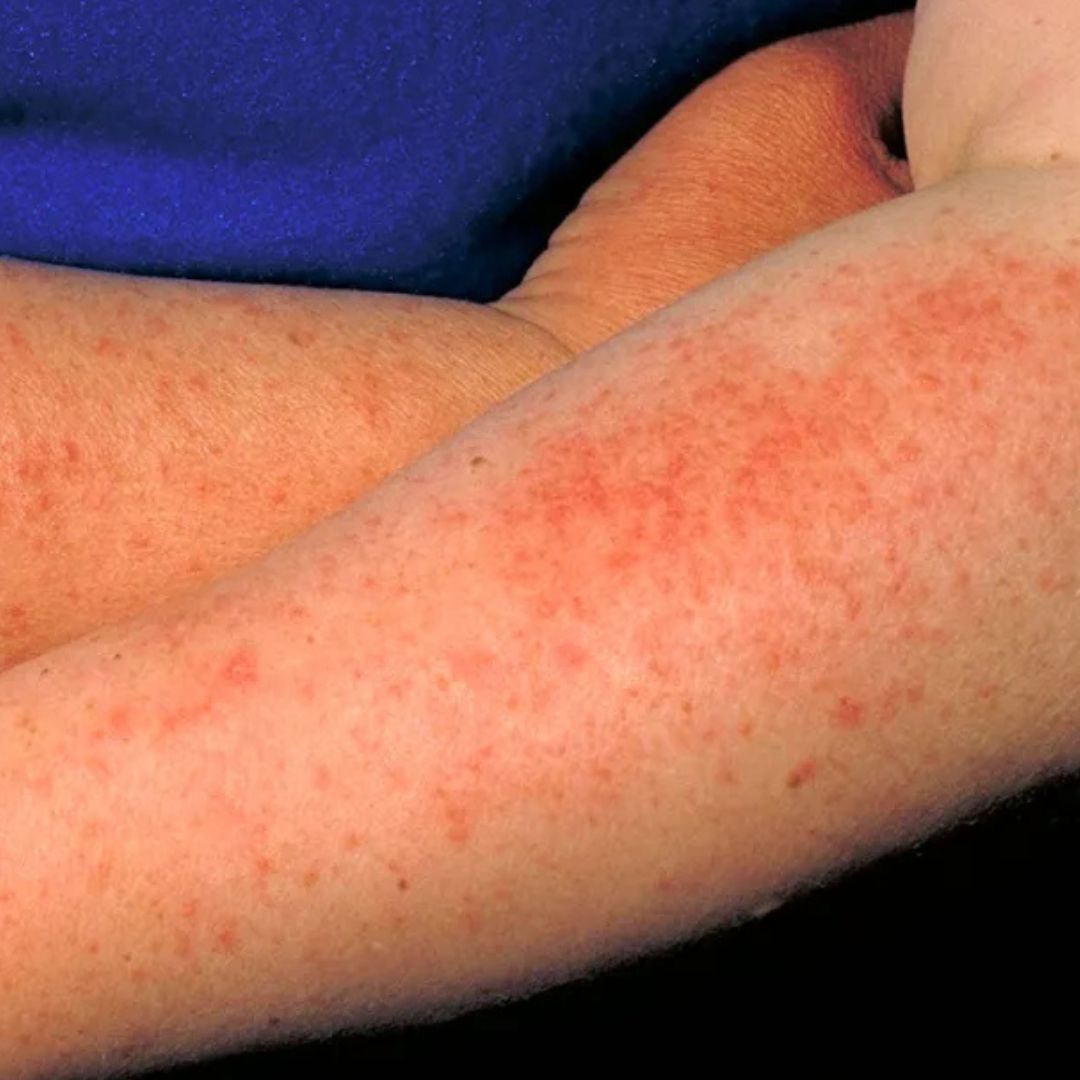
How can you tell that it is a sun allergy?
A sun allergy most often appears in the places that were exposed to sunlight, especially on the décolletage, shoulders, forearms, hands, thighs or the tops of the feet. Interestingly, the face need not always be affected as strongly, because throughout the year it is more used to the sun than the parts of the body that stay covered by clothing most of the time.
Among the most common signs are redness, itching, tiny rashes, stinging, burning, raised patches or small blisters. In one person the reaction may resemble hives, in another rather small bumps or reddened maps on the skin. That is precisely why a sun allergy can be tricky: in every person it may look a little different. The difference between sunburn and a sun allergy lies mainly in the way the skin responds.
While with sunburn the skin is usually evenly red, hot, tender to the touch and painful, with a sun allergy a rash appears more often, one that itches or burns, while the skin need not be burned in the classic sense. The reaction may appear shortly after time in the sun, but sometimes only after several hours or even the next day. If similar signs return every time you sunbathe, appear in the same places and are accompanied by noticeable itching or irritation, it is good to pay attention. It need not mean a serious problem straight away, but your skin is letting you know that it does not handle sunlight without consequences and would like a gentler approach.
Who is more prone to a sun allergy?
A sun allergy can appear in anyone, but some people are more prone to such reactions. It is more often linked with a lighter skin type, sensitive skin and with people who, after winter or a longer period without sun, suddenly expose themselves to intense UV radiation. A typical example is the first day of a seaside holiday, when the skin receives a large dose of sun all at once, even though it is not at all prepared for it.
More prone may also be those whose skin is generally reactive, who live with eczema or allergies, or who use cosmetics with more irritating active substances. The risk can also be increased by taking certain medicines, for example some antibiotics, acne treatments, anti-inflammatory medicines or preparations that can raise the skin's sensitivity to sunlight. That is why it is always good to read the patient information leaflet or to consult a doctor or pharmacist if you know that a more intense stay in the sun awaits you.
It is also good to know that a reaction to the sun need not always be an allergy in the true sense of the word. Sometimes it is rather photosensitivity, that is, an increased sensitivity of the skin to UV radiation. At other times the trouble may be the combination of sun and cosmetics, perfumes, essential oils or certain plant substances, which in the sun can bring about irritation or pigment spots.
Can a sun allergy appear later in life?
Yes, a sun allergy can appear during the course of life and need not be there from birth. This surprises many people, because they say to themselves that they never had trouble with the sun before, and suddenly their skin responds completely differently. The skin, however, changes over a lifetime. Its sensitivity changes, as does the state of the skin barrier, the hormonal balance, one's general health and also the cosmetics one uses.
Stress, a weakened body, medicines or simply the fact that after winter the skin is not prepared for strong sunlight can all play their part. So it can happen that someone who sunbathed for years without much trouble suddenly begins to notice itching, redness or a rash after being in the sun. It does not mean, though, that the skin has somehow failed. Rather, it is letting you know that it needs a different form of protection and a gentler approach than before.
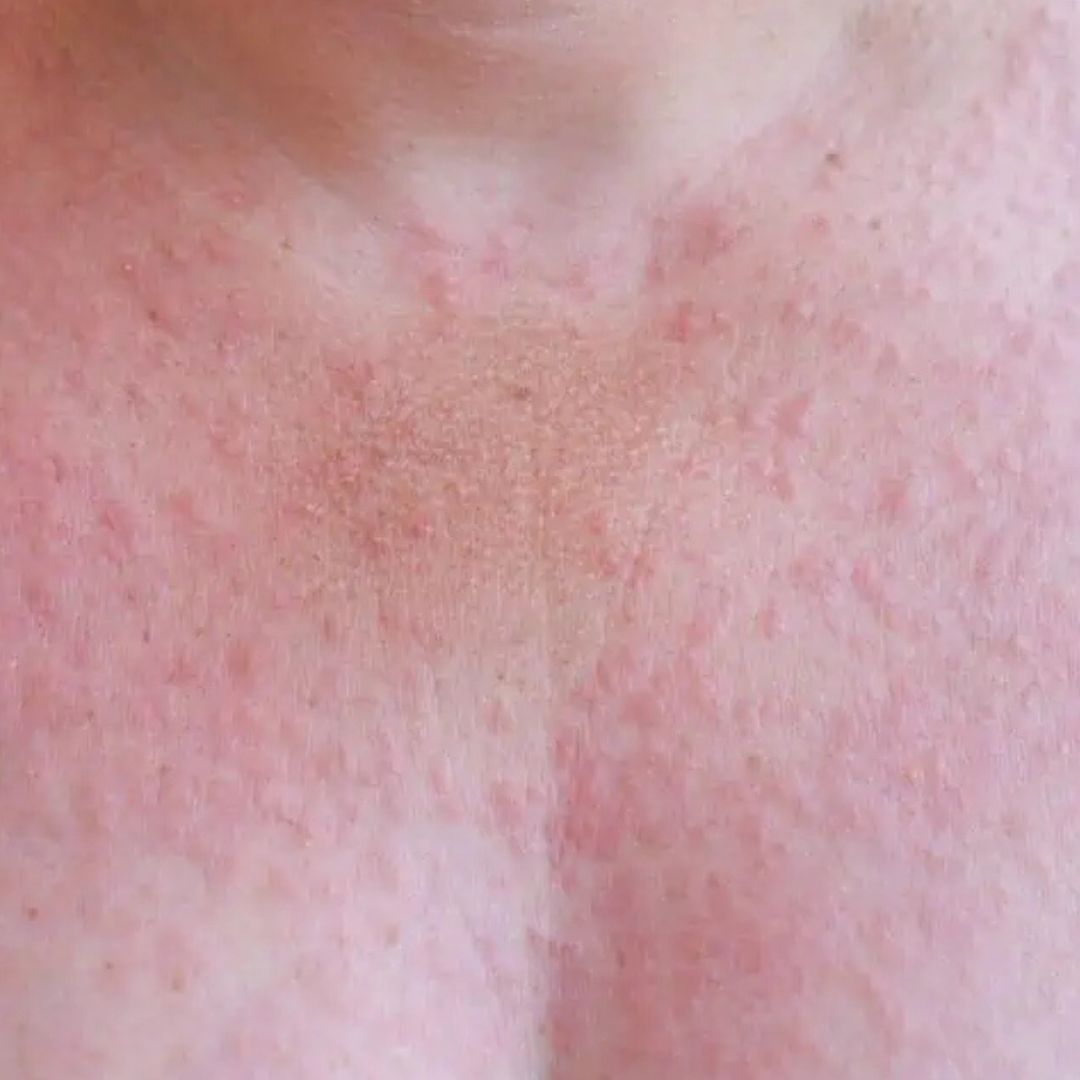
Can a person with a sun allergy go into the sun at all?
In most cases yes, but carefully and with good sense. A sun allergy does not automatically mean that you have to hide at home all summer or give up being outdoors altogether. It does mean, though, that it is worth respecting your skin more and not exposing it to strong sun without preparation and protection.
The biggest slip tends to be sudden, long sunbathing, especially during the first warm days or right after arriving on holiday. Skin that has been protected by clothing for months can respond to strong UV radiation with irritation. It is therefore kinder to expose it to the sun gradually, to begin with shorter time outdoors and to avoid the most intense sun around midday.
If you live with a sun allergy or suspect that your skin responds sensitively to the sun, the most suitable thing is to stay in the shade, wear airy clothing, a hat or a cap, and use a good sun cream with high protection. What matters is protection not only from UVB radiation, which causes burning, but also from UVA radiation, which penetrates deeper into the skin and can take part in sensitivity reactions and in premature ageing of the skin.
Which products to use with a sun allergy?
With skin that is sensitive to the sun, the most important things are simplicity, gentleness and reliable protection. A summer routine should not be overloaded with a multitude of active substances, strong exfoliants or perfumed products, because skin exposed to the sun is already under strain and does not need any further irritation. The foundation is a good sun cream with high protection, ideally SPF 50 or SPF 50+. When choosing, it is worth looking for the words broad-spectrum protection, which means that the product protects against both UVA and UVB radiation. For sensitive skin, products intended for sensitive or reactive skin are suitable, ideally without perfume and with the gentlest possible composition.
Some people get on well with mineral filters, for example zinc oxide or titanium dioxide, while others tolerate modern chemical filters better. There is no universal answer, because the best sun cream is the one your skin tolerates well and the one you will use in a generous enough amount. And with SPF the amount really matters. If you apply too thin a layer, the real protection may be considerably lower than the packaging states. Sun cream should be applied before going out into the sun and renewed regularly, especially after swimming, sweating or drying off with a towel. Do not forget the places that often stay unprotected either, such as the ears, the back of the neck, the tops of the feet, the hands, the shoulders or the edges of swimwear and clothing.
Care after time in the sun matters just as much. The skin will appreciate moisturising and soothing products that support the skin barrier and help to ease the feeling of tightness or irritation. Suitable ingredients may be aloe vera, panthenol, beta-glucan, oat extracts, Centella asiatica or gentle unperfumed moisturising serums and creams. If the skin is irritated, less really is more, so it is worth reaching for a simple product that calms the skin instead of overwhelming it.
What is better avoided with a sun allergy?
If your skin is sensitive to the sun, it is good to think not only about what you apply to it, but also about what you would rather leave aside. Before time in the sun, perfumed body sprays, strong essential oils, aggressive exfoliants, retinoids or strong acids are not ideal, especially if your skin is not used to these substances. Some cosmetic ingredients can irritate the skin needlessly or increase its sensitivity.
The combination of several active substances at once can also be a problem, especially during hot days, when the skin perspires more, loses moisture faster and more often comes into contact with the sun, salt water or chlorine. In summer it is therefore worth simplifying the routine. Gentle cleansing, moisture, soothing, support of the skin barrier and consistent protection from the sun are often more effective than complicated care full of strong active substances.
How to find relief once a sun allergy appears?
If after time in the sun itching, a rash or irritation appears, the first step is to stop exposing the skin to sunlight any further. Move into the shade or indoors, cover the affected place with loose clothing and give the skin some peace. Relief may come from cool compresses, a lukewarm shower and a gentle unperfumed moisturiser. Do not rub or scratch the skin and do not use aggressive products on it, even if you feel it needs cleansing. In reality it mostly needs soothing and time.
With pronounced itching, some people may be helped by antihistamines or local anti-itch preparations, but with medicines it is always advisable to consult a doctor or pharmacist, especially if you are already on another treatment, are pregnant or it concerns a child. If larger blisters, strong swelling, pain, fever or nausea appear, or if the reaction returns and worsens, it is better to see a dermatologist. A doctor can assess whether it really is a sun allergy or another skin reaction. This matters especially when the signs appear often, are pronounced or arise even after a short time in the sun.
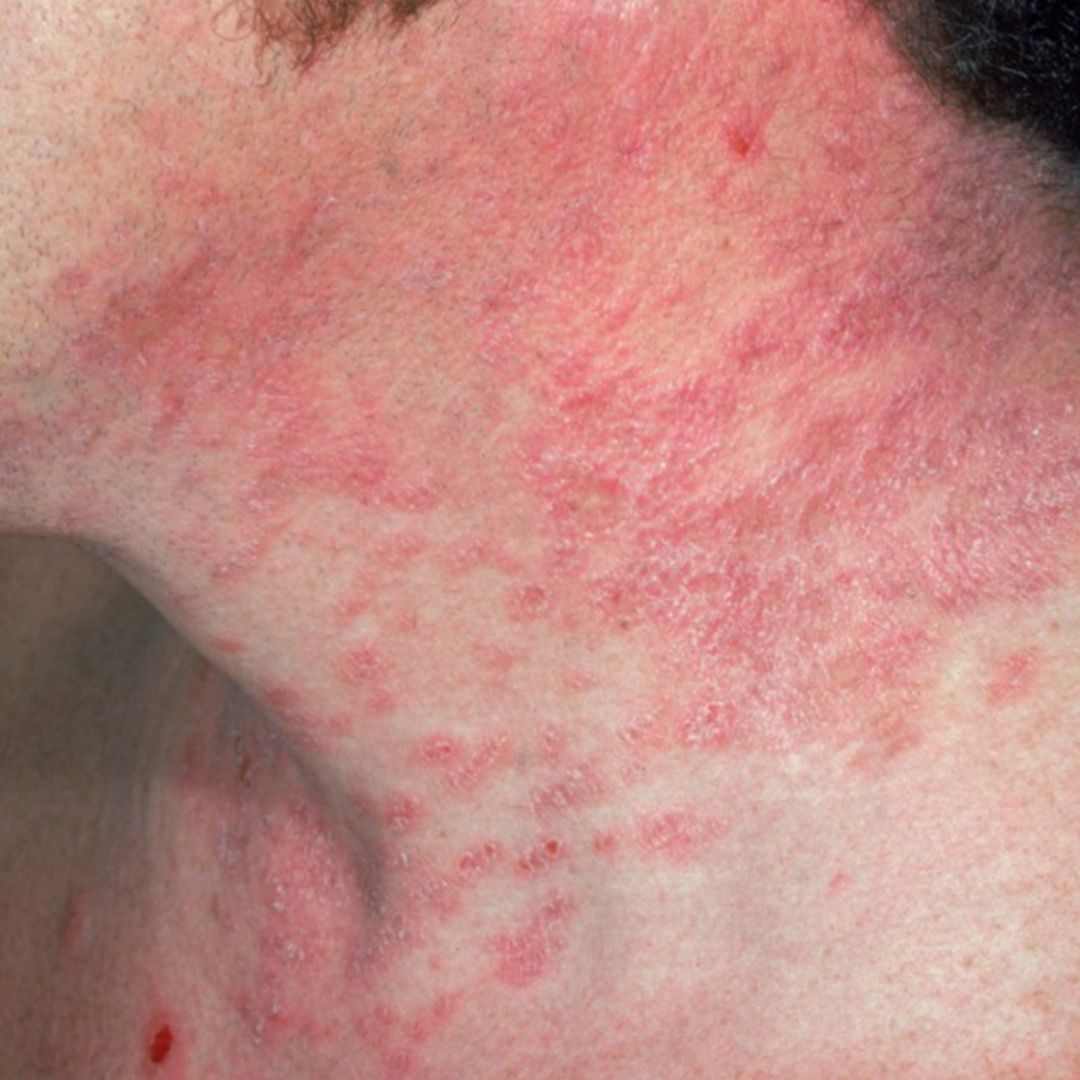
Can a sun allergy be prevented?
Not always with complete certainty, but the risk of a reaction can be lowered considerably. Prevention begins before the first rash ever appears. The most important thing is not to expose the skin to a sudden and intense dose of sunlight, especially after winter or after a period when you rather avoided the sun. It is good to let the skin grow used to the sun gradually, ideally with shorter times outdoors outside the most intense hours. That does not mean sunbathing without protection, though. On the contrary, even while growing used to it gradually, high SPF protection, suitable clothing and time in the shade whenever the sun is too strong should go without saying.
The state of the skin barrier also plays a large role. If the skin is dried out, irritated or disturbed, it may respond more sensitively, and that is why it is good to care for it not only during the holiday, but before it as well. Regular moisturising, gentle cosmetics, avoiding needless irritation and consistent protection from the sun can help the skin to handle the summer better. With repeated or strong signs, a dermatologist may recommend a special approach, for example a controlled accustoming of the skin to UV radiation under expert supervision. Such solutions, however, belong exclusively in the hands of a specialist and are not something to try on your own at home.
Is a sun allergy dangerous?
In most cases a sun allergy is unpleasant rather than dangerous. Itching, a rash and irritation can nevertheless spoil the summer considerably, disturb a holiday and lead a person to avoid the sun altogether. It is therefore important to find a balance between protection and a natural life outdoors. More serious can be the cases where the reaction worsens quickly, where extensive blisters, swelling or general symptoms appear, or where the skin responds even to very short exposure to the sun. In such cases it is certainly advisable to see a doctor, because similar signs may also be connected with other health conditions or with a photosensitive reaction to medicines.
If you are not sure whether it is a sun allergy, sunburn or another skin reaction, the safest thing is to consult a dermatologist. Self-diagnosis can be imprecise with skin signs, because a number of conditions or reactions can look very similar.
The sun need not be an enemy, but the skin deserves to be listened to
A sun allergy can be unpleasant, yet it need not mean giving up summer, holidays or being outdoors. Above all it means that your skin needs more attention, more consistent protection and a gentler approach. If a rash from the sun, itching after sunbathing, redness or repeated irritation appears in you, do not take it as a trifle to be endured. Your skin is speaking to you and showing you that it needs a different way of being cared for. Sometimes it is enough to change your sun cream, to avoid direct midday sun, to simplify your cosmetic routine and to give the skin more moisture. At other times it is good to consult a specialist, especially if the reactions return or worsen.
Summer skincare does not have to be complicated. On the contrary, sensitive skin often appreciates simplicity most: gentle cleansing, moisture, soothing, support of the skin barrier and good protection from both UVA and UVB radiation. The sun can be a beautiful part of summer, yet the skin should never suffer beside it. The most beautiful summer skin is not the one that is tanned at any cost, but the one that is healthy, calm, protected and feels good.