
While in winter we can put on a thick coat, wrap ourselves in a scarf and shelter from the weather in layers of clothing, our hair and face are often the only parts of the body we leave to the frosty wind and snow. Winter is without doubt the greatest test of the year for our crowning beauty.
In summer our hair is full of life, yet with the arrival of December it turns into unruly straw. In the morning you are wrestling with static electricity that lifts your hair in every direction, and in the evening you are dealing with a flattened style and roots that grow oily quickly after a whole day under a hat.
Why does our hair suffer so much in winter, though? And how can we bring back its health and shine with the strength of nature? We have prepared a complete guide for you, in which we take a close look not only at the hair itself, but at the scalp too.

What does the frost do to your hair?
To understand why our usual care falls short in winter, we need to look at a hair under the microscope. A hair is not dead matter – it is a complex structure that responds to its surroundings more sensitively than you might think.
A hair is made of three basic parts:
- The medulla (pith): the core of the hair.
- The cortex: the middle layer made of keratin fibres, which holds moisture and gives the hair its strength.
- The cuticle: the outer scaly layer, which shelters the inside of the hair like roof tiles.
Winter reaches all these layers in two ways: through freezing water and through temperature shock.
Temperature shock and the “explosion” inside the hair
The biggest mistake you can make in winter is to go outside with hair that is not fully dry. Water expands when it freezes. If moisture stays inside the hair fibre and you take it out into sub-zero temperatures, the water turns into ice crystals, which expand and literally tear the structure of the hair from within. The result is broken lengths and split ends that no miracle product can rescue. In such a case only the scissors will help.
Dry air, the thief of moisture
In winter the humidity of the air drops both outdoors and indoors, because of central heating. Dry air behaves like an ordinary sponge. It tries to draw moisture from everywhere it finds it, and it finds it in your hair and skin. Hair loses its suppleness and becomes fragile and dull.
That is exactly why moisture matters so much for hair in winter. It is not enough simply to add water, though; you need to seal it into the hair properly as well.
Static hair, the winter worry of every woman
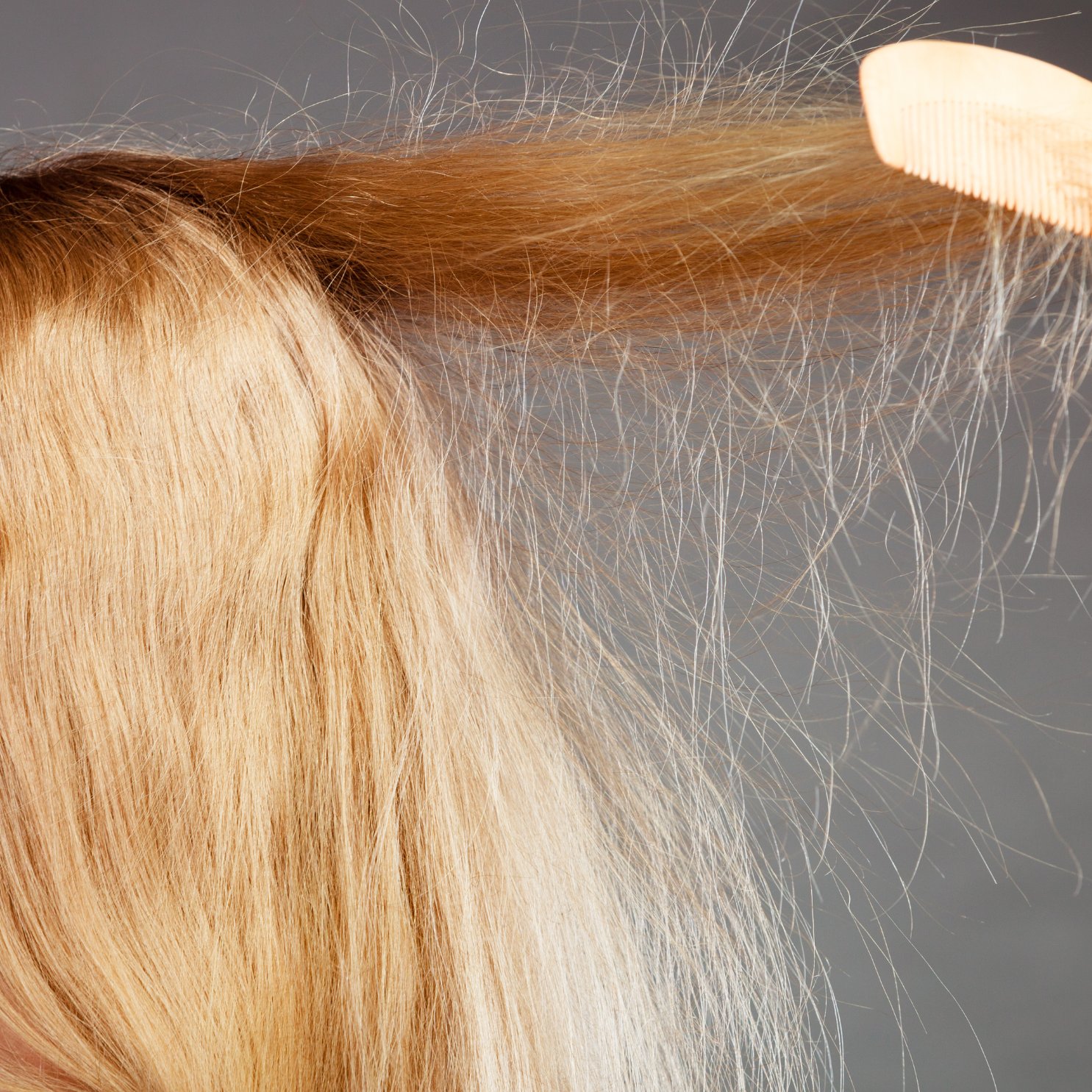
This is by far the most frequently searched concern of the winter season. Why does hair go static? It is mostly about physics and friction. Healthy hair has a closed cuticle on its surface and holds enough water. Water is conductive and helps carry away electrical charge. Dry winter hair, however, behaves as an insulator, and when individual hairs rub against each other, or against the synthetic material of your jacket or hat, a static electrical charge builds up. Since the hairs take on the same charge, they begin to repel one another. The result is static, unruly hair that is everywhere around your head, but not on it.
How to tame static electricity?
The answer lies in two steps: the choice of materials and the right cosmetics.
- Swap synthetics for nature: acrylic and polyester are the greatest makers of static electricity. Hats of wool, cotton or with a touch of cashmere are far kinder to the hair.
- Weigh the hair down with oil: light, flyaway hair needs “grounding”. Natural hair oils or leave-in serums are the ideal helpers. Just warm a few drops between your palms and run them through the lengths. The oil not only keeps static away, it also forms a protective film that holds the moisture inside.
Between dryness and oiliness
While the ends of the hair suffer from dryness in winter, at the roots quite the opposite often happens. Under a warm hat the scalp warms up and perspires. What arises is the so-called “greenhouse effect”.
Warmth and moisture are the ideal setting for the multiplying of bacteria and Malassezia yeasts, which are behind dandruff and itching. At the same time the sebaceous glands try to make up for the changes in temperature with increased sebum production. The result? You wash your hair in the morning and by evening you feel it is oily and flat again.
Why does an ordinary shampoo do harm in winter?
Many women make the mistake of reaching, in winter, for a harsh volumising shampoo full of sulphates (SLS/SLES) for oily hair. These substances do remove the oil perfectly, but they also dry out the scalp drastically. In its panic, the skin begins to produce even more sebum to protect itself. And so you find yourself in a vicious circle.
A solid shampoo as the answer
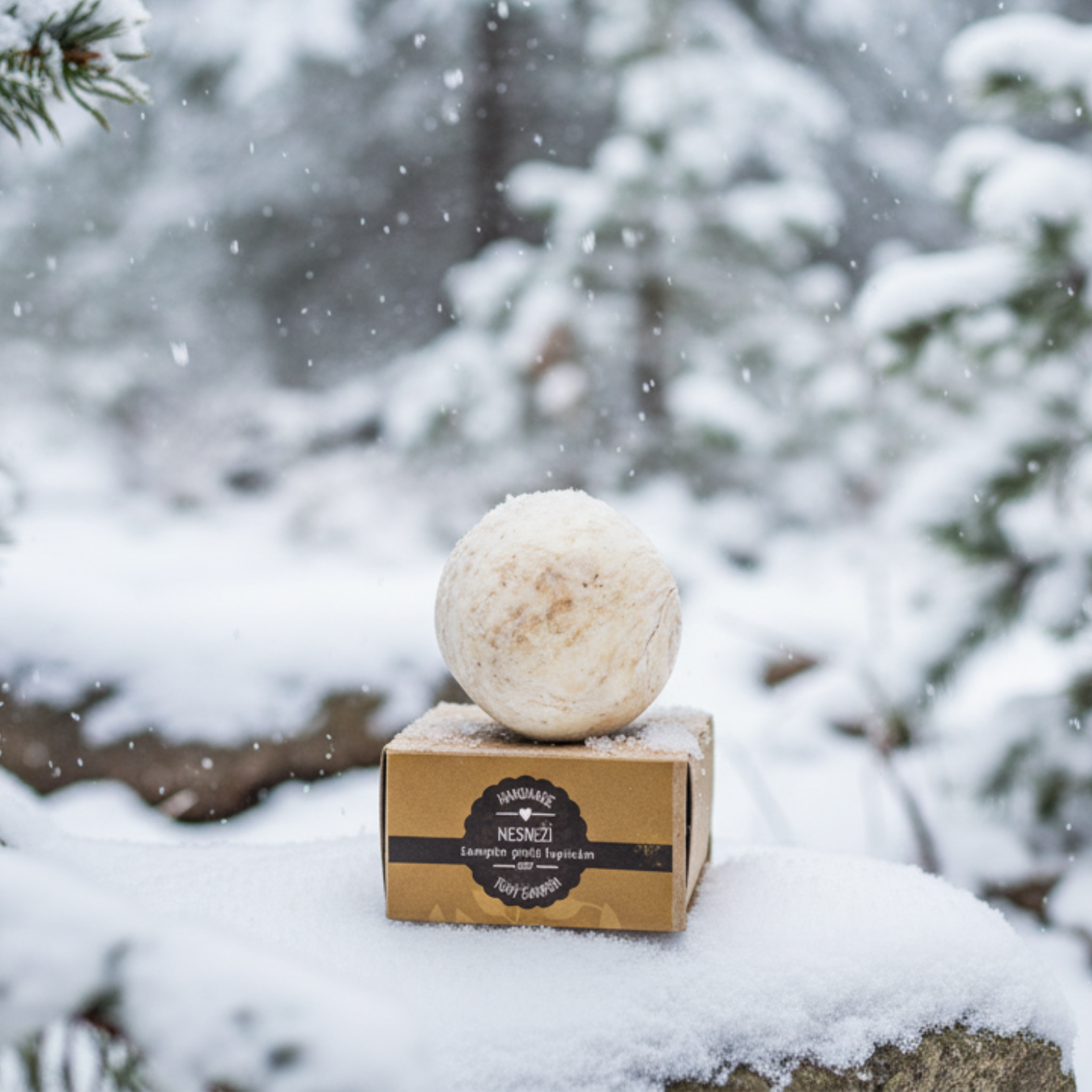
At Panakeia we have long championed a return to nature. Solid shampoos are an absolute game-changer for the winter season. You ask why?
- Gentle surfactants: instead of harsh sulphates we use gentle cleansing ingredients from coconut oil, which do not disturb the skin's protective barrier.
- Oils and butters within: a solid shampoo is not only about cleansing, but about caring too. It contains shea butter, cocoa butter and precious oils, which soothe the scalp while you wash.
- Herbal strength: extracts of nettle, rosemary and burdock naturally balance sebum production without irritating the scalp.
If you suffer from an itchy scalp or dandruff in winter, switching to a solid natural shampoo is often the only step you need to take to put things right.
Adjust your routine
To sum it up in practical steps, here is a short guide to how your bathroom shelf and your routine might look from December to March.
- Do not wash your hair in hot water: in winter a hot shower is tempting, but for the hair it is a disaster. Hot water opens the cuticle of the hair and washes away all its natural protective film. Wash your hair in lukewarm water.
- Moisture, moisture, nourishment: in summer a light conditioner is enough. In winter, bring out the heavy artillery. At least once a week, give your hair a nourishing mask. Look in the composition for ingredients such as panthenol, hydrolysed keratin or silk. These substances help rebuild the hair fibre.
- Oiling before washing: if your hair is very dry, apply oil to it before washing. Let it work for at least 20 minutes. The shampoo will then wash away the impurities, while the oil shelters the hair from the drying effect of the water.
- Thorough drying is essential: as we mentioned above – never go to sleep with a wet head, and certainly never go outside. Use a hairdryer on a medium setting and always, truly always, use a heat protection spray. Before you leave home, make sure your hair is 100% dry.
- Nourishment from within: cosmetics can do a great deal, but hair grows from within. In winter our diet holds less fresh fruit and vegetables. At this time of year hair often lacks zinc, selenium, B-group vitamins and healthy fats (Omega-3). Do not forget your drinking routine either – in winter we do not feel thirst as keenly, yet dehydration shows in the quality of the hair straight away.
Winter need not be an adversary
Winter has its own charm and it would be a shame to let worries about your hair spoil it. The key is prevention and gentleness. Swap harsh chemistry for the kind strength of Panakeia natural cosmetics, shelter your hair from extreme swings in temperature and do not forget a hat made of natural materials!. Your hair will thank you for this care come spring – it will be strong, long and ready to shine in the first rays of sun.