
Although nature has already woken up and we finally have beautiful sunny weather, many people are still troubled by spring tiredness and a lack of energy.
Instead of expensive and often disappointing preparations in capsules, try placing your trust in the strength of nature. Reach for the young spring shoots of stinging nettle; you will be surprised how versatile it is.
Our ancestors have known the gentle strength of nettle since time immemorial: they traditionally reached for it to ease the pains of a gout attack, they lightly whipped their rheumatic joints with it, they used it in connection with snake bites and, to warm themselves, they laid crushed nettle on the body. They were far more perceptive than we are and applied the laws of nature in their lives quite naturally.
Nettle grows everywhere there are enough nitrates in the soil. That tends to be along roads, on rubble, around fences and walls, at the edges of woods, whatever the altitude.
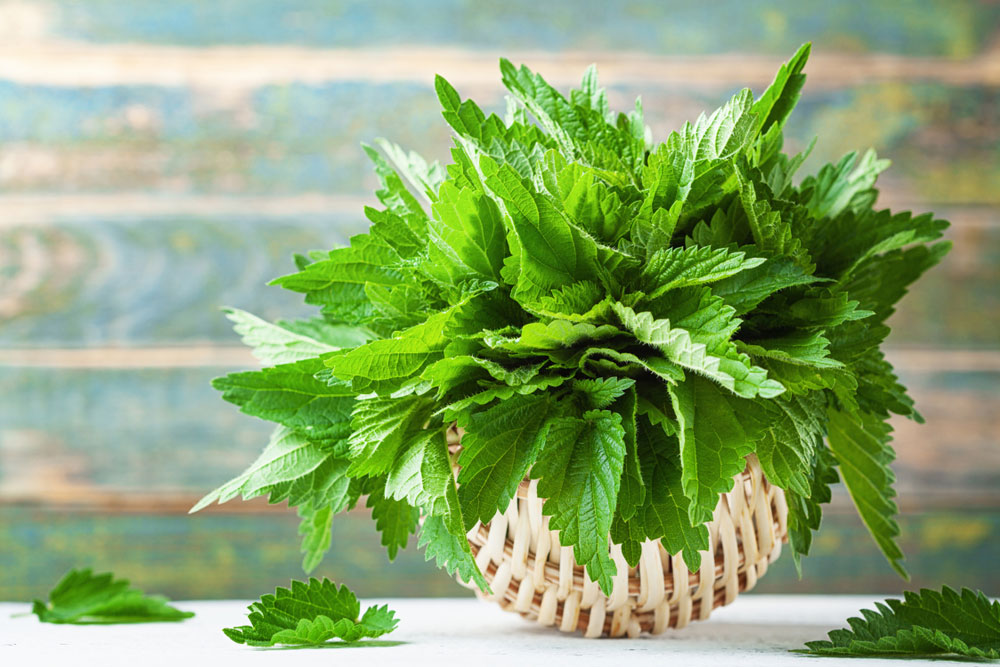
The common nettle, Urtica dioica, has been cherished in tradition from its rootstock through the stems and leaves all the way to the flowers. Nettle leaves are traditionally valued for their cleansing, detoxifying and diuretic qualities. Nettle is said to be our finest herb for cleansing the blood and supporting its formation.
For rheumatic aches, nettle is traditionally laid on the sore joints. People troubled by rheumatic aches may like to try this old practice. It has long been reached for in connection with sciatica and lumbago. After the nettle is laid on, the skin reddens and swells, thanks to which a large amount of blood flows into the skin tissues. This is traditionally said to ease the inflammation behind rheumatic aches. After this practice, though, it is good to be careful with cold water, which can cause strong burning.
- Traditionally reached for with aches in the lower back.
- Supports digestion and the body’s natural defences.
- Has antioxidant qualities.
- Is traditionally said to ease inflammation of the nerves.
- Is traditionally used with acute and long-standing troubles of the airways, and is said to support the work of the glands of inner and outer secretion.
- Is traditionally reached for with an unsettled menstrual cycle. It is said to help ease heavy bleeding and to shorten the number of menstrual days.
- It is traditionally used with inflammation of the ovaries and fallopian tubes.
- Is traditionally reached for with long-standing kidney troubles, with the forming of urinary stones and with inflammation of the urinary tract.
- People troubled by gout traditionally drink nettle tea. It is said to lower the level of unwanted by-products that gather in the body.
- It is traditionally used with hair that is prone to falling out. If you make a nettle decoction and wash your hair with it every day, it will certainly strengthen the hair and is said to keep it from falling out, to renew it and to support its growth.
- Is traditionally said to be favourable for the hormonal glands in childhood and puberty.
- Is traditionally reached for with eczema, fungal troubles and corns.
- Supports digestion, regularity and the cleansing of the digestive tract.
- Is traditionally used with a cough and supports clear breathing.
The nettle ritual
A cleansing nettle ritual is best carried out twice a year, ideally in spring, when the nettle is young. For nettle tea it is best to gather the tops of the nettle
It is at its very finest prepared cold, that is, as a cold infusion, a juice or a smoothie.
The tastiest way to prepare and preserve nettle is by fermentation. Lactic fermentation increases the availability of minerals and vitamins in the food, improves the flavour and is at the same time a way of preserving. We make it the way we make sauerkraut.
COLD INFUSION: Fresh nettle, about 5-8 whole pieces - leaves and the whole stem - is left to steep in 1 l of boiled and cooled water from evening until morning. In the morning we pour it off and drink 1 cup of the infusion 3 times a day. Ideally it is warmed to body temperature and lemon juice may be added. Since nettle is a strong diuretic and can be very dehydrating, it is kinder to keep the ritual shorter, 2-3 weeks, and then take a pause. Such cleansing rituals are most ideally carried out twice a year, in spring and in autumn. This nettle infusion can also be used in the bath, if it is warmed and poured into the tub. The bath should last at least 20min; afterwards we do not towel ourselves dry, we simply wrap up in a bathrobe. It is also traditionally reached for with skin troubles or with rheumatism.
FRESH JUICE is the strongest and does not burden the body. Even in the most demanding of times, juices have traditionally been considered the gentlest choice among natural approaches. During an intensive ritual it is quite ideal to drink 0.5 to 1dcl of pure pressed nettle juice 2-3 times a day.
SMOOTHIE A smoothie is wonderful too, because the whole little plant is in it, the chlorophyll matters as well, and so it also contains fibre. For a smoothie the nettle first has to be blended with water and only then the rest added. We add lemon juice, and we may add a little turmeric or other herbs. We drink it once a day in the morning, ideally on an empty stomach, as a detox.
What nettle contains
- chlorophyll with renewing qualities
- vitamin C, K
- provitamins A, B1
- iron
- pantothenic acid
- glucokinins, which are said to lower the level of sugar in the blood
- phytoncides, which hold back the growth of unwanted microorganisms
- organic acids, amines, amino acids and trace elements
A nettle decoction for the hair
Washing the hair with a nettle decoction is traditionally used with hair that is prone to falling out. We prepare it as follows:
We simmer 100g of chopped nettle for thirty minutes in 1L of water with a little vinegar.
Combined with a nettle shampoo it is an absolute treat for the hair
The nettle root and its wonderful qualities.
- Is traditionally used with troubles of the prostate
- Is traditionally reached for with diarrhoea and vomiting
- Is traditionally used with hair that is prone to falling out
- Increases the forming of sebum on the scalp,
- Traditionally reached for with inflammation of the lungs – it is said to ease the build-up of mucus
- Is traditionally used with a cough and with white discharge
- Carries excess water out of the body,
- Is traditionally reached for with anaemia,
- Wonderful for troubles of the urinary system,
- Is traditionally used to ease aching muscles and joints – wonderful with rheumatism,
- Cleanses the blood.
Tincture
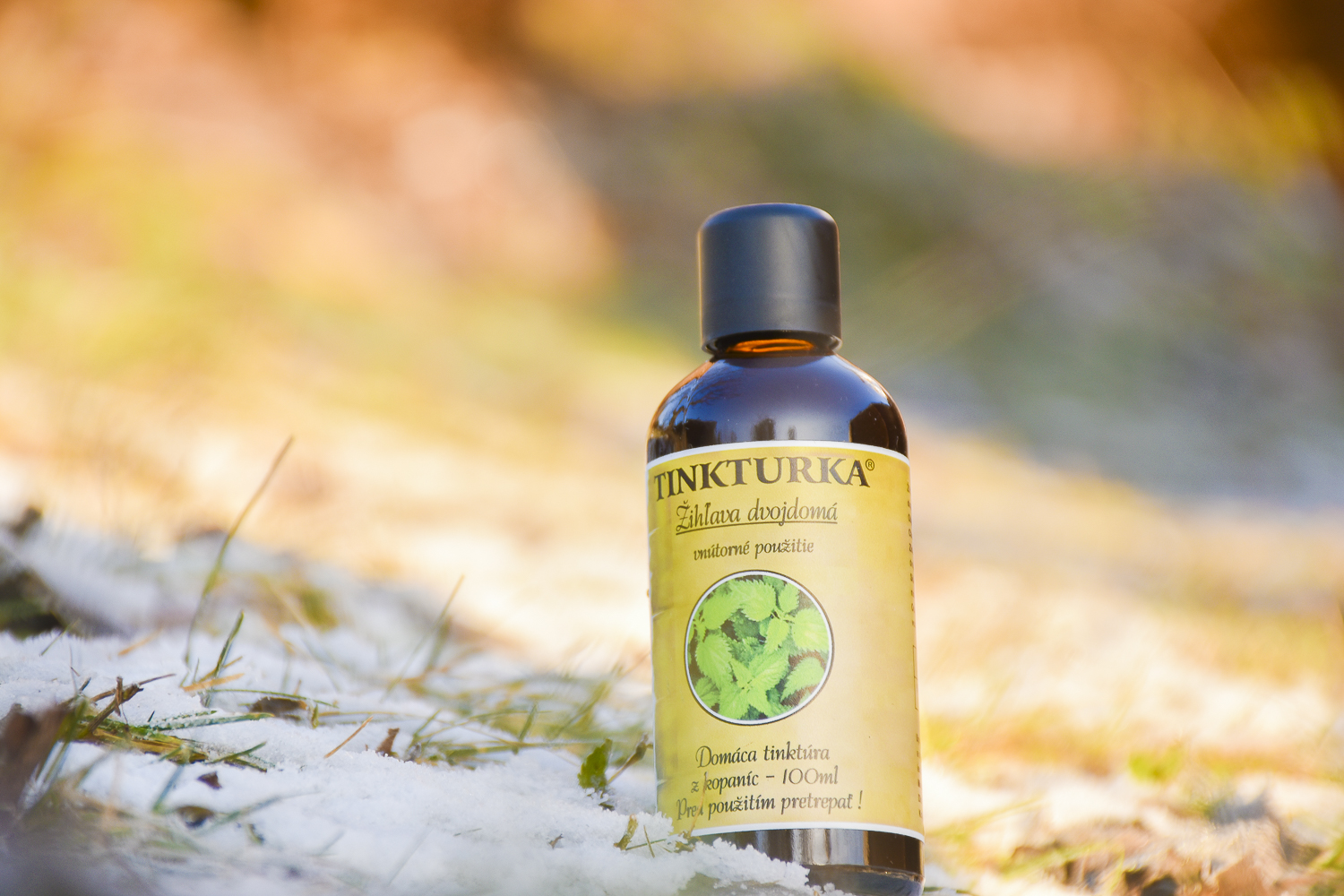
A tincture of nettle root is also traditionally reached for to ease the aches of rheumatism. We may also use it to dab sore places. Applied externally it is also wonderful as a hair water. Dilute the tincture with water in a 1:3 ratio and massage it into the scalp. It is a much-loved helper for hair that is prone to falling out and for strengthening the hair.
Salt scrub
In spring we often plunge headlong into cleansing the body in every way, but above all from within. We often forget the outer part of ourselves. The body, though, asks for care as well. Wash the old winter skin away and step out of your cocoon like a butterfly.
A scrub is a natural and universal way to cleanse the skin of impurities.
Epsom salt, almond oil and nettle are the foundation of our scrub
Shea butter
Nettle is also traditionally cherished for skin that needs a little extra care, and is said to have soothing qualities. Rinse your face every evening with a decoction of fresh nettle leaves. In this way you may ease the look of blemishes and marks and soften little red patches too. A nettle decoction is traditionally reached for with eczema as well. It is also used for dabbing with chickenpox or on insect bites.
The whole spring cleansing set for body and hair at a special price
For cleansing the blood, a decoction of nettle roots is traditionally considered stronger: we put 40g of fresh, washed and chopped roots into a litre of cold water, bring it to the boil and then simmer it covered over a low flame for about 8 minutes. After steeping for 10 minutes we strain it and sip about half a litre a day
We complement the drinking ritual with baths - one evening a foot bath and the next evening a hand bath. One day a week we leave everything out
For high blood pressure the following tea is traditionally reached for: We pour a litre of cold water over 50g of young, fresh nettle leaves, warm it slowly, simmer it over a low flame for 3 minutes and take it off the heat. After steeping for 15 minutes we strain it and drink it by the cup throughout the day.
Nettle root may bring on stomach and intestinal discomfort in some people.
Although nettle itself is traditionally said to be anti-allergic, as immunity weakens the number of people allergic to nettle grows