
Shea butter is made from the fruit of a tree that grows in equatorial Africa. In Burkina Faso the shea tree, whose name translates as the milk tree, is even considered sacred and is held in deep respect. After all, it takes fifteen years before it bears its first fruit, and a proper harvest comes only from trees thirty years old. In this article we will tell you more about this African wonder.
How shea butter is made
Making shea butter happens right where the nuts are gathered, and most of the work is traditionally done by women, by hand, in communities large and small. The knowledge needed for this intricate craft has been passed from mother to daughter for centuries. First all the nuts that have fallen to the ground are gathered and carried to the farm, where the green leathery skin is removed. At this point the nut is still wrapped in a shell, so it is boiled in water and then dried in the sun - this makes it possible to crack the shell by hand and use it afterwards as fuel. The nuts themselves then face another long handmade process - they are roasted, crushed, ground and rinsed with water, until at last the fat itself is obtained: shea butter.
The qualities of shea butter
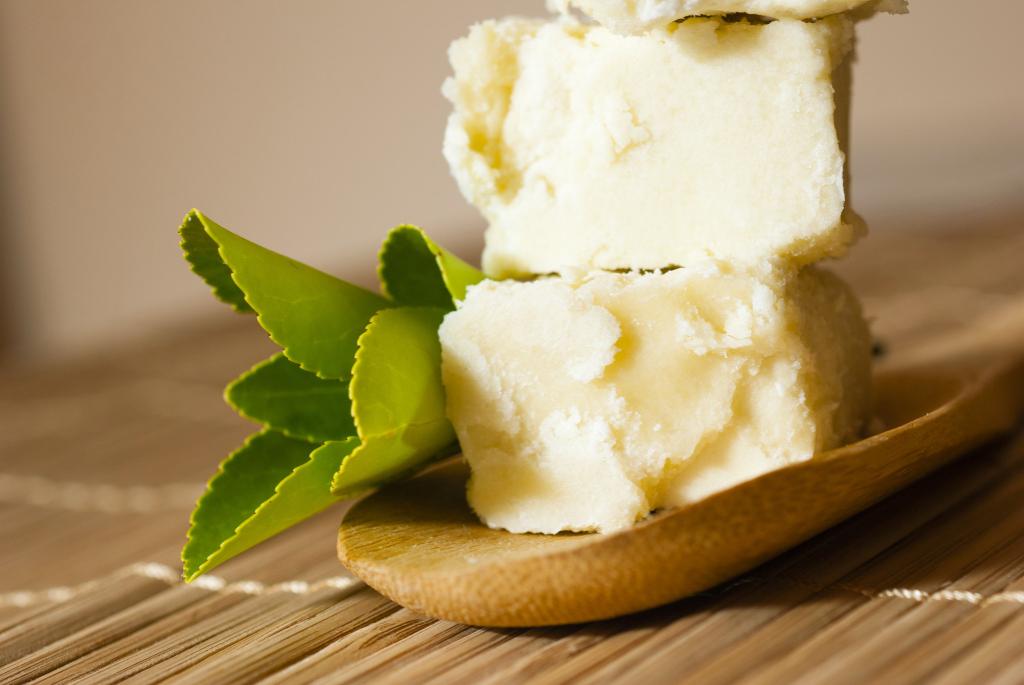
Shea butter suits every skin type, including the most sensitive. Let us look at its qualities below:
- It nourishes the skin and locks its natural moisture in
- It suits oily and blemish-prone skin too, as it does not feel greasy and does not clog pores
- It is multifunctional and gentle - you can use it anywhere: on the face, the whole body, hair, in caring for a pregnancy bump and for children
- It works beautifully as a make-up remover, a hair wax, and care for cuticles and hardened heels
- It has an anti-ageing quality, as it encourages the skin to make more collagen
- It is soothing, which is why many people reach for it when their skin feels irritated, dry or out of balance
- It contains a high amount of vitamin E, a natural antioxidant
But do take care. Not every cream is the same - and even though the butter really may be in there, 0.1% of the total content certainly will not bring the qualities described above. So once again it pays to read the label and look at where shea butter (Butyrospermum Parkii Butter) sits in the ingredient list. All these qualities make shea butter a wonderful helper not only in caring for the skin of your face, but for your whole body - for instance in looking after skin during pregnancy or areas prone to cellulite.
What shea butter contains
- The main building blocks of shea butter are stearic and oleic acid, which make shea butter something of a salve. And the salve - a water-free product - is coming back into the light precisely because it is so multifunctional.
- The alpha-amyrin and lupeol contained in the butter are traditionally associated with an anti-ageing effect, as once applied to the skin they can encourage a greater production of the collagen responsible for a youthful, firm-looking complexion.
Shea butter for hair
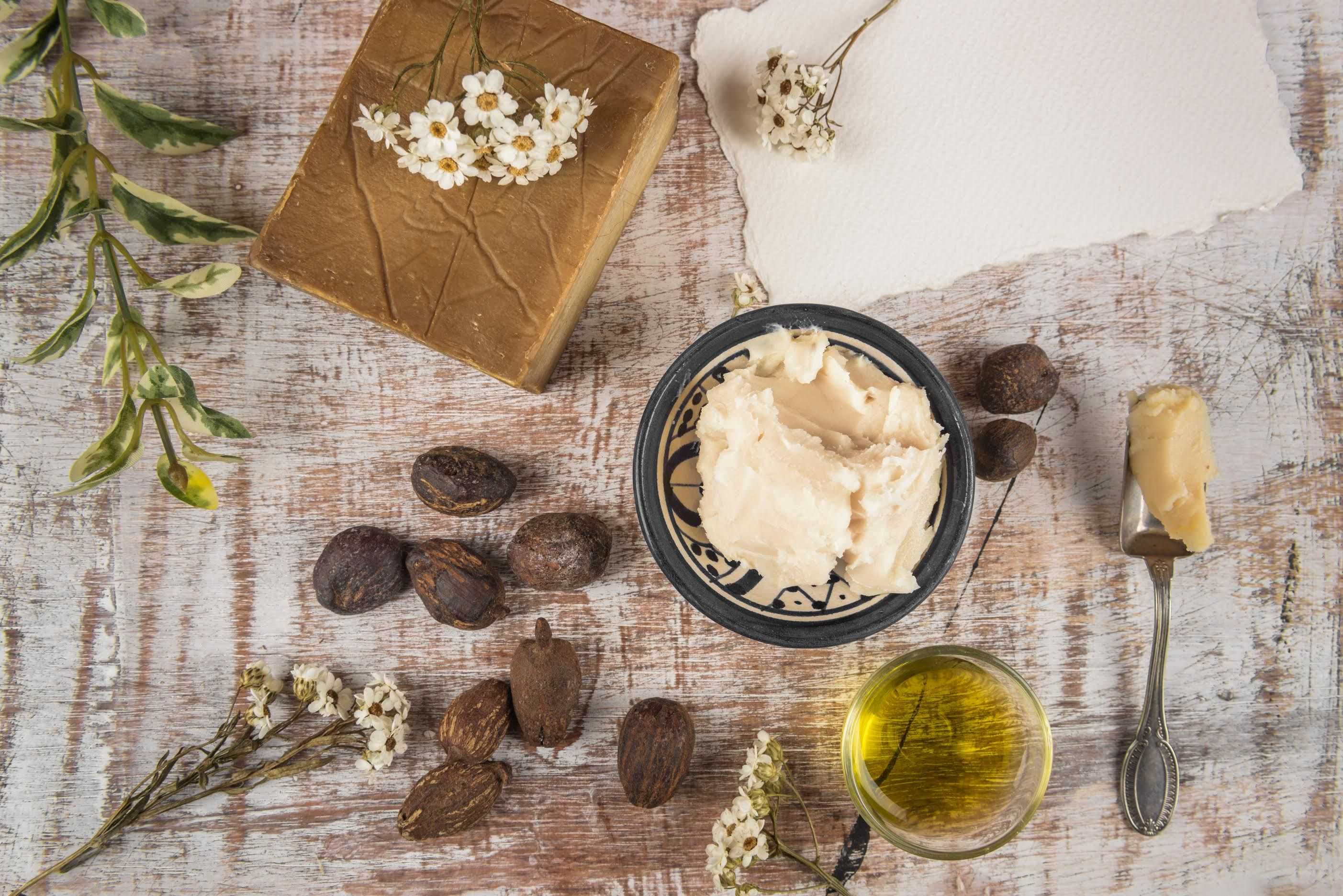
In hair care it is wonderful for taming flyaway ends - simply take the tiniest amount and work it into the ends with your fingers, so that they settle without feeling greasy. (You can do this after washing as well as when styling dry hair.) Shea butter is a wonder, but there are some things it simply cannot offer - for instance a sufficient amount of the beneficial unsaturated fatty acids or other bioactive substances that are hidden in other plant oils. That is why we combine our face and body butters with the very best oils and with oil-soluble active ingredients.
Real shea butter has a strong scent
In our water-free facial night creams, unrefined shea butter is the main ingredient. That gives them a very particular scent, which for anyone who has not used quality natural cosmetics before can seem quite strong indeed. The colour and the scent of the butter tell you how it was made. The strongest scent comes from butter that is cold pressed, or made by boiling the nuts and collecting the fat as it floats to the surface. A very faint scent, on the other hand, belongs to refined butter, where the fat is filtered and cleaned with acids and lyes. Unrefined shea butter may have a somewhat challenging scent and colour, but it keeps all the exceptional qualities that refining takes away.
Unrefined shea butter is the loveliest choice
Unrefined shea butter is indeed more expensive and it has a not very pretty beige, brown or even grey colour and a particular nutty, earthy scent that is not to everyone's taste, but it is of true quality. Refined shea butter, to which various synthetic fragrances or essential oils are added, is white and sweet-smelling, but refining takes away most of its unique qualities. This quality butter, which many find strong-smelling, is traditionally valued for helping the skin age more gently. It even contains substances similar to those found in ginseng, which are traditionally spoken of for their soothing qualities. It can also happen that one night cream smells a little different from the next one you buy. We always buy the butter fresh and individual batches can differ in scent, which in a natural, chemically untreated raw material is completely normal.