
Youthful skin, firm contours and supple joints are not only a matter of genetics, but above all of your body's ability to renew its natural supporting structure – collagen, the most important protein in our body. The thing is, its natural production begins to decline after the age of 25, and after 40 the pace of its formation slows down dramatically.
But this is not something you simply have to accept. You don't have to rely on expensive invasive procedures alone. There are science-backed ways to gently encourage your own cells to get back to work. In this article we share 5 key pillars that truly help if you want to replenish your collagen reserves from within as well as from the outside.

Why do we lose collagen in the first place?
Before we move on to the solutions, we need to understand what is happening in our skin. Collagen is a protein that makes up as much as 75 % of the volume of our skin. It is responsible for its firmness and structure. With the years, however, our fibroblasts (the cells that produce collagen) become less active.
Besides our natural biological clock, there are also external factors that literally consume collagen:
- Oxidative stress: caused by pollution and lifestyle.
- Glycation: an excess of sugar makes collagen fibres stiff and brittle.
- UV radiation: as much as 80 % of visible skin ageing is down to the sun, which breaks down collagen structures.
Tip 1: Rely on the power of retinoids and vitamin A
In the world of cosmetics there are few ingredients whose effects are confirmed by as many independent studies as vitamin A. If you are looking for a way to encourage your skin to produce more collagen from the outside, retinoids are a must-know.
How does it work?
Retinol and its stronger forms (such as retinal) travel deep into the skin, where they directly stimulate the fibroblasts. Those then begin to produce new collagen fibres and at the same time slow down the activity of the enzymes that break collagen down.
A practical note: Start with a lower concentration twice a week and increase the frequency little by little. You will see the results of collagen stimulation after 3 to 6 months of consistent use.

Tip 2: Micronutrients as fuel for collagen formation
You can consume kilograms of collagen, but if your body doesn't have the right tools to process it, it will simply pass through unused. Collagen formation is a complex chemical process that calls for specific cofactors.
- Vitamin C: It is the essential trigger of the whole process. Without it, the body cannot join amino acids into the firm collagen helix. It acts as a stabiliser that keeps the fibres strong.
- Zinc and copper: These minerals activate the enzymes needed to repair damaged tissue.
- Amino acids: Make sure your diet contains enough glycine and proline (found in good-quality broths, fish, eggs or plant proteins).

Tip 3: Hydrolysed collagen peptides
For a long time there were debates about whether drinking collagen makes any sense. Today we know that the key is molecular weight. Classic collagen from food has molecules that are too large to be absorbed into the bloodstream in their original form.
Hydrolysed collagen, however, is broken down into small pieces – peptides. These have two functions:
- They serve as direct building material.
- They act as a kind of signalling molecule. When these peptides appear in the blood, the body reads it as a sign that its own tissue has been damaged, and starts producing new collagen in a big way.
- What to look out for: Look for products with a purity certificate and at least 5 000 mg of collagen in a single serving. Marine collagen (Type I) is ideal for the skin, bovine for joints and the gut.
Tip 4: Facial massage and mechanical stimulation
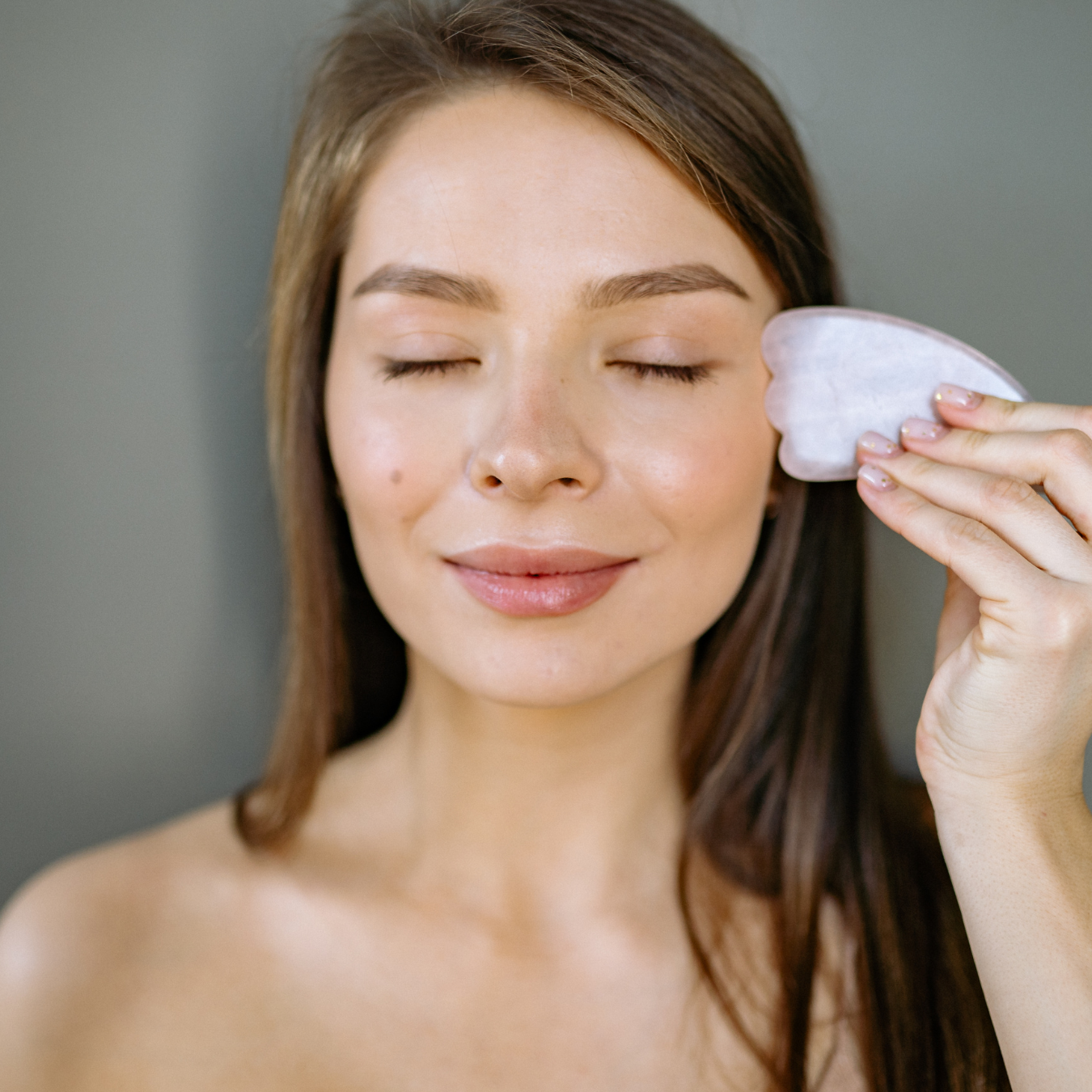
It may sound like pure wellness relaxation, but a good facial massage is like a gym session for your fibroblasts. Mechanical pressure applied to the skin sends the cells an impulse to become active.
- Gua Sha and face rollers: These little helpers support lymphatic drainage and, with the right technique, gently stretch the tissue and encourage the skin's renewal processes.
- Professional treatments: Methods such as microneedling are based on exactly this principle – they create microscopic openings that invite the body to build a completely new, denser collagen network.
Tip 5: Protecting the collagen you already have
Supporting its formation is only half of the story. The other half is making sure you don't lose collagen faster than you can create it.
The greatest challenge for collagen is sunlight (UVA rays). These reach deep into the dermis and activate enzymes called matrix metalloproteinases (MMPs), which cut collagen apart.
What helps: Using a cream with SPF 30 or 50 every day – yes, even when it is cloudy or you are in the office. Adding antioxidants to your routine (vitamin E, ferulic acid, niacinamide) helps neutralise the free radicals that damage collagen.
How will you know that your care is bearing fruit?
With collagen, patience is everything. The renewal cycle of skin cells takes around 28 days, but rebuilding the collagen structure in the deeper layers takes 8 to 12 weeks.
The first signs that you are on the right path:
- Your skin feels less tight in the morning and bounces back more quickly.
- Your hair and nails are stronger and break less often.
- Your complexion takes on a natural glow and looks more hydrated - collagen helps the skin hold on to water.
An investment in your own future
Supporting collagen production isn't about buying one miracle cream; it is about combining good nutrition, thoughtful cosmetics and protection. If you begin with these five steps today, your skin will thank you in ten years' time. Remember, the aim is not to stop time, but to age with grace and keep skin that is healthy, resilient and well. Which of these five tips will you welcome into your routine first?