
Common chicory, or Cichorium intybus in Latin, may not look like anything special at first glance – just a tall, slender plant with pale blue flowers. But do not let its modest appearance fool you. This plant has long played an important role in traditional herbalism and has even found a place as a coffee substitute. In our article we explore what makes chicory so remarkable. We look at its botanical roots, its cultural significance, its common uses in tinctures and teas, and how it earned its place in home herbal "medicine cabinets".
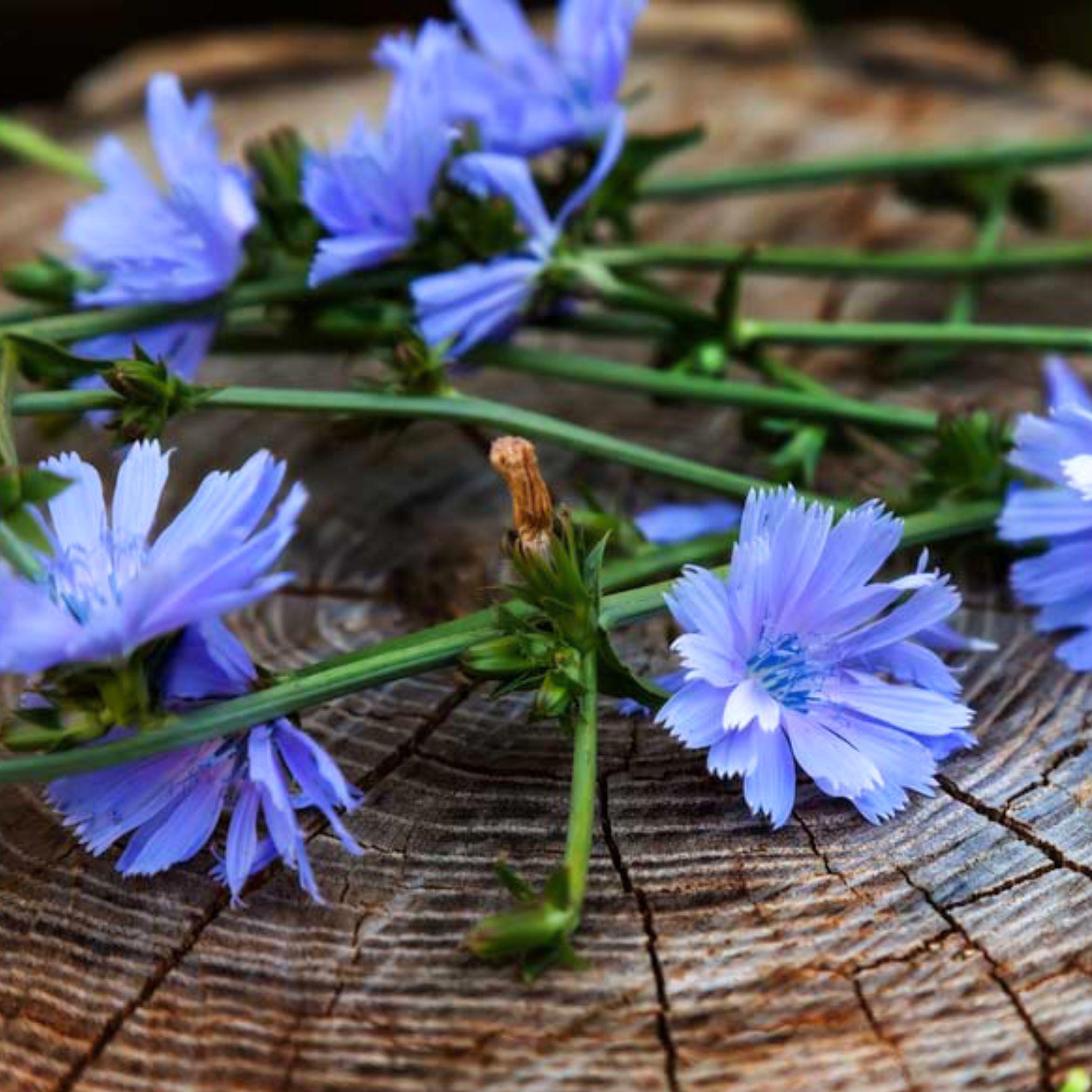
What is common chicory?
Common chicory is a perennial herb of the daisy family (Asteraceae), originally from Europe, though today it is found in many temperate regions around the world. It usually grows along roadsides, pastures and the edges of fields. Its deep root is rich in inulin, a prebiotic fibre, and it is the root that is most often used in herbal preparations and caffeine-free coffee blends. Chicory coffee contains no caffeine and is much loved by people who tolerate it poorly for one reason or another, or who are simply cutting back. In folk traditions, common chicory is associated with support for digestion, liver function and appetite. While modern research continues to explore its properties, its value as a food and herbal ingredient has remained strong across the generations.
Common uses of chicory
1. Chicory coffee from the root
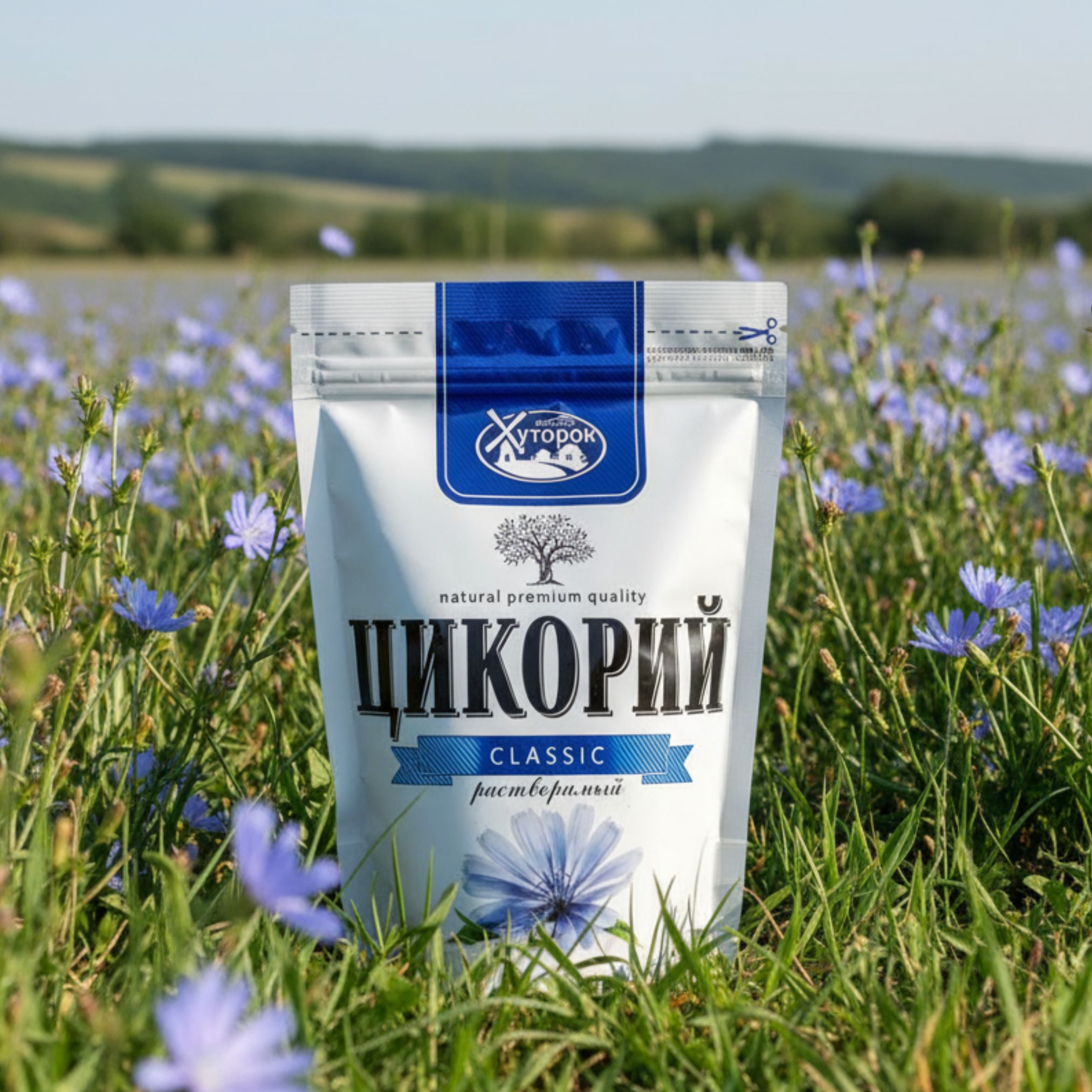
One of the most beloved uses of chicory (the root) is in the form of a roasted powder, often prepared as a caffeine-free alternative to coffee. Its earthy, slightly bitter taste makes it a genuinely delicious alternative. If you too would like to lower your caffeine intake without giving up your morning ritual, chicory coffee may be just the thing. In our range you will find several kinds of chicory coffee made from carefully roasted root, for a pleasant and flavourful moment.
2. Chicory tinctures
Common chicory tincture is made by steeping chopped or dried root in alcohol to extract its natural compounds. It is commonly used in small, diluted doses as part of herbal routines meant to support digestion and everyday wellbeing. As with all herbal extracts, consistency and a suitable dose matter more than immediate effects.

3. A traditional friend to digestion
In Europe, chicory has long been treasured for its role as a "bitter herb" – a plant used to support appetite and digestion, especially before a meal. Even today, some people add chicory to herbal blends meant to support the digestive system, taken before eating.

Frequently asked questions about common chicory
Is chicory root good for digestion?
Many herbalists use chicory root as part of digestive drinks or herbal teas. Its inulin content, a kind of prebiotic fibre, may also indirectly support the gut flora. People with certain sensitivities (especially FODMAP sensitivity) should test their tolerance slowly, though.
Is chicory coffee safe for everyday use?
Yes, roasted chicory coffee is generally considered safe and is naturally free of caffeine. It can be enjoyed daily as an alternative to traditional coffee – either on its own or blended with other roots, such as dandelion or burdock.
What does chicory root taste like?
It has a slightly woody, nutty and delicately bitter taste. After roasting it darkens and becomes more aromatic, rather like a medium-roast coffee with herbal undertones.
Does chicory root contain caffeine?
No – chicory root is naturally free of caffeine. It is often used as a caffeine-free alternative for people who want the coffee ritual without the stimulant.
Is chicory root used in cosmetics?
Yes, some natural cosmetics brands include chicory extract in tonics or soothing creams, especially for sensitive skin. More often, though, it is used as a nutritional herb taken internally.
How to use chicory?
Chicory is surprisingly versatile. You can prepare it as a tea, blend it with coffee, take it as a tincture or enjoy it mixed with other natural coffee alternatives. Some prefer it seasonally – in spring and autumn, as a ritual of resetting the body and supporting digestion. Others take it daily, in gentle moderation of course, for overall wellbeing or as prebiotic support. In the PANAKEIA range you will find chicory tinctures as well as roasted chicory coffee – all of high quality and maximum purity, with care for the environment.

Is common chicory suitable for everyone?
Although chicory is considered safe for most people, there are some exceptions. People allergic to ragweed (the Asteraceae family) may also be sensitive to chicory, which belongs to the same family. Because of its inulin content it may also cause gas or bloating in people with FODMAP intolerance. As always, it is best to start with small amounts and notice how your body responds.
Interesting facts about chicory
- In ancient Egypt chicory was used as a liver tonic and was considered a sacred plant.
- Napoleon promoted the use of chicory coffee in France during shortages of imported coffee.
- The bright blue flowers of chicory open in the morning and close in the afternoon – which earned it the nickname "the sun's bride" in some cultures.
- It is a common ingredient in traditional "detox" blends across Europe.
- The plant's latex (the white milky sap) has historically been used to make natural chewing gum.
- Chicory is still grown on small family farms in Central Europe and is dried in traditional ways before roasting or making tinctures.