
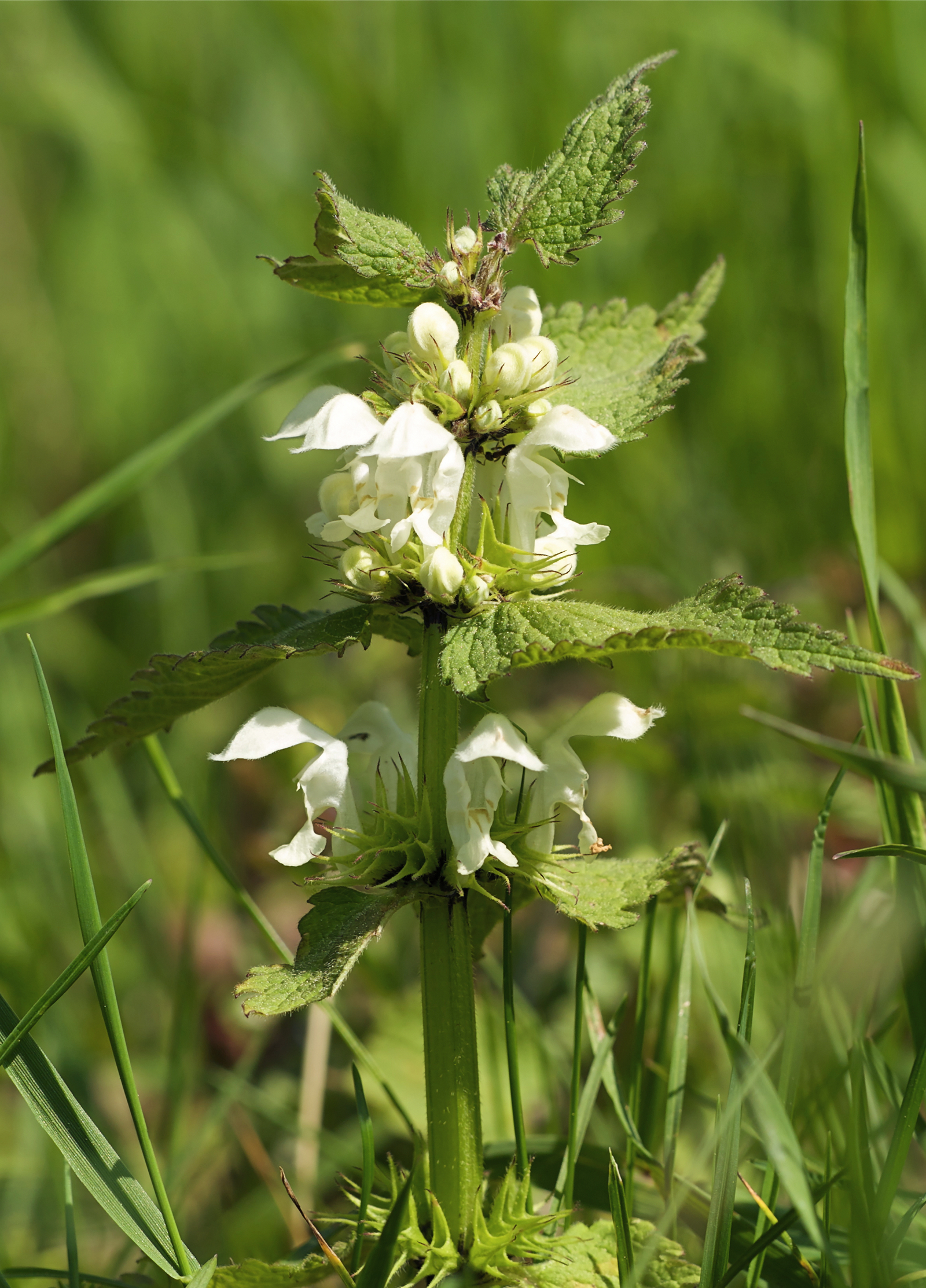
White deadnettle, in Latin Lamium album, is a remarkable herb with a rich history and many traditional uses. This perennial plant with its gentle toothed leaves and clusters of white flowers adds elegance to gardens, meadows and the edges of woodlands all across Europe and Asia. White deadnettle is often mistaken for the stinging nettle. It has been held in high esteem since ancient times for its traditional herbal qualities.
White deadnettle and its effects
- it is traditionally used to soothe inflammation
- it is traditionally reached for to ease the unpleasant signs that come with irregular, heavy or painful menstruation, and it is said to support women who wish to conceive as well as to help with inflammation of the ovaries
- it is traditionally used with infections of the urinary tract
- it is said to help the body release excess water
- it is traditionally recommended for an irritating cough
- it is said to bring digestion into balance
- it is traditionally used to support the healing of haemorrhoids
- it is traditionally said to have a positive influence on varicose veins
- it is said to support the immune system, to protect the cells and to help as a prevention of colds and flu
- it is traditionally used to soothe inflammation in the urinary tract, and in men it is said to ease concerns with the prostate
- it is traditionally said to help lower high blood pressure
- it is said to calm the nervous system and improve the quality of sleep
White deadnettle is not a stinging nettle
Discover the gentle powers of white deadnettle and let its tender beauty catch your attention. White deadnettle has traditionally been valued for its herbal and soothing qualities. It is traditionally said to have anti-inflammatory, antibacterial and astringent properties that offer relief with various concerns, such as troubles with breathing or irritations of the skin. People often mistake it for the stinging nettle. And although the two look alike, the deadnettle does not sting.
White deadnettle tincture
The white deadnettle tincture is one of the fine tinctures well worth your consideration. It is made from home-grown white deadnettle from our meadows and woodlands. Thanks to this tincture, just a few drops a day are enough to weave white deadnettle into your routine and draw on its traditional qualities. If you are fond of herbal preparations and natural rituals, you will surely appreciate this tincture. It is made honestly, following the strictest quality standards, and the result is the greatest possible purity and quality.
White deadnettle – frequently asked questions
Can white deadnettle be used every day?
White deadnettle is one of the favourite herbs of traditional herbalists. It is commonly used in tinctures, teas and various infusions. Many herbalists weave it into their everyday routines, although it is best to use it in moderation, following the recommendations of the producer (for example in the case of a tincture or another prepared product) or of a specialist, and to make sure it comes from a good source.
Herbs similar to white deadnettle
White deadnettle is often compared with the stinging nettle, yarrow and ribwort plantain, because these herbs share similar traditional uses. It is even easy to mistake it for the stinging nettle. White deadnettle, however, stands out with its gentle white flowers, which makes it a well-known herb in traditional European herbal practice.
What is the best way to use white deadnettle?
White deadnettle can be used in teas, tinctures or herbal infusions. Many people prefer tinctures for their concentrated strength, while others like to steep the dried leaves and flowers into a tea. It is also a common part of all sorts of herbal blends.
Can white deadnettle be combined with other herbs?
Yes, white deadnettle is often combined with chamomile, marigold or elderflower, for example. You will also find it in various blended teas, where it can be joined by all kinds of other herbs.
White deadnettle – little curiosities
- Despite its look and its likeness to the stinging nettle, white deadnettle does not sting when you touch it.
- The flowers of white deadnettle are rich in nectar, which makes them a favourite with bees and pollinators.
- In the Middle Ages this plant was often used in traditional herbal practice, especially in Europe.
- White deadnettle is an edible plant and its young leaves were used in soups and salads.
- It grows all across Europe and Asia and is often found in meadows, along roadsides and at the edges of woodlands.
- White deadnettle spreads quickly, which makes it a common wild plant in many regions.