
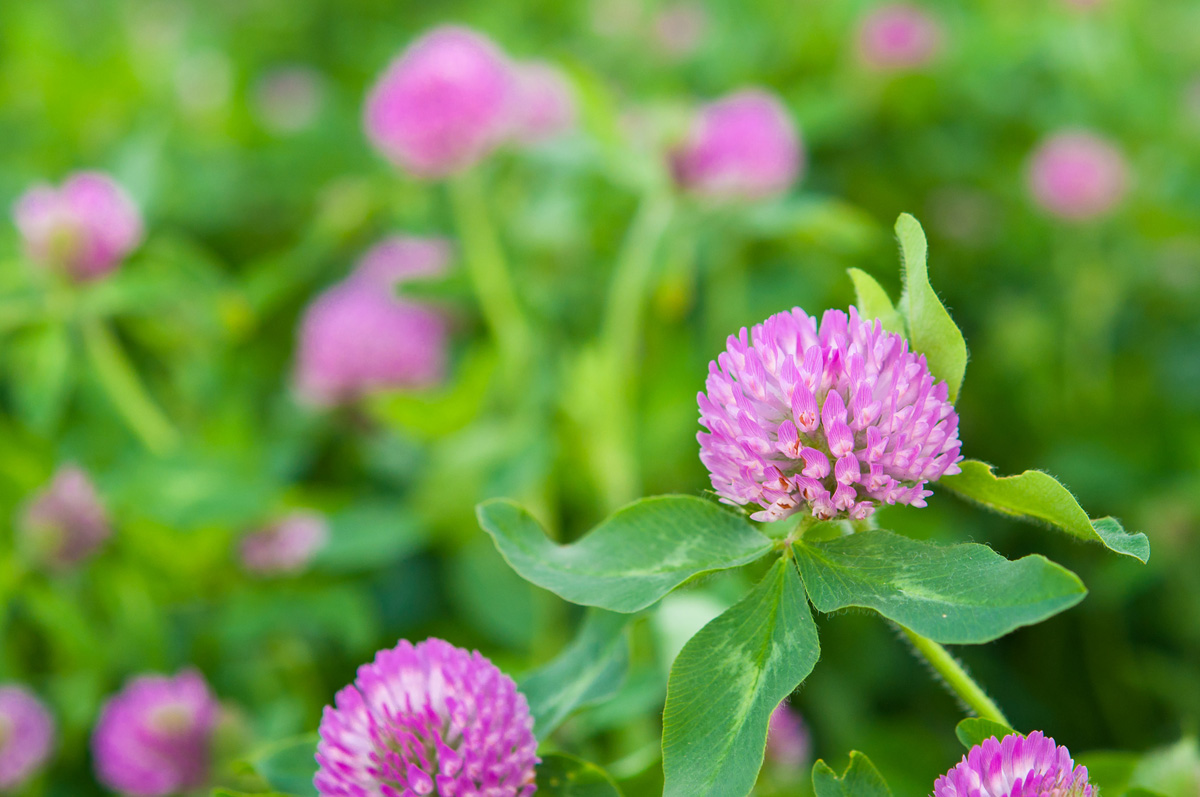
Red clover and its effects
- it is traditionally used to help women bring their hormone levels into balance and is said to be especially welcome with the unpleasant signs of menopause such as hot flushes, perspiration and changes of mood
- it is traditionally reached for to ease menstrual cramps
- it is said to have a gentle influence on the nervous system – a kind companion in times of low mood, worry and swings of mood
- it is traditionally said to help you fall asleep more easily and improve the quality of your sleep
- it is said to help release long-held tension
- it is traditionally used to make coughing up easier and to loosen mucus
- it is traditionally appreciated with diarrhoea and bloating
- it is traditionally said to help soothe an uneasy stomach
- it is traditionally said to cleanse the blood of unwanted substances and to support the immune system
Red clover and skin care
Red clover is valued for its potential to support women's health, especially in easing the signs of menopause and PMS. Clover is also rich in isoflavones, phytoestrogens and other bioactive compounds. It is traditionally said to help regulate hormonal balance, soften hot flushes and ease menstrual discomfort. Clover is also valued for its soothing and blood-cleansing qualities, thanks to which it is traditionally seen as supportive of overall wellbeing. For centuries red clover has traditionally been used in folk medicine, among other things for breathing and digestive difficulties and in skincare. Its kind qualities have earned it an important place in traditional herbal practices all over the world.
Thanks to its traditionally valued cleansing and antiseptic qualities, red clover and a decoction made from it are traditionally used with:
- irritated and sensitive skin
- weeping wounds
- insect bites
- flaky and uneven-looking skin
- mouth ulcers and various irritations
Red clover tincture
Red clover tinctures are made from its flowers and leaves. It is a strong concentrate of clover that offers a simple and quick way of taking it. Just a few drops of red clover tincture a day are enough to give you a concentrated form of its kind compounds to support hormonal balance, ease the symptoms of menopause and support overall vitality. Care for your overall wellbeing with red clover tincture today.
Red clover – frequently asked questions
Can red clover be used every day?
Red clover has been widely used in traditional herbalism for generations. It appears in teas, tinctures and various other preparations. Many herbalists suggest that it can be woven into a daily routine, but as with every herb it is important to use it in moderation and to choose high-quality sources. It is always good to consult a specialist and to follow the instructions of the maker of the particular preparation.
Herbs similar to red clover
Red clover is often compared with the stinging nettle or raspberry leaf, because these herbs likewise have a long history of traditional use. Red clover, however, is unique thanks to its striking pink flowers and its ability to flourish in a wide range of climates. Its versatility and its long-standing reputation in herbal traditions make it one of the most beloved herbs.
What is the best way to use red clover?
Red clover can be prepared in several ways. Traditionally it is taken as a tea, a tincture or an infusion. Some people prefer tinctures for their concentrated qualities, while others use the dried flowers for a gentler effect. Clover is also commonly part of various herbal blends.
Can red clover be combined with other herbs?
Red clover is often blended with chamomile, dandelion and burdock root. Many herbalists pair it with complementary plants to create balanced herbal preparations. It is especially beloved in herbal teas and tinctures.
Little curiosities about red clover
- Red clover belongs to the legume family, which makes it a relative of peas and beans.
- The flowers of red clover are edible and have been used for centuries in salads, teas and syrups.
- In agriculture clover is much loved, because its deep roots help enrich the soil with nitrogen.
- Red clover is a favourite among pollinators and its nectar-rich flowers attract bees and butterflies.
- In folk tradition red clover was considered a symbol of luck and protection.
- Clover is highly adaptable and grows in various settings, from meadows to mountain slopes.