
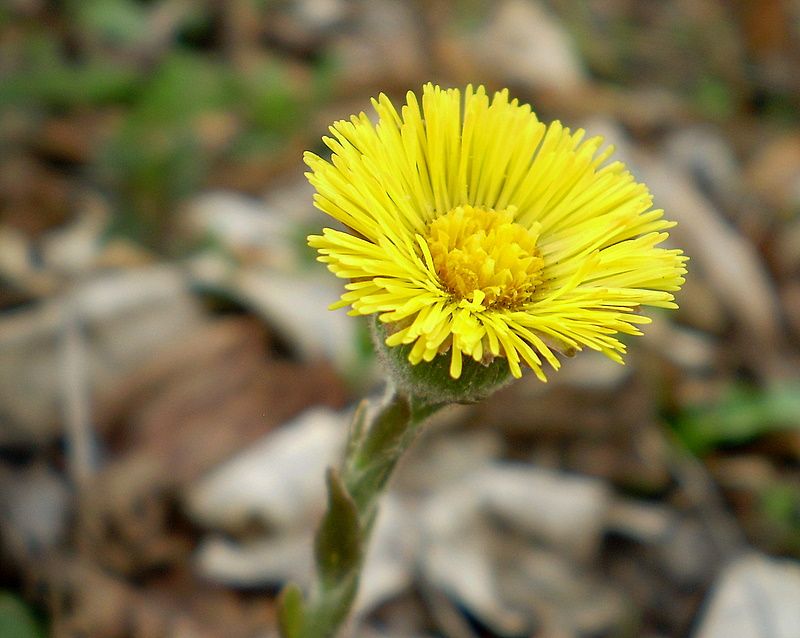
Coltsfoot, or Tussilago farfara in Latin, is a distinctive herb with a look all of its own and a long history in herbal traditions. You will recognise it by its bright yellow flowers, which appear before its broad, hoof-shaped leaves. It arrives early in spring along riverbanks, by paths and in damp open places.
Coltsfoot and its traditional uses
- coltsfoot has traditionally been used as a softening, mucilage-forming and secretolytic herb for irritation of the upper airways
- with a chesty cough
- it has traditionally been used with stomach and intestinal irritation
- with a poor appetite
- with concerns about blood pressure and circulatory health
- with inflamed veins and skin complaints
- with surface sores and burn wounds
- airway complaints, occasional coughs and irritated mucous membranes of the upper airways
- digestive troubles (it is said to support digestion)
- it is said to support metabolism
- slow-healing wounds, burns, skin troubles
- swelling after insect bites
- occasional joint discomfort
- it is said to support immunity
- it is said to ease muscle aches (thanks to choline)
- inflamed veins
- support for gum health (as a gargle)
Coltsfoot and the airways
One of the traditional uses most often linked with coltsfoot is airway comfort. It has long been reached for to soothe a cough and irritation in the airways. Its leaves and flowers contain compounds thought to have expectorant qualities, helping to loosen mucus and make breathing feel easier. Beyond the airways, coltsfoot is also valued for its potential to care for the skin. It is said to calm irritation and support a healthy-looking complexion, which makes it a wonderfully versatile herb.
Coltsfoot tincture
Coltsfoot was also used in the past for its diuretic qualities. This is said to support kidney health and help the body release excess fluid. Herbalists and everyone who loves herbal remedies know coltsfoot very well. A much-loved way of enjoying this herb is in tinctures — gentle, potent concentrates. Coltsfoot tincture concentrates its beneficial compounds and offers a convenient way to welcome all it has to give.
Coltsfoot — frequently asked questions
Can coltsfoot be used every day?
Coltsfoot has been a cornerstone of herbal tradition for centuries, yet it is good to use it in moderation. Some specialists caution against long-term use because of the pyrrolizidine alkaloids naturally present in the plant. Many herbalists suggest short-term use, or choose processed forms of coltsfoot in which these compounds are reduced.
How does coltsfoot compare with similar herbs?
Mullein, known for its soothing qualities, is often mentioned alongside coltsfoot. What makes coltsfoot unique is its early spring flowering, and the fact that both its leaves and its flowers are used. Unlike some herbs that focus on a single concern, coltsfoot is treasured across several herbal traditions for its versatility.
What is the loveliest way to use coltsfoot?
Coltsfoot is used in many different ways. It is made into teas, tinctures and syrups, and it is even applied locally. Dried flowers and leaves are often steeped as an infusion, while tinctures offer a stronger, more concentrated alternative. The way you use it depends very much on personal preference and on what you have in mind.
Can coltsfoot be blended with other herbs?
Of course it can. Coltsfoot is often combined with thyme, liquorice root or elder to create a lovely herbal blend. It has traditionally been paired with other herbs to make balanced recipes with all-round benefits.
Coltsfoot — little curiosities
- The English name "Coltsfoot" comes from the hoof-shaped leaves that appear once the yellow flowers have faded.
- Unlike most plants, coltsfoot blooms before its leaves grow, a rare and rather charming botanical trait.
- In some regions coltsfoot was once smoked as a herbal alternative to tobacco.
- Medieval apothecaries held it in such high esteem that they used its symbol to mark pharmacies and herb shops.
- Coltsfoot spreads both by seed and by rhizomes, which lets it thrive in a variety of conditions.
- Its Latin name *Tussilago* comes from „tussis“, meaning cough, reflecting its long-standing place in herbal traditions.