
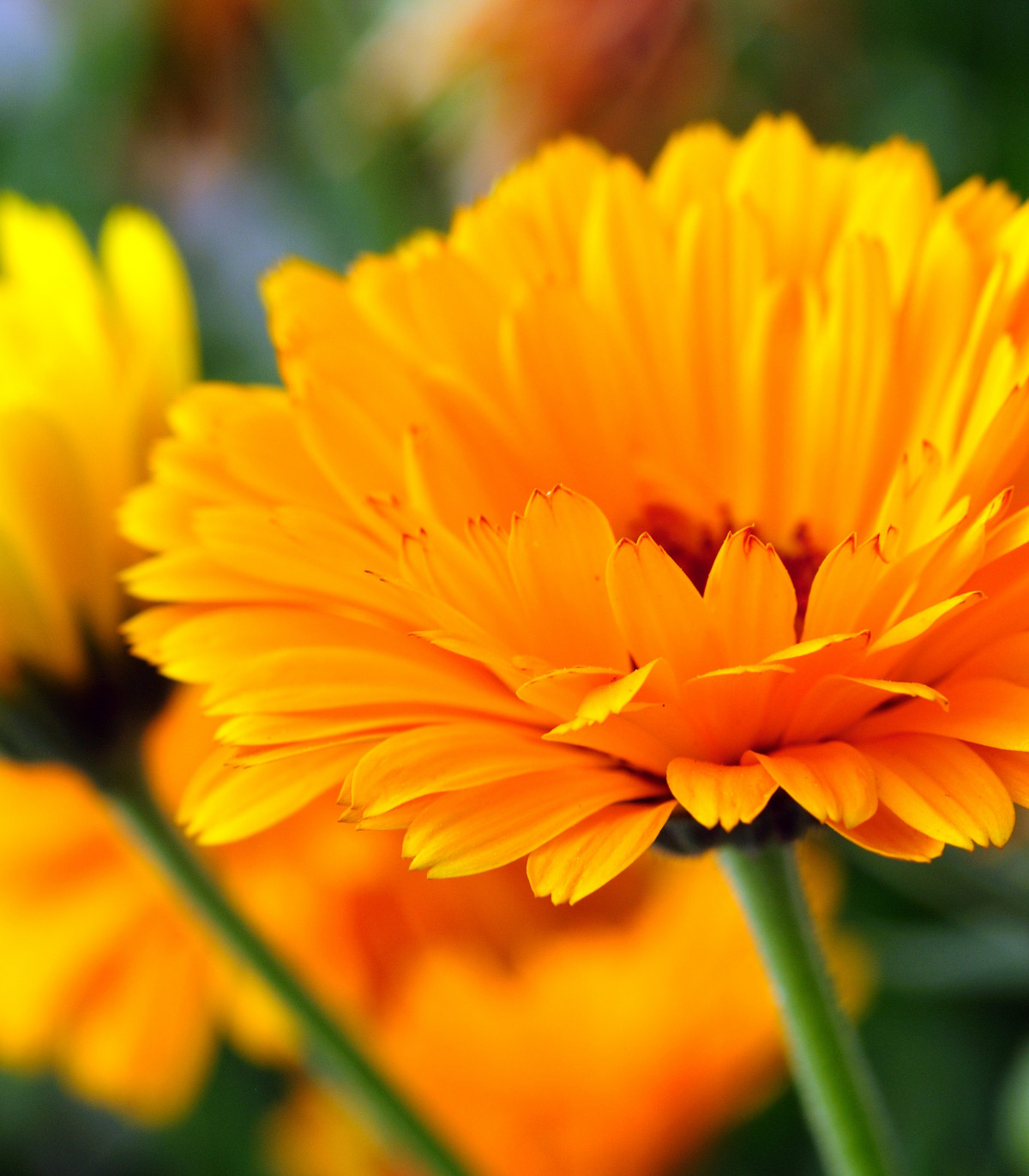
Calendula officinalis in traditional use
- traditionally regarded as a blood-cleansing herb
- traditionally used to support the skin after minor wounds, and after a tooth extraction
- calendula ointment has traditionally been used to soothe the skin after burns and frostbite
- traditionally used for fungal issues on the feet
- calendula tincture has traditionally been applied to bruises, strained tendons and swellings
- fresh juice pressed from calendula is said to soften age spots
- the tea is said to have a beneficial effect on digestion and to contribute to a feeling of comfort in the abdomen
- traditionally used in cases of diarrhoea
- traditionally used to support the body and the lymphatic system in detoxifying
- traditionally said to have a calming, settling effect on the nervous system
- traditionally used to ease menstrual cramps
- traditionally reached for during fevers and to help loosen mucus
- traditionally used for cold sores
- traditionally used to ease bloating
- traditionally used to ease rheumatic pain, as well as headaches and migraines
- traditionally used for haemorrhoids
- traditionally associated with supporting kidney function
- traditionally associated with supporting healthy blood pressure
Calendula and the health of your skin
One of the best-known qualities of calendula is the way it supports the skin. This herb has soothing, calming properties, which is why it is often used to support the natural healing of minor skin irritations, small cuts or grazes. There are many cosmetic and pharmacy products containing calendula. Its traditional repertoire, however, reaches into many other areas as well, such as haemorrhoids, bloating and much more.Calendula tincture
Calendula tincture is sought after for its broad traditional potential. Extracted from Calendula officinalis, the tincture concentrates its beneficial compounds and offers a quick way to take it. In our e-shop you can order calendula tincture today. We guarantee fast delivery straight to your door and you can also rely on the highest tincture quality. If you have any questions, do get in touch and we will gladly answer them.
Calendula officinalis - frequently asked questions
Can calendula be taken every day?
Calendula has long been a cornerstone of herbal traditions. It is widely used in teas, tinctures and topical applications, and many people welcome it into their daily routine. As with any herb, it is important to choose high-quality sources and to follow the manufacturer's recommended instructions for use.
Herbs similar to calendula
Calendula is often compared with chamomile or ribwort plantain, as these herbs have traditionally been used for similar purposes. Calendula stands out, though, for its orange flowers and its versatility in both internal and external use. It has long been treasured in traditional herbalism, which makes it one of the most widely used plant ingredients of all.
What is the best way to use calendula?
Calendula can be prepared in several ways. Traditionally it is used in infusions, tinctures, ointments and creams. Herbalists often favour tinctures for a more concentrated extract, while infusions offer a gentle, soothing alternative. Oils and creams containing calendula are also common in natural cosmetics.
Can calendula be combined with other herbs?
Yes! Calendula officinalis sits well alongside lavender, chamomile or yarrow. It is often blended with other herbs in teas, natural cosmetics and herbal preparations. Many herbalists use calendula together with other flowers and leaves to create beautifully balanced preparations.
Calendula officinalis - did you know
- Calendula is often called the "herb of the sun" for its radiant flowers, which follow the sun throughout the day.
- It has been used since the days of ancient Rome, where it was valued for its many uses.
- In medieval Europe calendula petals were commonly added to soups and stews, which gave rise to the nickname "pot marigold".
- The flowers close at night and open again in the morning, earning the plant a reputation as a natural weather forecaster.
- Calendula is widely used as a natural dye, giving yellow and orange pigments for fabrics and cosmetics.
- The plant is known for attracting helpful pollinators, which makes it a favourite in organic gardening.