
Angelica contains terpenes, essential oils, bitter compounds, tannins, angelicin and other substances.
Positive effects:
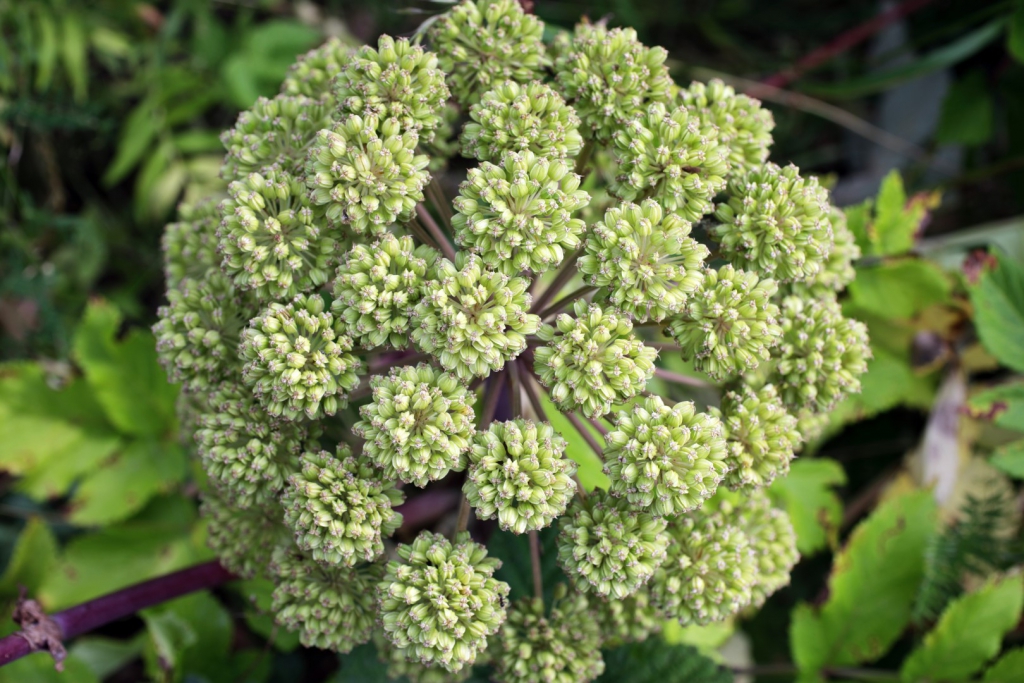
Angelica, in Latin Angelica archangelica, is a tall biennial herb originating in northern Europe and Asia. It is distinguished by large stems, broad toothed leaves and clusters of small white flowers. It grows in moist soils and is often found along rivers, marshes and damp meadows.
Angelica and its effects
Angelica contains terpenes, essential oils, bitter compounds, tannins, angelicin and other substances.
- acts as a diuretic
- is a natural cleanser of the blood
- supports perspiration
- is effective with a cough, as it eases expectoration
- supports digestion, gently improves the peristalsis of the intestines and eases flatulence
- brings relief with migraine
- has analgesic effects
- supports the work of the metabolism and the appetite
- acts on the central nervous system as a sedative (calming)
Angelica supports digestion
Already in the past, angelica was revered for its healing properties and was widely used in medieval European medicine. Its name “angelica” is said to come from a legend telling that the archangel Michael revealed the healing power of the plant during an epidemic of plague. Since then the herb has been associated with protection and healing, and was often used to ward off illness and evil spirits. The benefits of angelica are varied. It is known for the qualities with which it supports digestion, helping to ease bloating and a loss of appetite. The plant also has anti-inflammatory and antispasmodic effects, thanks to which it is helpful in easing muscle cramps and pain in the joints. Beyond that, it is used to improve the circulation of the blood, to support the health of the airways, and it acts as a mild sedative to ease stress and anxiety.
Angelica tincture
A popular form of taking angelica is through tinctures. Angelica tinctures are strongly concentrated extracts made by steeping the roots of the plant, and sometimes also its seeds or stems or flowers, in alcohol or another solvent. This method of extraction captures the active compounds of the herb, ensuring an effective and easy-to-use preparation. Angelica tincture is commonly used to support the health of digestion, to ease respiratory concerns and to support relaxation.