
If we had to choose one single step in skincare on which the health of your skin stands or falls, it would clearly be make-up removal and cleansing. You can own the most luxurious serums and the most precious natural creams, yet if you apply them to insufficiently cleansed skin, your investment and your effort literally come to nothing.
The paradox is that although we wash our face every day, it is precisely with make-up removal that most women make the most fundamental mistakes. The result is clogged pores, a disrupted skin barrier, premature ageing, dehydration or the appearance of acne. So today let us look together at why oil cleansing is the most natural and most effective way to free the skin of impurities, and how to bring this process to complete perfection.

The myth about oily skin: why there is no need to fear oil
Many women, especially those with combination and oily skin, freeze at the very word oil. For years we were taught that oil clogs the pores and causes breakouts. The commercial cosmetics industry convinced us that clean skin must, to put it simply, squeak after washing and be perfectly degreased. Yet the opposite is true.
Chemistry cannot be argued with – like dissolves like. To begin with, it is good to know that our skin naturally produces sebum. Decorative cosmetics, make-up, rich creams with a protective SPF factor and settled impurities from smog are mostly soluble in fats, not in water. If you try to wash them off with water alone or with aggressive foaming gels full of sulphates, you will remove only the surface dust from your skin while drying it out critically.
A quality natural oil is able to gather up excess sebum, hardened impurities in the pores and stubborn make-up without disturbing the protective hydrolipid film of your skin.
The magic called hydrophilic oil
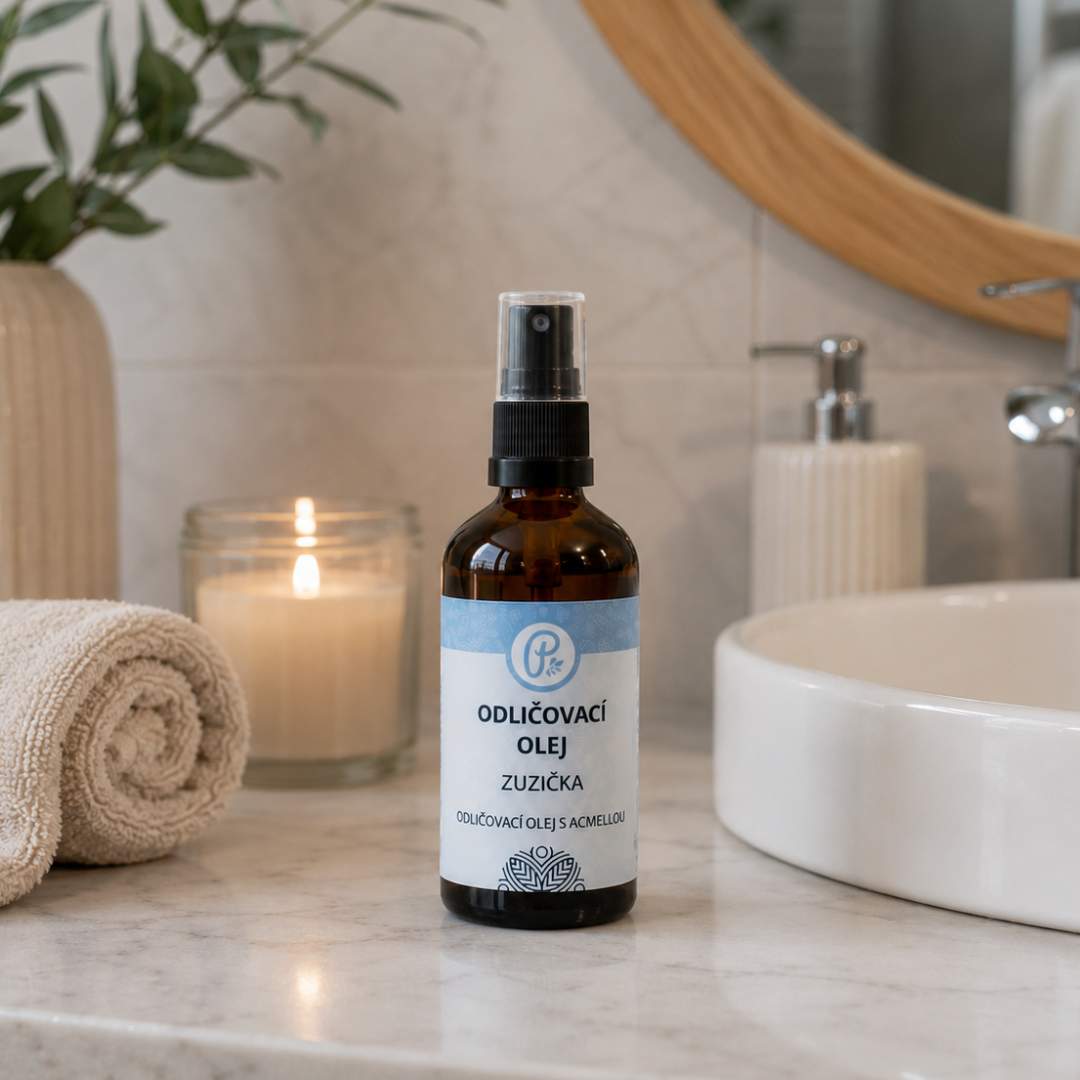
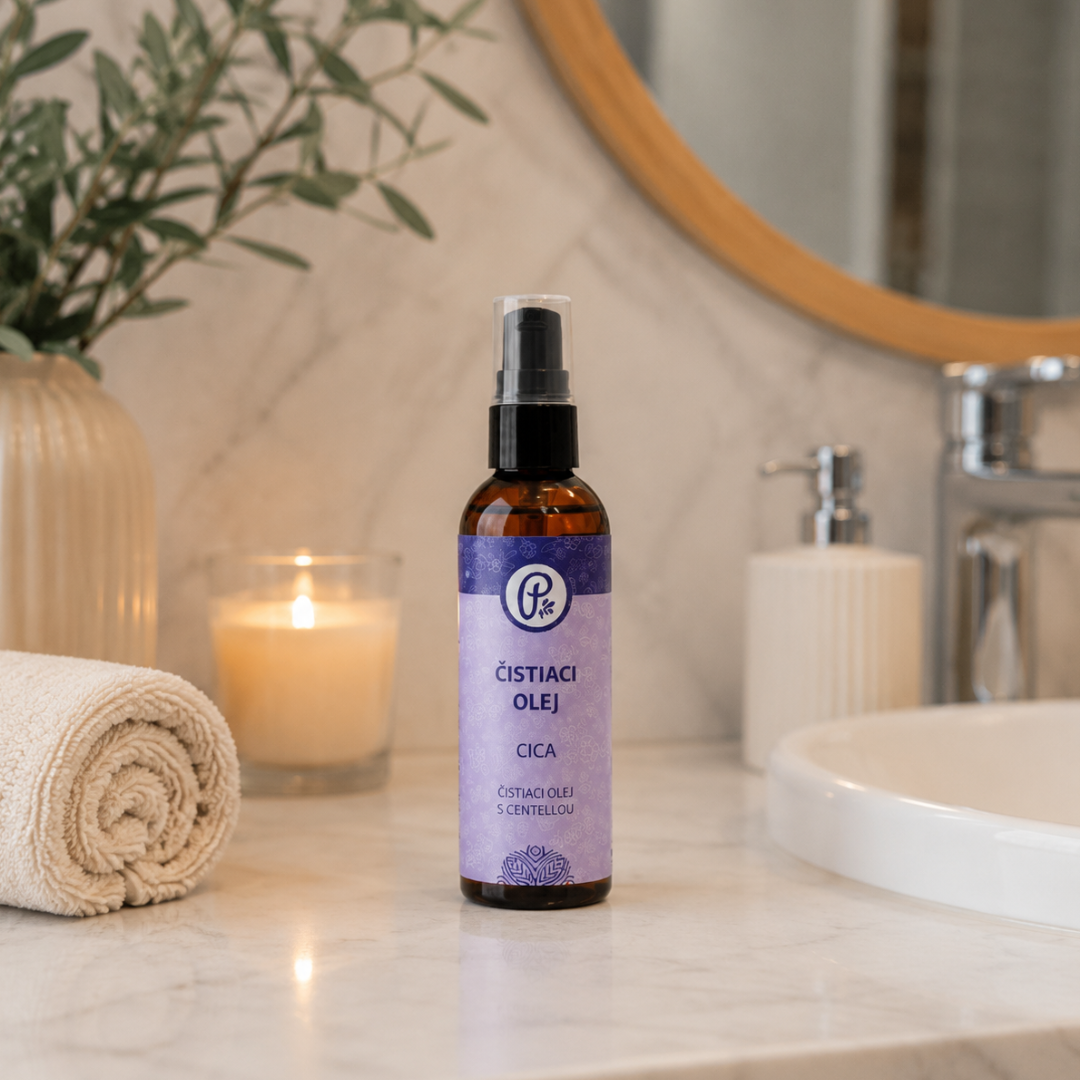
The greatest fear of oil cleansing comes from the idea that a heavy, greasy, airtight coating will be left on your face and will not wash off. And this is exactly where the hero of modern natural cosmetics steps in – the hydrophilic oil.
The word hydrophilic literally means water-loving. It is a masterfully blended mixture of pure natural oils to which a gentle, skin-friendly plant emulsifier has been added. When you apply a hydrophilic oil to a dry face, it behaves like a classic oil – it dissolves all make-up and impurities. But as soon as you moisten your hands with water and begin to massage your face, the emulsifier triggers an immediate reaction. On contact with water the oil turns into a soft, white milky emulsion. This emulsion binds all the dissolved impurities and can be washed off the face very simply with plain water. The result? Perfectly clean, supple and nourished skin without a single trace of an oily film.
The most common cleansing mistakes that harm our skin
As specialists in natural care, we meet women every day who are not sure how to approach their own skin. Here are the biggest sins we commit in the bathroom:
- Aggressive scrubbing with cotton pads
A cotton pad soaked in micellar water, with which you rub the eye area and cheeks with force, causes micro-traumas, weakens the elasticity of the skin and contributes to the forming of wrinkles and to redness.
- Not rinsing off micellar water
If you do use micellar water, you need to rinse it off. Micelles are surface-active substances (surfactants) that work like a detergent. If you leave them on the skin, they disturb its protective barrier all night long.
- Relying on cleansing wipes
They only smear impurities and make-up across the face, they do not remove them deeply, and they often contain irritating preservatives.
- Choosing the wrong water temperature
Ice-cold water will not lift impurities and oils away. Water that is too hot dries the skin out extremely, irritates it and may contribute to the appearance of broken capillaries. Lukewarm water is always the ideal choice.
- Not enough time (the 60-second rule)
Do you cleanse for 15 seconds? For the oil to dissolve all the layers of make-up and reach into the pores, it needs time and your gentle massage – ideally one whole minute.
Mineral oils vs. plant-based hydrophilic oils
When you decide on a cleansing oil, read the composition (INCI). There is an enormous difference on the market between cheap synthetic products and honest natural hydrophilic oils.
- Mineral oils (Mineral Oil, Paraffinum Liquidum): These are by-products of petroleum processing and often form the base of ordinary commercial cosmetics. On the skin they create an impermeable film, they "suffocate" the skin and contain no vitamins. For many women, mineral make-up removers are the main trigger of acne and clogged pores.
- Pure plant oils in a hydrophilic base (for example jojoba, almond, rosehip, grapeseed): Their structure is naturally similar to our own sebum. The skin recognises them at once and can make use of their precious fatty acids, vitamins and antioxidants. A quality hydrophilic oil is built exclusively on these pure plant oils, with only a gentle emulsifier added so that on contact with water they turn into a soft, rinsable emulsion.
Choose the oil that suits your skin type exactly
In natural cosmetics we follow the comedogenic scale (from 0 to 5), which shows how likely a given oil is to clog the pores. Zero means non-comedogenic (safe for acne-prone skin), five means highly comedogenic.
- For oily and acne-prone skin: Look for oils with a value of 0 to 1. Hemp oil, grapeseed oil or jojoba oil are wonderful. These oils are light, absorb quickly and can even help balance the excessive production of your own sebum.
- For dry, mature and sensitive skin: You can allow yourself richer, more nourishing oils with a value of 2 to 3, such as almond, apricot, rosehip or precious argan oil. They will not only cleanse the skin, but immediately give it back its lost elasticity and soothe any feeling of tightness.
The skin microbiome and the protective barrier
Our skin is not just a dead surface, it is a living ecosystem protected by a hydrolipid film. If you wash your face with aggressive foaming gels with a high pH (some of them work literally like a detergent), you destroy this fragile ecosystem completely. The skin is left bare, its pH becomes alkaline and it turns into an open gateway for the bacteria connected with acne, eczema and dermatitis. Cleansing with hydrophilic plant oils, on the contrary, builds this protective mantle, does not disturb the pH of the skin and keeps its natural microflora in balance.
How to cleanse with a hydrophilic oil?
Cleansing should be a lovely evening ritual, in which you wash away the heaviness of the whole day. Here is the exact guide on how to get the most out of it:
- Applying to dry skin (the most important step!): Always apply the oil to dry palms and then to a dry, unmoistened face. If you were to wet your face beforehand, the water would start the emulsification too early and the oil would not have time to dissolve the make-up.
- Massage and dissolving (the golden 60-second rule): With circular movements, massage your face from the neck across the cheeks up to the forehead (about 60 seconds). Do not forget the eye area – the natural composition does not irritate the eyes and gently dissolves mascara as well.
- The magic of emulsification: Moisten your palms with lukewarm water and continue the massage. Watch how the oil on your face turns into a white emulsion.
- Rinsing off: Simply wash everything away with lukewarm water. For a perfect spa experience you can help yourself with a small towel soaked in warm water.
The skin purging phenomenon: why can the skin get worse at the beginning?
One very important piece of information for beginners: when you move from chemical micellar waters to honest oil cleansing, it can happen that in the first days or even two weeks your skin breaks out a little. Do not be alarmed and above all do not give up.
This process is professionally called skin purging. Plant oils begin to reach deep into the pores and draw to the surface all the settled toxins and hardened sebum that have been blocked there for months. Give your skin at least 3 to 4 weeks (one whole cycle of skin cell renewal) to get used to the new, healthy routine.
Double cleansing
If you live in a dusty city environment or wear make-up and SPF every day, double cleansing is here for perfectly clean skin. It is an absolute blessing for the skin microbiome and the protective barrier of the skin.
Phase 1: Oil-based cleansing (removal)
We have just described this step in detail. Your hydrophilic oil loosens and lifts from the surface of the skin everything that is fat-based (make-up, sebum, filters from sun creams).
Phase 2: Water-based cleansing (finishing the pores)
Once the oil phase is rinsed away, a gentle cleansing gel or water-based foam comes next. Since the coarse impurities are gone, this gel can reach the skin directly and deeply cleanse the pores themselves of the remains of perspiration and dead cells. Always choose gentle natural gels with a neutral pH.
Why is this way of cleansing so important for your routine?
Only perfectly cleansed skin works like a sponge that can absorb the active substances from your precious serums and creams. If you apply active ingredients to poorly cleansed skin, they will simply sit on the surface and your skin will remain undernourished.
Mind the right layering after cleansing!
Clean skin is ready to be nourished, but this has its uncompromising rules. Always apply light water-based serums first (hydrating toners or hyaluronic serums, for example), so that they reach deep into the cells. Only afterwards, as the very last step, use oil serums or richer nourishing creams. The oil component at the end works as an imaginary seal that locks all the delivered moisture into the skin. If you were to turn this order around and put an oil serum before a water-based product, you would create a shield on the skin and the hydration would never get inside.
A return to what is natural is worth it. Setting aside rough cotton pads and aggressive soaps in exchange for a silky hydrophilic oil is the loveliest decision you can make for the health and radiance of your skin.