
You wake up in the morning, look in the mirror and suddenly there it is – a red, inflamed spot that wasn't there yesterday. You are not overdoing the sweets, you take care of your skin, you even cleanse in two steps. So what is going on? Perhaps your skin is simply whispering what you don't want to admit to yourself – that you are under stress. Acne isn't always only about impurities or hormonal shifts. Sometimes it is the quiet cry of your psyche.
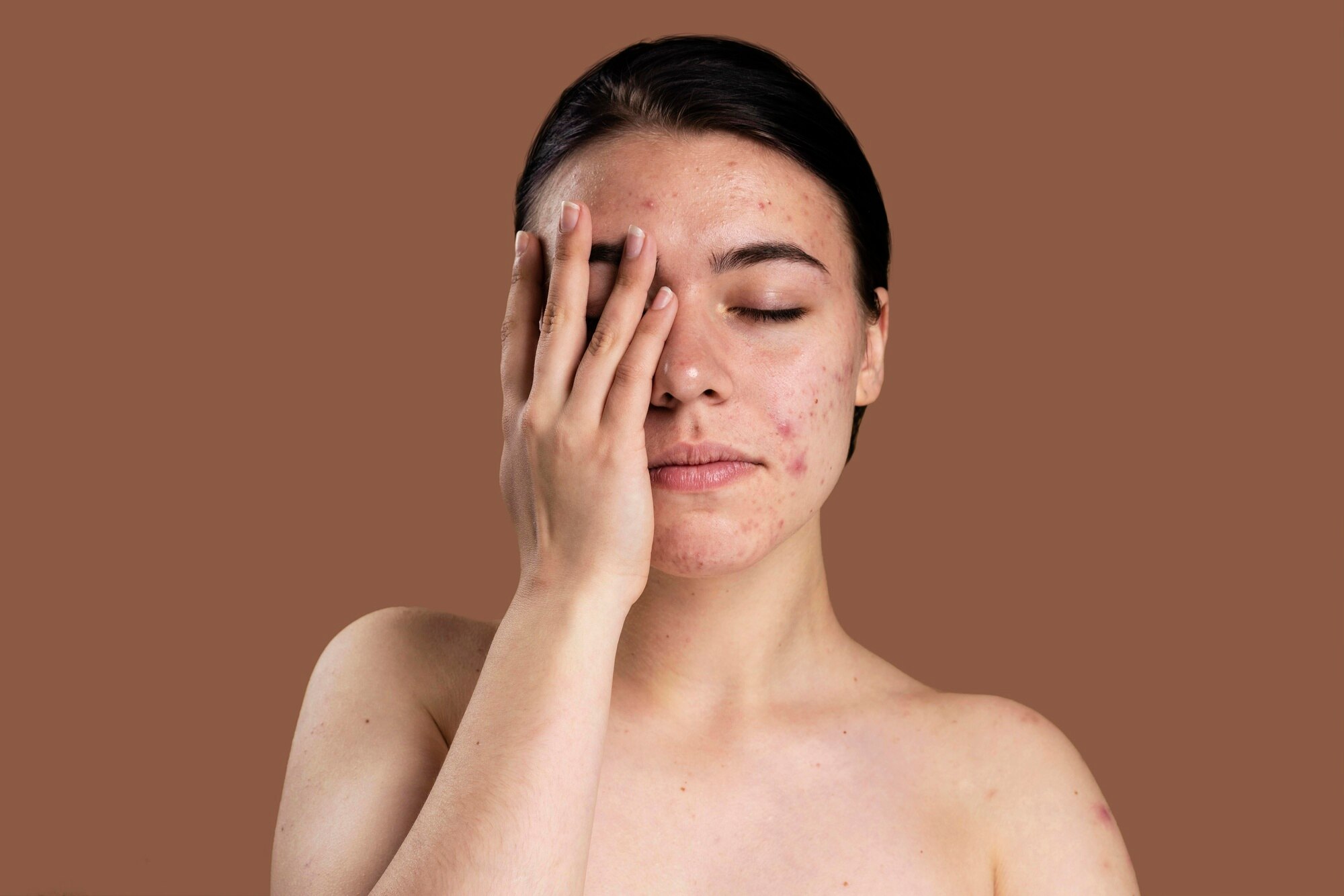
Stress and skin: what is the real connection between them?
Our skin is connected to the nervous system far more than we realise. When we are under stress, the body increases its production of cortisol – the stress hormone. And that has several unpleasant effects on the skin:
- It increases sebum production. Excess sebum clogs the pores and creates the ideal environment for acne to appear.
- It slows down skin renewal. Wounds heal more slowly, which means acne lingers for longer.
- It worsens inflammatory processes. Stress literally "stirs up" inflammation – and acne is an inflammatory concern.
- It affects the immune system. The body has less energy left for dealing with the bacteria on the skin.
How do I recognise stress-related acne?
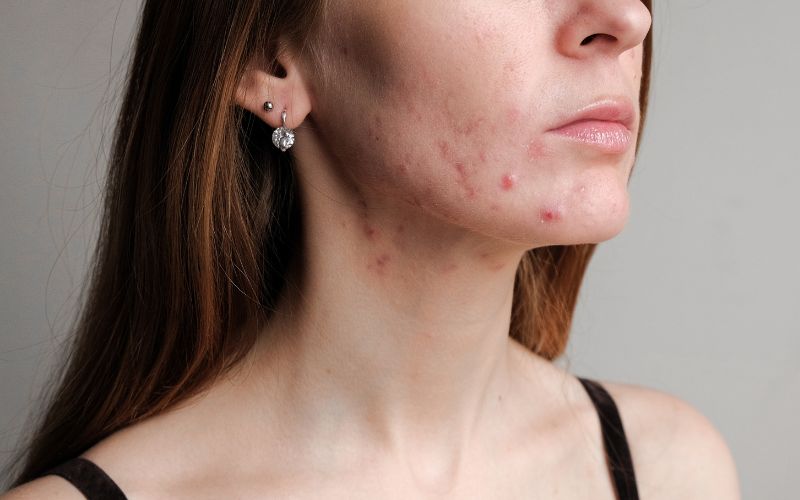
Stress-related acne usually appears suddenly and most often in these places:
- the lower part of the cheeks,
- the jawline and chin,
- the forehead.
It is often accompanied by redness, itching or sensitivity of the skin. It can appear even in women who have never had noticeable skin concerns before – simply because they have been living with tension for a long time.
How to bring it back into balance? Combine care for your skin with care for your mind.
1. Focus on soothing skin care
- Cleansing: Use gentle, alcohol-free cleansers, ideally with niacinamide, panthenol or hyaluronic acid.
- Soothing serums: Products with AHA/BHA acids, niacinamide or green tea, which help calm inflammation, are a lovely choice.
- Keep it simple: Less is sometimes more – too many products can irritate the skin even further.
- Hydration: Yes, oily and acne-prone skin needs hydration too – choose light, non-comedogenic moisturisers.
- Targeted local care: Zinc paste or tea tree oil, for example, can be a gentle help during flare-ups.
2. Soothe your stress – the key to lasting improvement
- Move your body, even if only for 15 minutes a day. Movement releases endorphins and lowers cortisol levels.
- Try breathing exercises. Just 5 minutes of deep breathing a day can do wonders for your mind.
- Treat yourself to a digital detox. Social media can raise your stress levels without you noticing.
- Plan some "time just for you". A book, music, the scent of your favourite essential oil – anything that brings you calm.
3. Support from within: nutrition and supplements
- Avoid inflammation triggers. Ease off on sugar and dairy, which can make inflammatory flare-ups worse.
- Add nourishing foods to your plate. Increase your intake of zinc, selenium, B-group vitamins and omega-3 fatty acids (linseed oil or fish, for example).
- Natural support for stress. Adaptogens such as ashwagandha or reishi are traditionally used to help cope with stress in a natural way.
OUR TIP: to calm your mind, slow down and truly relax, we recommend trying the oral spray with the precious reishi mushroom, reishi capsules or the Baikal skullcap tincture.

Little facts you may not have known:
- Skin remembers. If stress stays with you for a long time, the skin changes – its renewal slows down, elasticity declines and the risk of chronic inflammation rises.
- Examples from real life. Studies have shown that students during exam season had noticeably more inflammatory skin flare-ups than outside stressful periods.
- Stress plays a part in wrinkles too. Cortisol is not only the "culprit behind acne", but behind ageing as well. Long-term stress speeds up the appearance of wrinkles, pigmentation and a dull tone.
And what if the stress doesn't go away?
Sometimes we simply can't switch everything off at once – work, the household, children, responsibilities. But we can change the way we live with stress. Skin is often a reflection of our inner balance. Try to stop seeing acne as an enemy and begin to read it as a signal. As a gentle reminder that your body is asking for rest.
Your skin doesn't want to hurt you. It is only telling you something.
Skin care matters, but without inner balance not even the most expensive cream will work. Try listening to your skin. Don't judge it. Instead of resistance, try understanding. Because the loveliest skin isn't the one without a single flaw – it is the one in balance with what lives inside you.
Give yourself a moment just for you. Light a candle, apply a soothing mask, work a drop of lavender oil into your hair, take a breath. Your body is not your enemy – it is your home.
Kindness, patience and small everyday rituals can do more than it seems. Acne linked to stress is just one of the ways your body is telling you: "Pause. Take care of me. And above all – of yourself." Because skin has a soul too. And when you care for it with love, it suddenly glows differently – from within.