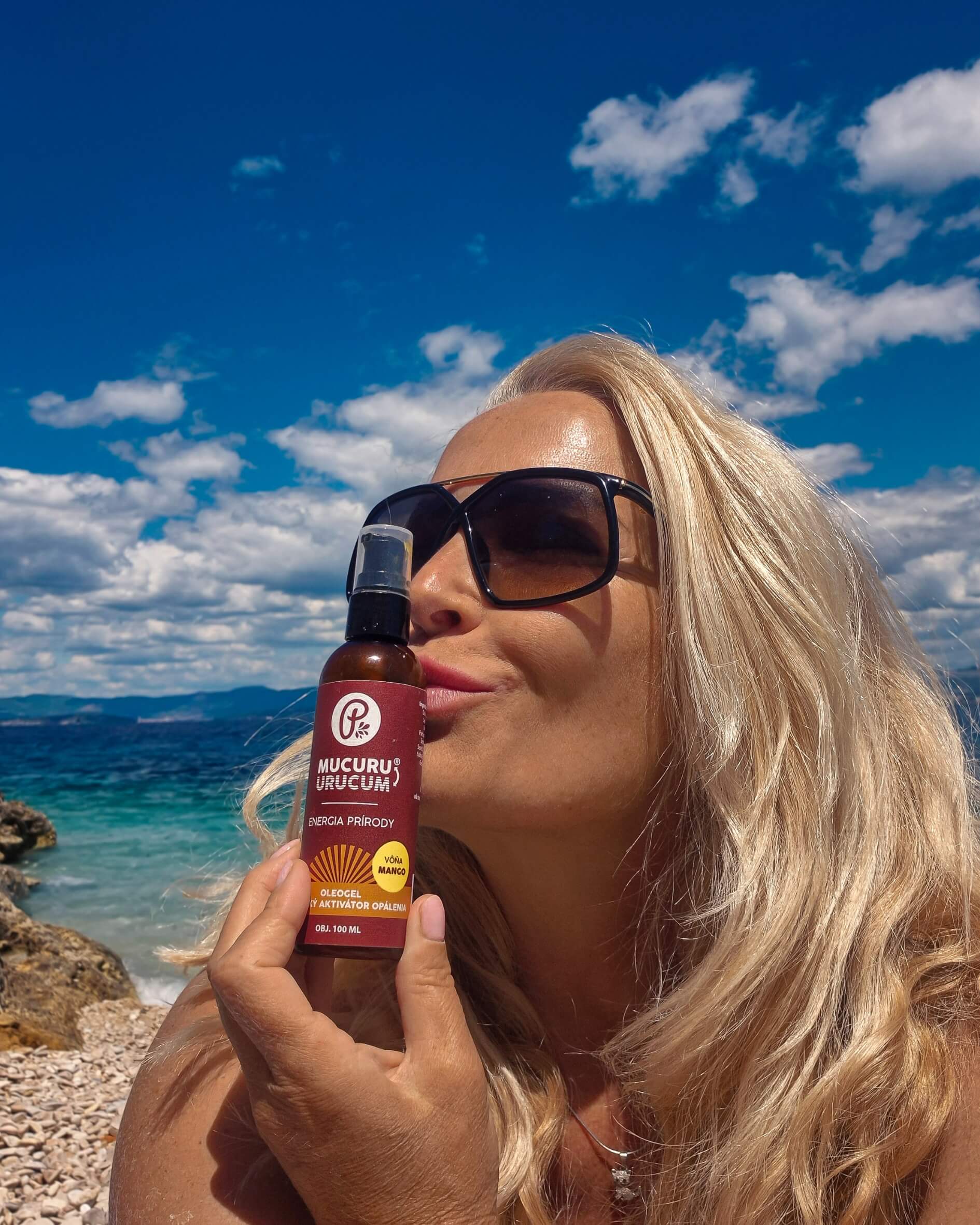
Sunbathing is an ordinary part of summer, yet most people still do not give it enough attention. Many rely on myths, make light of the risks connected with UV radiation or are unsure how to choose suitable protection. The result is often irritated skin, pigment spots, premature ageing and, in worse cases, more serious skin troubles. In this article you will find information on how to sunbathe safely, how melanin works, what science says about the influence of sunlight, and what role natural active substances play in protecting and supporting a healthy tan.
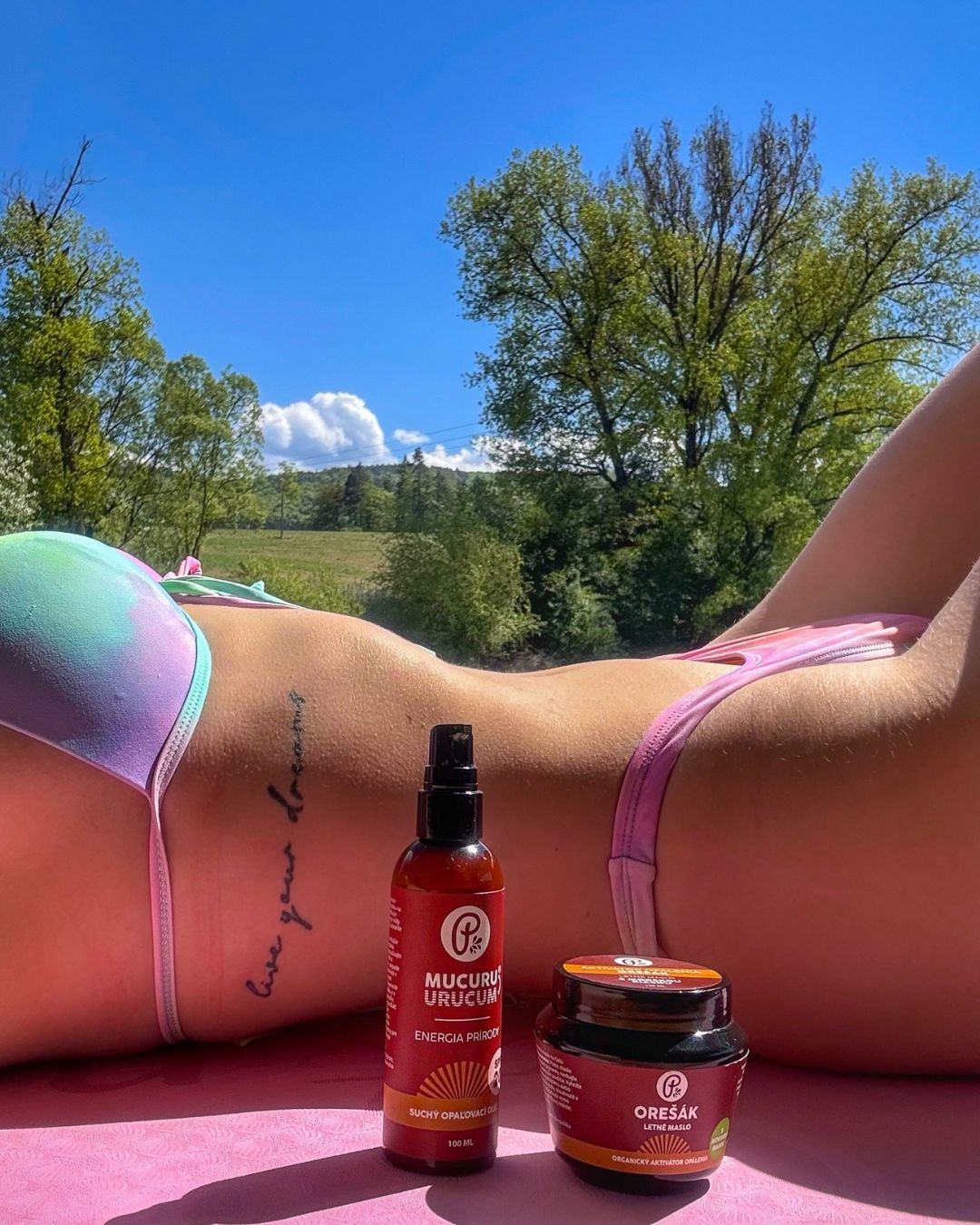
Why the sun both heals us and harms us
The sun is essential for life. It gives us warmth, regulates our biorhythms, touches the mind kindly and is the main source of vitamin D in the human body. At the same time, though: what is a remedy in a small amount can be harmful in a larger one. And with sunlight this is doubly true.
Too much exposure to the sun can cause not only acute burning, but also long-term damage to the skin, including premature ageing, pigment spots and, in the worst case, skin cancer. How is it possible that something as natural as the sun's rays can also have another face?
Ultraviolet radiation: invisible, yet strong
Part of the solar spectrum is also UV radiation (ultraviolet), which is responsible for most of the unwelcome effects on our skin. It divides into:
UVA (95 % of UV radiation) – it travels deep into the skin, all the way to the dermal layer. It does not bring on immediate redness the way UVB does, which is why people often underestimate it. Long-term exposure to UVA radiation, however, speeds up the ageing of the skin, increases the forming of fine lines, lowers the skin's suppleness and encourages the appearance of pigment spots.
UVB (5 % of UV radiation) – it acts mainly on the surface layers of the skin and is responsible for burning, redness and damage to the cells of the epidermis. It is also the main „trigger“ of vitamin D production, yet in excess it damages DNA and can lead to cancerous mutations.
Both of these parts of UV radiation bring about oxidative stress – an imbalance between free radicals and the skin's own defences. The consequence is damage to the DNA of the cells, a weakening of the skin's immunity and inflammatory processes, which may show themselves quietly at first, yet with the passing years leave noticeable traces.
The sun is not a bogeyman
To be fair, though – the sun is not our enemy. Short and responsible time in the sun's rays brings a whole range of benefits:
- Vitamin D production – key for immunity, for the health of the bones and for wellbeing of mind. A few minutes in the sun several times a week are enough for the body to make plenty of this vitamin – the rest is more safely topped up through food or supplements.
- Lifted spirits – sunlight stimulates the production of serotonin, the „hormone of good mood“, which helps to ease stress, tiredness and the symptoms of seasonal low mood.
- Support for the circadian rhythm – daylight regulates the inner biological clock, which influences sleep, energy levels and hormonal balance.
There is a limit
The foundation is to understand that the sun is not automatically harmful – what is harmful is its excessive and unaware use without protection. Many people underestimate the strength of the radiation, especially on cloudy days or during everyday activities such as a walk through town or sitting on a terrace. UV radiation, though, passes through clouds, glass and is active outside summer as well – which is why it is good to make daily skin protection a habit.
How much sun is „just right“
Experts recommend protecting yourself whenever the UV index is ≥ 3. Short (5 – 30 min) times in the sun three times a week are enough for a healthy adult to make vitamin D. The rest is more safely topped up through food or supplements. The World Health Organization recommends taking protective measures whenever the UV index reaches a value of 3 or more. In practice this means that even under a slightly cloudy sky in a Central European summer (UV ≈ 6 – 8) the skin can begin to redden within 10 – 15 minutes, while in winter (UV 1 – 2) ordinary clothing and a short time in daylight are enough.
When it is kinder to say no to the sun
People with phototype I, children under 3, pregnant women, patients after immunosuppressive treatment and everyone with a personal or family history of melanoma are advised to use photoprotection already at a UV index of ≥ 3 and to keep unprotected time to a minimum. A yearly dermatoscopic check of moles is the foundation of prevention. If you plan your time in the sun sensibly - that is, stay in the sun briefly and gradually, follow the UV index and top up vitamin D in winter - you will take the very best the sun has to offer.

Mineral vs. chemical filters: why we choose invisible zinc oxide
When someone says „sun cream“, most people automatically picture the classic rich emulsion with an SPF factor that can be bought in a drugstore. Few know, though, that there are two fundamentally different types of UV filter: chemical (organic) and mineral (physical, inorganic). The choice between them is not only a question of composition, but also of how the skin responds, of the influence on the environment and of personal preference.
How they work – chemical vs. mineral filters
Chemical filters (such as avobenzone, octinoxate, oxybenzone and others) work by absorbing UV radiation and turning it into heat, which is then released from the skin. Their effect only arrives about 20 minutes after application, which is why they need to be applied in advance. Some of them can travel into the skin, which in more sensitive people brings on irritation, redness or an allergic reaction.
Mineral filters (especially zinc oxide and titanium dioxide) work differently: they reflect and scatter UV radiation away from the skin like a mirror. These are naturally occurring minerals, which stay on the surface of the skin and work immediately after application – there is no need to wait.
The advantages of mineral filters – what the customer often does not suspect
- Gentle on the skin - mineral filters are hypoallergenic, which means they suit children, people with eczema or with rosacea. Zinc oxide also has a mildly soothing quality and is often used in preparations for nappy rash – that is how gentle it is on the skin.
- Immediate protection - unlike chemical filters, which need time to activate, mineral ones work right after application. They are therefore ideal for „quick trips“ into the sun, when there is no time to wait.
- Kindness to nature - some chemical filters are toxic to marine ecosystems, especially to corals (e.g. oxybenzone has already been banned in some countries). Mineral filters such as invisible zinc oxide are biodegradable and safe for the aquatic environment – which matters especially when using them while swimming in nature or at the sea.
- Stability and effectiveness - zinc oxide is photostable, which means that it does not break down or lose its effect when exposed to the sun. Many chemical filters do not have this quality – under UV radiation they degrade, which lowers their effectiveness and increases the risk of irritation.
The white film on the skin
Mineral filters were always known for leaving a white or grey cast on the skin – especially at higher SPF. Today it is different, though. Thanks to micronisation technology (making the particles smaller), modern zinc oxide is invisible yet still safe, because no nanoparticles that would travel deep into the skin are used. The result? A light, transparent film that can neither be felt nor seen – and all that without chemical ingredients.
When to reach for mineral filters?
- If you have sensitive skin, a tendency to redness, blemishes or eczema.
- If you are looking for a product suitable for children or babies.
- If you are ecologically minded and would like to protect aquatic ecosystems.
- If you prefer natural cosmetics without irritating substances.
- If your skin tends to become oily – zinc oxide can help to balance the sebum.
PANAKEIA offers you a range of sun oils and various activators
Dry sun oil MUCURU-URUCUM SPF 20 / sun oil SPF 30
- Invisible zinc oxide – a new-generation mineral filter that helps to shelter the skin from UVA and UVB radiation without white traces. It is gentle on the skin and on nature and holds the certifications Ecocert a COSMOS.
- URUCUM extract – a tropical plant rich in beta-carotene that naturally supports the tan, moisturises and helps to shelter from oxidative stress.
- Dunaliella Salina – a unique sea algae, a clinically tested source of beta-carotene, which improves the suppleness of the skin, softens it and reduces the appearance of fine lines and UV spots.
- Vitamin E – a strong antioxidant that helps to shelter the skin from the effects of the sun.
- Fractionated coconut oil – without colour, scent or an oily film. It absorbs quickly and leaves the skin soft and smooth.
- Suitable for the whole family - including children from 3 years. The composition is safe for all skin types – and at the same time gentle on the marine ecosystem.
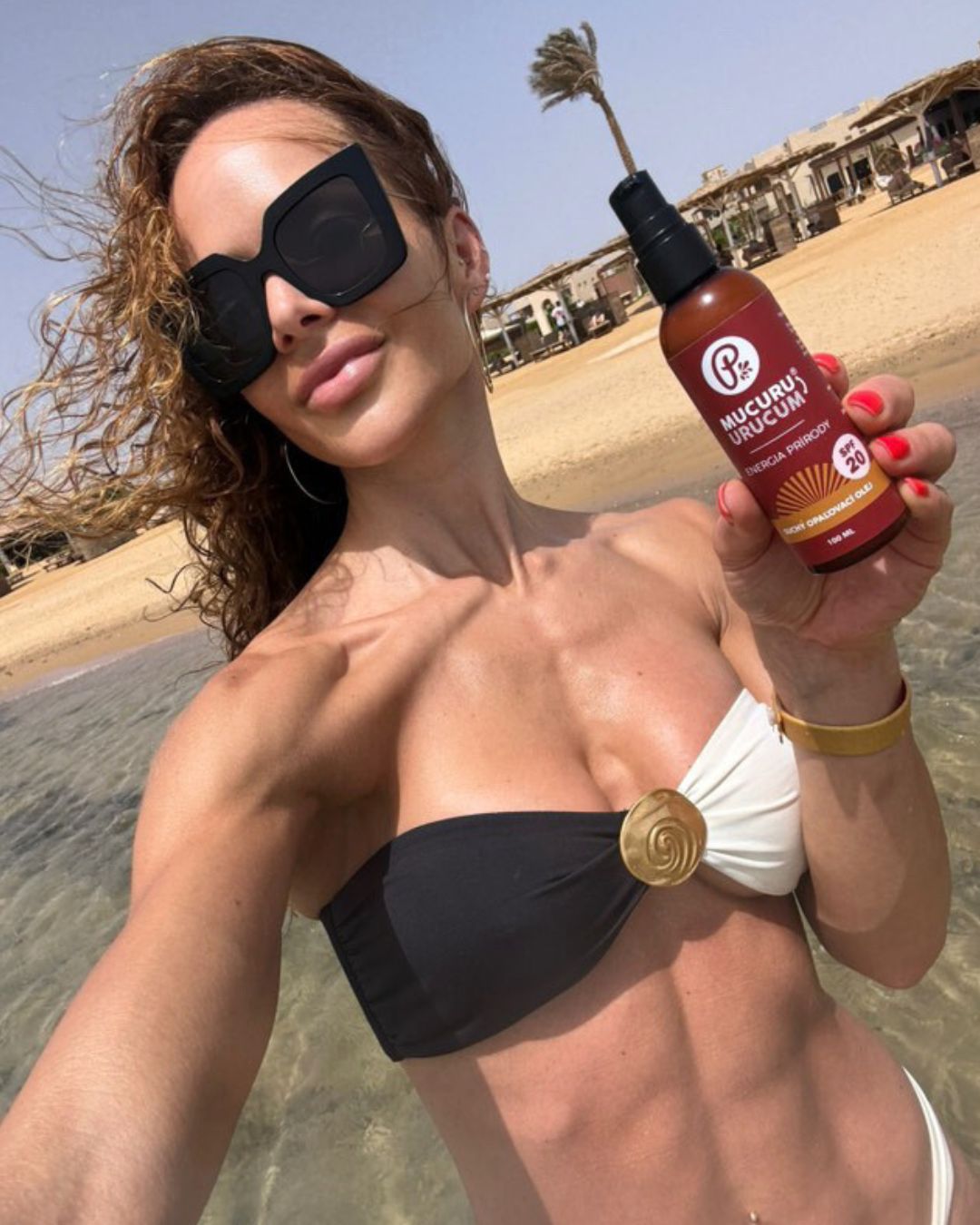
- Broad-spectrum UVA/UVB protection (SPF 30) thanks to ultra-fine, invisible zinc oxide – without white traces, ECOCERT & COSMOS certified.
- Support for a natural tan – URUCUM extract (rich in beta-carotene) + the sea algae Dunaliella Salinaencourage melanin, increase suppleness and reduce UV spots.
- Antioxidants and nourishment – natural vitamin E helps to shelter the cells, fractionated coconut oil absorbs quickly and leaves the skin non-greasy, soft and smooth.
- Suitable for the whole family - including children from 3 years. The formulation is moreover gentle both on the skin and on marine ecosystems.
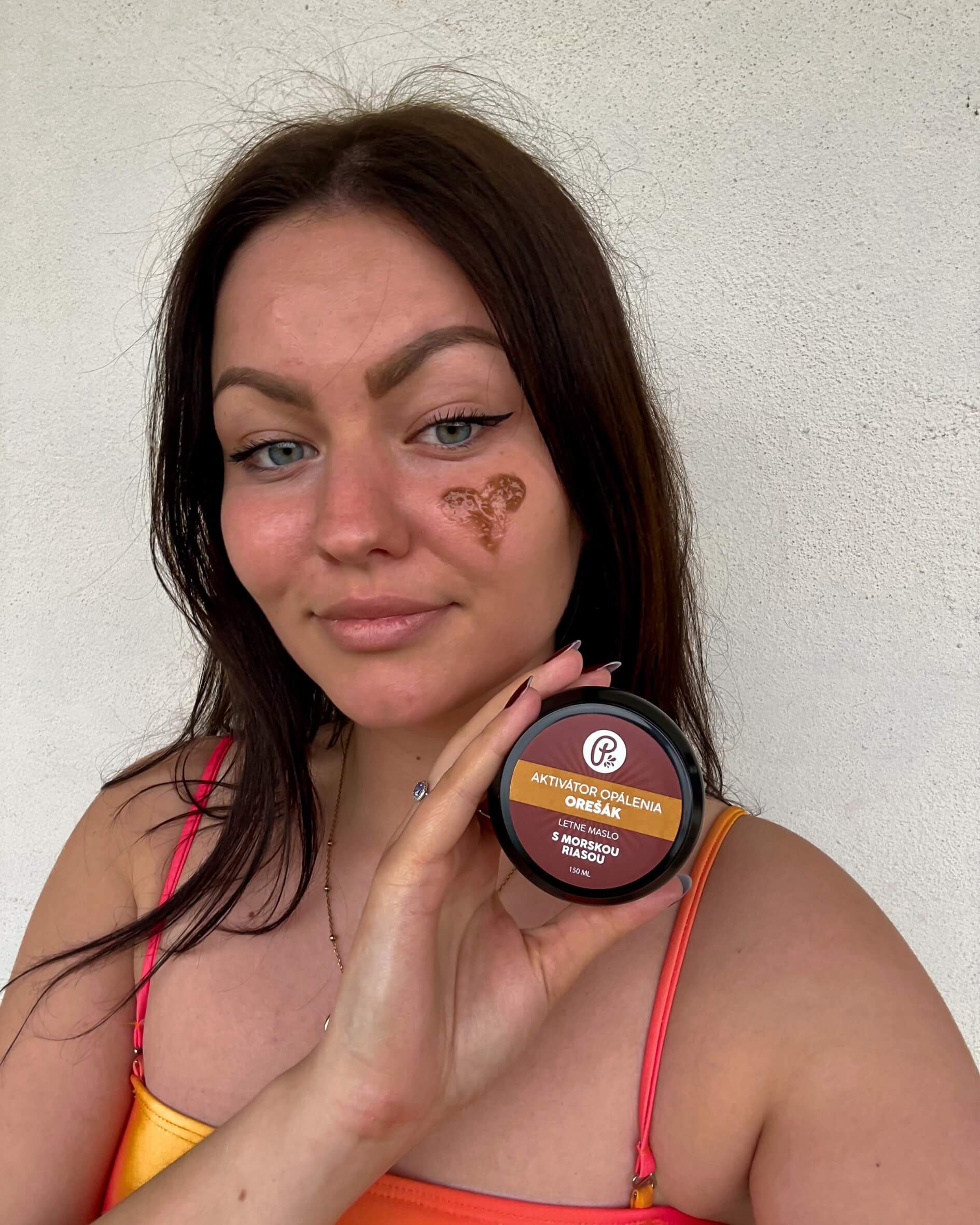
- Strongly supports the pigmentation of the skin - Urucum contains as much as 100× more beta-carotene than carrot oil.
- Encourages the forming of melanin – the pigment responsible for the tan. In this way it prepares the skin for the sun the natural way. The result is a golden, even and long-lasting tan.
- Rich in trace elements - it contains zinc, magnesium, calcium, copper and selenium – minerals that support the health of the skin and help to shelter it from premature ageing.
- A strong antioxidant and natural protection - beta-carotene and other antioxidants help to neutralise free radicals and oxidative stress. In this way Urucum helps to shelter the skin from the sun, slows ageing and acts as a gentle insect repellent.
- An exotic scent and a non-greasy feel - an oriental-floral fragrance with notes of exotic fruit, amber and red wood leaves a soft, alluring veil on the skin. Thanks to organic sesame oil, which does not clog the pores and absorbs quickly, the skin is nourished, smooth and without an oily film.
- Without chemistry and artificial UV filters - the product contains no synthetic ingredients or chemical filters. It suits sensitive skin too and you can use it without worry together with an SPF sun cream.