
COWSLIP - not only for tea, but also for hair loss
The cowslip is one of the first messengers of spring and it has a very long history in folk herbalism.
It belongs to the primrose family and grows almost all over Europe, as well as in the temperate zone of Asia.
The cowslip was also used with great success in their practice by the well-known priest Sebastian Kneipp (one of the founders of naturopathy) and by the herbalist Maria Treben.
The cowslip contains mainly saponins, flavonoids, essential oil, glycosides, ascorbic, mustard and silicic acid, volatile oil and carbohydrates. The flowers and leaves are also rich in vitamin C and beta-carotene, which have antioxidant properties and help to support the immune system. In the cowslip we also find minerals such as potassium and calcium.
In traditional use, the main value of the cowslip lies in its saponin content, which is said to thin the mucus in the bronchi and lungs, making it easier to cough up, while at the same time having a soothing effect.
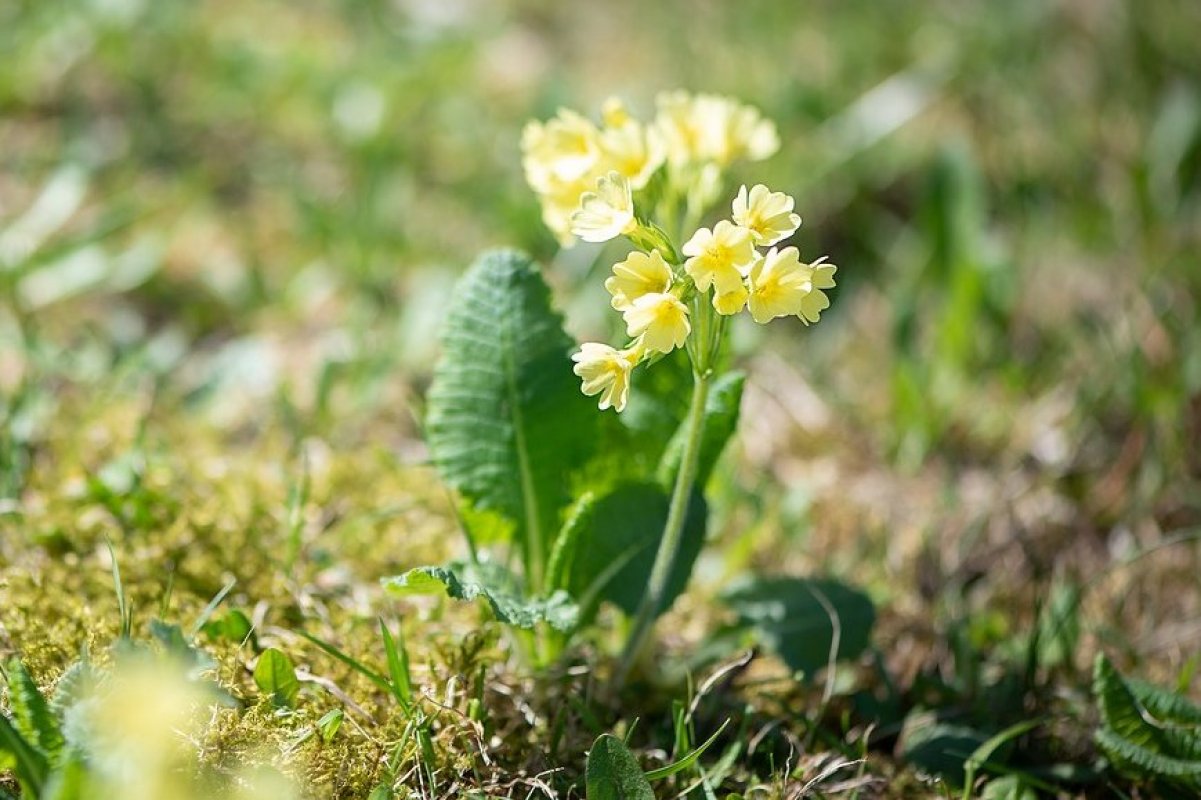
The cowslip is a valuable herb of folk medicine and it has a wide range of uses. It has traditionally been used for the airways and is said to help with migraines, sleeplessness and nervous tension; it was believed to cleanse the blood and it also has a calming character. This plant is also said to have a diuretic effect and was traditionally given for rheumatic complaints.
In folk tradition the cowslip was also used for paralysis and gout, and it was said to be good against stroke. Physicians and monks of the early modern period often prescribed it as a means of strengthening the heart, for colds, for urinary stones and for the care of wounds.
Ointment and oil were traditionally used for irritated skin, blemishes, acne, warts and other skin complaints.
Most often the cowslip is taken on its own as a herbal infusion or in many tea blends. Dried or fresh flowers are used for tea, or the whole herb. The leaves and flowers can also be eaten raw, especially in spring salads. In the past, cowslip leaves also appeared in many recipes.
Cowslip flowers are a lovely ingredient in inhalation blends for the airways and in herbal baths.
- Bring three litres of water to the boil in a pot. When the water boils, add 2 tablespoons of sea salt, 1 tablespoon of dried cowslip flowers and 1 tablespoon of chamomile, stir and leave to infuse under a lid for 5 minutes
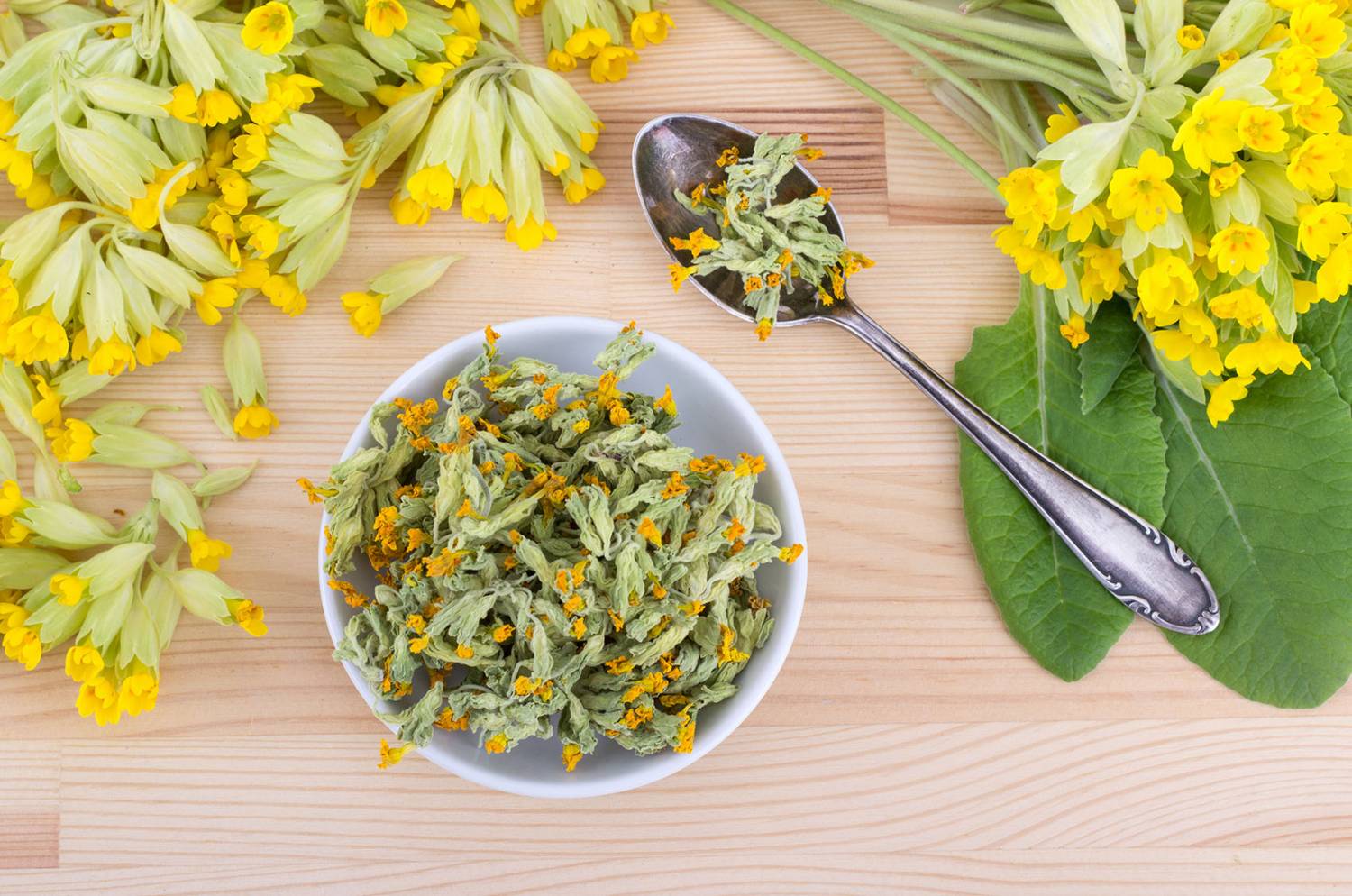
A traditional preparation said to support the heart is cowslip wine, which can be made in spring. A two-litre bottle is filled loosely with cowslip flowers up to the neck and topped up with white wine. The flowers must be submerged. Cork the bottle lightly and leave it in a sunny place for 14 days. For heart discomfort a sip of the wine is traditionally taken now and then; people with heart complaints traditionally take up to three tablespoons a day.
Cowslip tea
The cowslip is also a frequent ingredient of various tea blends. It combines well especially with liquorice root, basil herb, plantain leaf, marshmallow root, thyme herb, aniseed, coltsfoot leaf, hyssop herb and mullein flower
A saponin drink to clear the lungs
Since saponins are sensitive to high temperatures, a lovely choice for supporting the clearing of the lungs can be a drink prepared cold, by macerating cowslip flowers, violets, lungwort and nettle in water for at least 6 hours, ideally overnight. In the morning we strain the macerate and
warm it to a temperature that is pleasant to drink.
Cowslip tincture
A tincture is also made from the cowslip, traditionally used for the lungs and bronchi and for coughs. It is said to loosen mucus, soothe irritation and contribute to the breaking down of urinary stones. It is traditionally valued for overall relaxation and for making it easier to fall asleep. It is used for headaches of psychogenic origin. It is said to help with hair loss caused by long-term stress.
Mix a little of the tincture with water in a ratio of 1:3 and massage it into the scalp
Migraine
For migraine, tradition recommends an infusion of two teaspoons of the flowers in 2.5 dcl of water.
Pneumonia
For pneumonia, folk tradition prepares a decoction from one tablespoon of finely chopped root. Pour cold water over it and leave it to soak for 15 minutes. Then bring it to the boil and, once off the heat, leave it to infuse for another 10 minutes.
Rheumatism and gout
For rheumatism and gout, tradition prepares an infusion from 10 g of the whole plant (flower, leaf, root). Pour a litre of boiling water over the herb and leave it to infuse for 10 minutes. Drink 1 cup a day.
Sleeplessness
For sleeplessness, try the cowslip with lavender, St John's wort and valerian root. Drink a cup of the hot tea before going to bed
Cowslip flowers can sometimes cause contact allergic reactions in sensitive people (reddening of the skin, small blisters). As part of teas you can take the cowslip without worry, but excessively high doses may cause nausea, vomiting or diarrhoea. Pregnant and breastfeeding women are advised to reduce the doses accordingly