
Rosehip oil is a light, quick-absorbing oil pressed from the seeds of wild roses, and it is one of the gentlest ways to give your face softness and a natural glow. It has a soft amber colour, almost no scent and a texture so light that it is often called a dry oil. Rosehip oil for face care suits dry, dehydrated and mature skin especially well, yet it does not feel heavy even on combination skin. Here is what is in it, what rosehip oil benefits you can expect and how to make it part of your evening ritual.

Rosehip oil and what is in it
Many women hesitate to put plant oils on their face. Are you also worried that your skin will feel greasy and your pores clogged? There is no need. Rosehip oil sinks into the skin within moments and leaves no greasy film behind. Most rosehip seed oil comes from the wild roses of South America, Rosa moschata and Rosa rubiginosa, known there as rosa mosqueta; its European cousin is the dog rose, Rosa canina. The oil is rich in essential fatty acids, above all linoleic acid (omega 6) and alpha-linolenic acid (omega 3), and it naturally contains vitamin E and carotenoids, which give it its warm amber colour.
Rosehip oil benefits for mature skin
Essential fatty acids help your skin hold on to moisture and keep its protective barrier comfortable, so it feels supple and looks smoother. That is why rosehip oil is so loved in care for mature skin: with regular use fine lines look softer, the skin tone looks more even and the complexion has a fresher, rested glow. Think of it as gentle, everyday care rather than a quick fix; the softness comes back drop by drop, evening after evening.
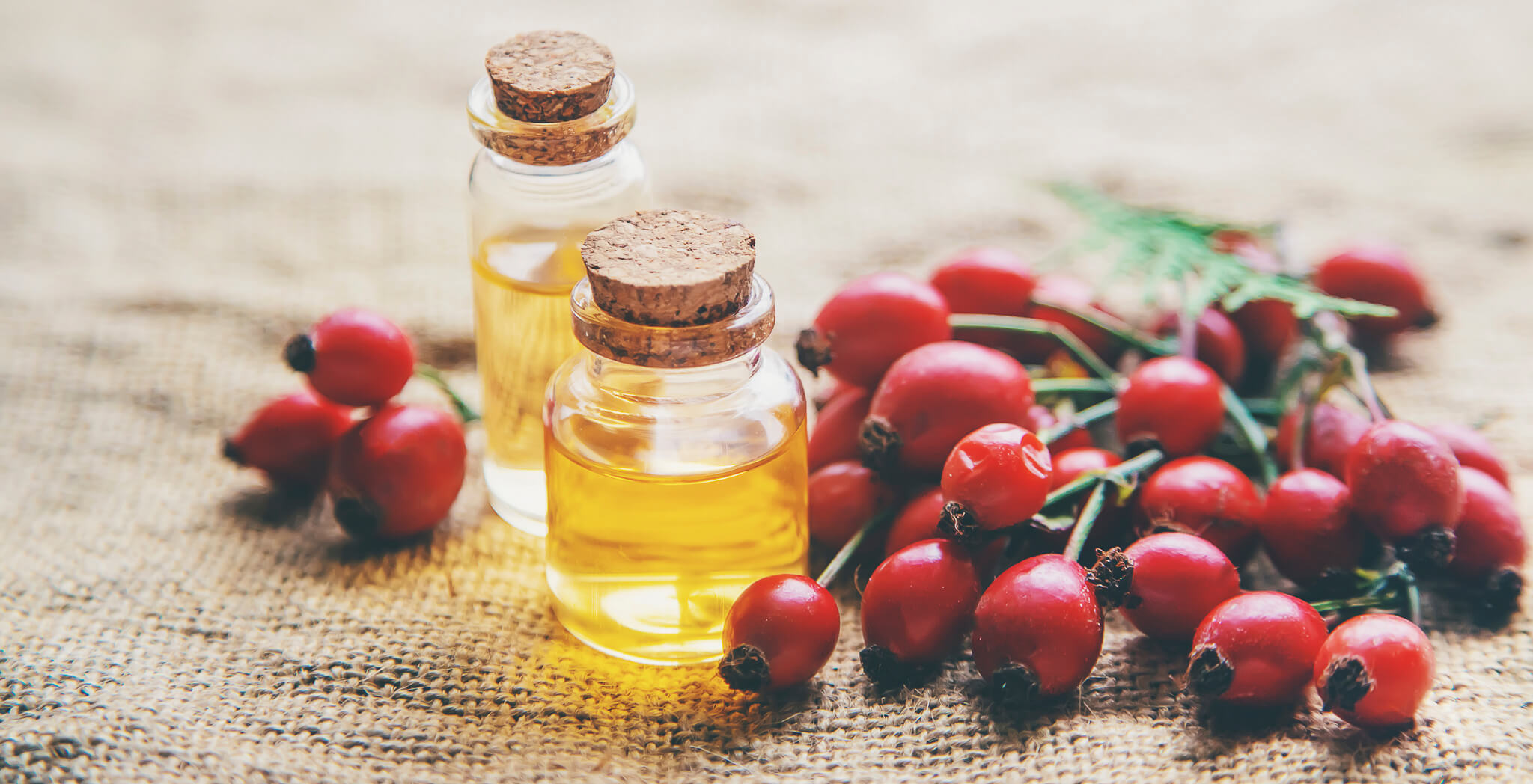
Rosehip oil for face: dry and dehydrated skin
Thanks to its "dry" texture, this oil absorbs well into every skin type, but it is dry, dehydrated and tight skin that loves it most. It softens rough patches, helps the skin feel calm and comfortable after a day in the wind or in a heated room, and gives it a natural glow. If you like your oil in a more complete formula, our Kopaničiarska žehlička facial oil serum blends rosehip seed oil with argan oil and squalane.
Rosehip oil for blemish-prone skin
Rosehip oil is considered a light oil with a low tendency to clog pores, so even oilier and blemish-prone skin can usually enjoy it. Its linoleic acid helps keep the skin balanced and soft. Start with one or two drops in the evening on clean skin and watch how your skin responds over a couple of weeks.
Facial care with rosehip oil
At Panakeia we love this oil so much that we built a whole line of facial care around it, the Štramanda edition. Its Štramanda rosehip serum combines rosehip seed oil with dog rose fruit extract, squalane and coenzyme Q10 for a soft, glowing look.
How to use rosehip oil on your face
Use it in the evening after cleansing and toning, while your skin is still slightly damp. Warm two or three drops between your fingertips and press them gently into your face, neck and décolleté, then let them sink in for a minute before your night cream, or on their own if your skin feels comfortable that way. In the morning, one drop mixed into your day cream is enough.
- Pure oil: Organic rosehip oil 100ml, a single ingredient for the face, body and nails.
- Serum: Štramanda rosehip serum 15ml for daily facial care.
Did you know…
Did you know that it takes a very large amount of tiny rosehip seeds to press a single small bottle of rosehip oil?