
Bakuchiol is a plant-based cosmetic ingredient isolated from the seeds of Psoralea corylifolia, and in skincare it is mentioned as a gentler alternative to retinol. You will find it in the BOSORKIN LEKTVAR serum, in the MAGIC NATURE cream and in the Mango + Bakuchiol body butter. More serums are in the face serums category, and our Advisor can help you choose.
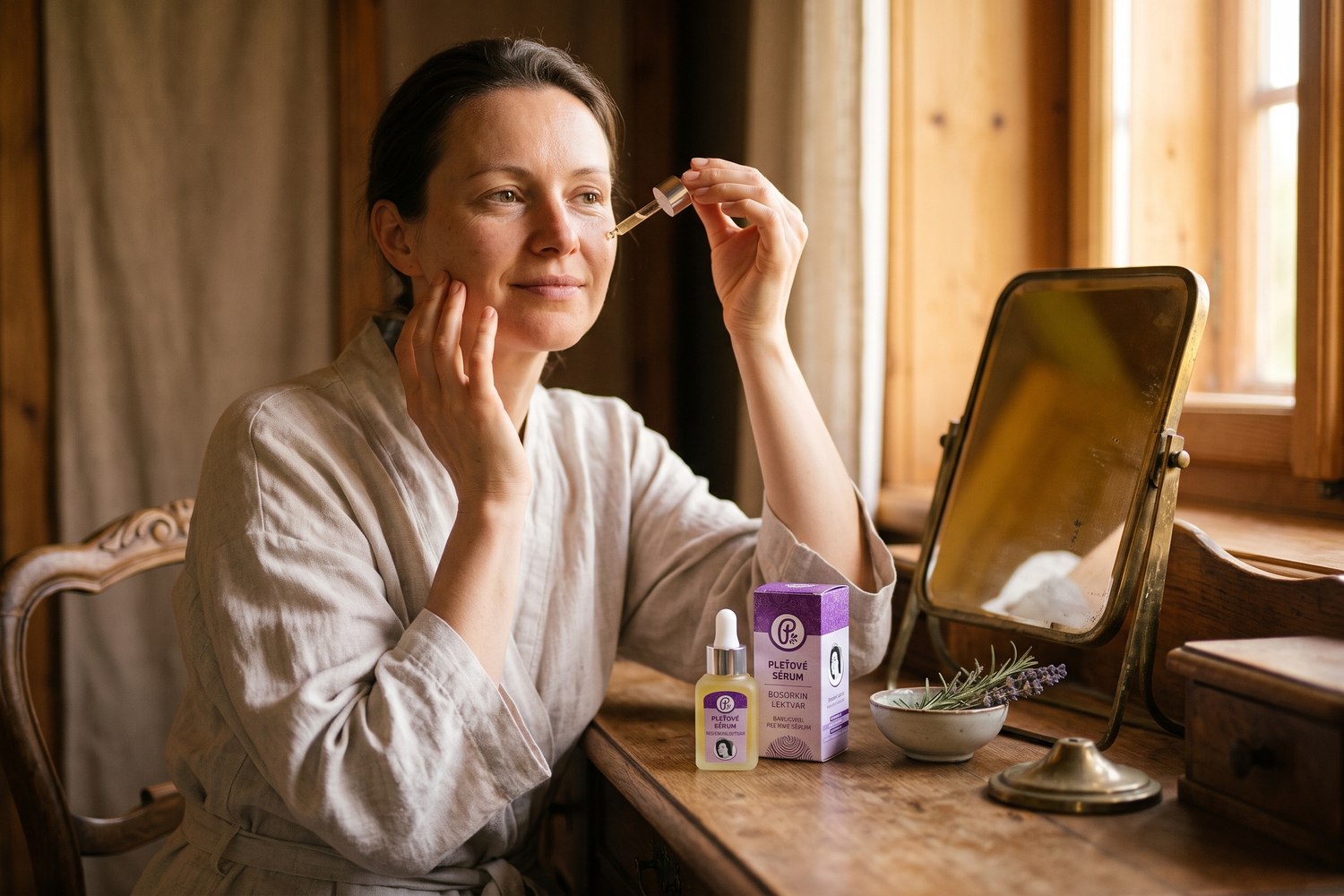
What bakuchiol is and where it comes from
Psoralea corylifolia is an annual herb from India, known in Ayurveda by the name babchi. Its seeds were used in traditional medicine for centuries, and today a phenolic substance is isolated from them that goes into the ingredients of cosmetics under the name Bakuchiol. One distinction matters: it is not a retinoid and it is not derived from vitamin A. Its chemical structure is entirely different. So you cannot call it a natural retinol, even though it is often compared with it. Both ingredients are used in similar steps of a routine, but they are two different substances with a different history of research. If you are interested in what scientific papers say about it, you can find them through studies on bakuchiol and retinol in the PubMed database.
How does bakuchiol differ from retinol?
The most common question is whether it replaces retinol. The honest answer is: it is a different ingredient, not a copy of it. Retinol is a long-studied derivative of vitamin A, and when it is added to a routine, a gradual approach is usually recommended. Bakuchiol is a newer plant extract and there are so far fewer comparative studies, so we prefer to speak about it carefully and without big words. The ingredient is described as gentler, but skin sensitivity is individual. What suits one skin may irritate another, and so here too a test on a small area of skin applies. We do not promise any transformation, only information, so that you know what you are choosing and can compare it with the label in your hand. The table shows the main differences.
| Property | Retinol | Bakuchiol |
|---|---|---|
| Origin | Derivative of vitamin A | Plant substance from the seeds of Psoralea corylifolia |
| Chemical nature | Retinoid | Not a retinoid |
| Fitting it into a routine | Usually started gradually, mainly in the evening | According to the label of the specific product |
| Amount of research | Long-standing | Newer, fewer studies |
How to fit bakuchiol into your routine
Products like these are most often used in the evening on cleansed skin, but that is not a rule. According to the product page, the MAGIC NATURE cream can be used in the morning and in the evening, while the BOSORKIN LEKTVAR serum is applied in a small amount to cleansed and toned skin. The body butter is meant for the body and, according to the label, is not applied to the face. With every new product start with a small amount and give your skin time, because cosmetics are judged in weeks, not in a single evening. If redness, burning or a rash appears, stop using the product. In the morning, when you do not feel like thinking, it is enough to skip an extra step and take care over the evening. A simple routine can look like this:
- Gently cleanse and dry your skin.
- Apply a toner or a hydrating step according to your routine.
- Add a small amount of serum and gently massage it in.
- Seal the care with a cream that suits you.
- In the first days use the new product every other day and watch how your skin reacts.

Where you find bakuchiol in the ingredients of our products
On a pack the ingredients are written from the largest share to the smallest, so the order reveals whether an ingredient makes up most of the recipe or only a smaller part of it. In the BOSORKIN LEKTVAR serum, Bakuchiol is in fifth place, right after squalane, triglycerides, tomato seed oil and pomegranate extract. In the MAGIC NATURE cream it is eighth, after rose water, argan oil, pearl powder and a vitamin C ester, and in the Mango + Bakuchiol body butter sixth, after sunflower oil, shea butter and mango butter. You cannot read the exact percentage from the order, but you can see where the ingredient stands and what surrounds it in the recipe. It is a useful habit when reading any cosmetics.
| Product | Form | Position in the INCI | Ingredients before it |
|---|---|---|---|
| BOSORKIN LEKTVAR 15 ml | Face serum | 5th | Squalane, Caprylic/Capric Triglyceride, Solanum Lycopersicum Seed Oil, Punica Granatum Seed Extract |
| MAGIC NATURE 30 ml | Face cream | 8th | Rosa Damascena Flower Water, Argania Spinosa Kernel Oil, Cetearyl Olivate, Pearl Powder, Tetrahexyldecyl Ascorbate, Sorbitan Olivate, Caprylic/Capric Triglyceride |
| Mango + Bakuchiol 150 ml | Whipped body butter | 6th | Helianthus Annuus Seed Oil, Butyrospermum Parkii Butter, Mangifera Indica Seed Butter, Silica, Parfum |
If you would like to read ingredients yourself, the article on choosing a face serum will help. You will find the hydrating step before a serum in the text on hyaluronic acid, and for the morning something from the day creams category is also a good fit.
Who bakuchiol is for and when to talk to a doctor
The ingredient interests women for whom retinol does not suit, or those who want to add to their routine an ingredient that is not tied to the evening alone. That is no guarantee that every skin will tolerate it. So always try a small amount on a small area of skin, for example on your forearm, and wait to see how your skin reacts. The labels of all three products warn that they should not be used on irritated or sensitive skin. Cosmetics do not replace medical care and do not aim to solve health problems. If you have persistent redness, inflamed spots or patches that are changing, book a visit to a dermatologist. Whether an ingredient is suitable for you in your particular situation is decided by a doctor, not by a blog article.
Did you know…
Did you know that bakuchiol is not a retinoid and is not derived from vitamin A?