
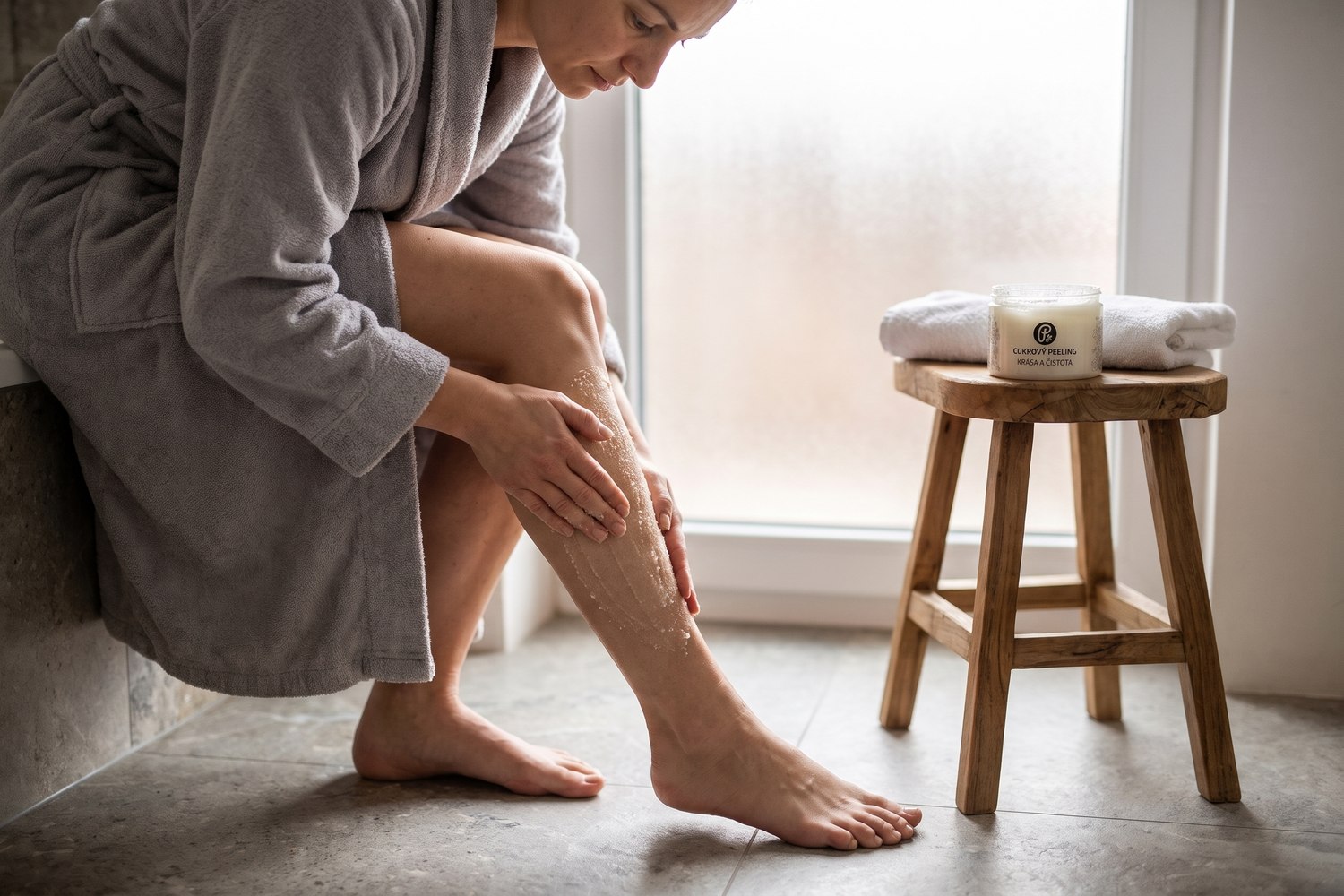
Ingrown hairs appear when a hair curls back into the skin after shaving or hair removal, or grows beneath its surface, which is quite common. They show up as small, sometimes tender bumps, most often on the legs, underarms and bikini line. Gentle shaving, lukewarm water and an occasional exfoliation help, for example the Krása a čistota sugar body scrub from the body scrubs category. After shaving, you can care for your skin with the Natural Oat Oil.
Why ingrown hairs appear
When you shave, the hair is cut just above the skin. Its tip is sharp and straight. If the skin is dry, thickened or covered with dead flakes, the hair has a harder time getting out and may turn back. It is similar after waxing or plucking, when the hair grows again and meets an obstacle. Ingrown hairs are more common with curly and coarser hair, with tight clothing that rubs, and when shaving against the direction of growth. They are not a result of carelessness and you cannot avoid them completely, but the risk can be reduced with gentle shaving and care for your skin. The important thing is not to start scrubbing. The more you irritate your skin, the more inflamed it gets and the harder it is for the hair to get out.
Is it an ingrown hair or something else?
You can recognise an ingrown hair by a few signs. Usually you will notice:
- a small bump through which you can see a dark dot or a loop of hair,
- a spot that appeared a few days after shaving or hair removal,
- slight tenderness or itching right on the bump,
- bumps only where you shave or wax.
If the spot is very red, hot, painful, full of pus or getting bigger, do not squeeze it and speak to a doctor or dermatologist. That is no longer a matter for cosmetics. Turn to a doctor as well if the problem keeps returning in the same places and no change to your shaving helps. Ingrown hairs can be unpleasant, but they usually settle down when you give your skin a rest and stop irritating them. Patience helps, even though it is hard to find in the bathroom.
How to shave and wax so that hairs do not grow in
Most things are decided before shaving. First soften your skin with lukewarm water, for example after a shower, when the hairs are softer and the skin more relaxed. Use a clean, sharp razor, as a blunt one pulls and irritates. Shave in the direction of hair growth, even if the result will not be as smooth, and without pressure. Do not stretch your skin or go over the same spot twice unless you have to. After shaving, rinse with lukewarm to cooler water and dry gently by patting. Do not apply strongly scented products straight away, as they may sting. After waxing, leave your skin alone for at least a few hours, with no hot shower and no tight clothing. Loose cotton helps, as it does not press and rub the way synthetics do.

Exfoliating for ingrown hairs: when and how
Exfoliation helps remove the dead flakes that block the hair's way out. One rule applies, though: gently and occasionally. The Krása a čistota sugar body scrub (150 ml) has sweet almond oil, Caprylic/Capric Triglyceride, sucrose and the emulsifiers Polyglyceryl-4 Oleate and Polyglyceryl-10 Laurate in its INCI. You will also find fragrance in it and fragrance allergens such as Limonene, Linalool and Eugenol, so try it first on a small area of skin. The page states that it should not be used on irritated or sensitive skin, so do not apply it to red or inflamed spots. The Cukráreň sugar body scrub has a similar composition. Massage the scrub into damp skin slowly in circular movements and rinse it off with lukewarm water.
| What helps | What to avoid |
|---|---|
| Shaving after a lukewarm shower, in the direction of growth | Shaving dry and against the direction of growth |
| A clean, sharp razor without pressure | A blunt razor and several passes over the same spot |
| Gentle exfoliation now and then, according to the label | Scrubbing with a flannel and exfoliating inflamed spots |
| Unscented oil or lotion after shaving | Strongly scented products straight after shaving |
| Loose cotton clothing | Tight synthetic leggings after waxing |
What to do when a hair has already grown in
The best thing you can do is not to squeeze anything. Picking with a needle, tweezers or nails injures the skin and raises the risk that the spot becomes inflamed or leaves a mark. If the hair is close to the surface, you can gently warm the spot with a warm damp compress to soften the skin, and then leave it alone. For a few days, do not shave or wax that spot until it settles. After a shower you can use the Natural Oat Oil, which has a single item in its INCI, Avena Sativa Kernel Oil, and no added fragrance. Do not guess the amount, follow the label. Ingrown hairs after shaving are also covered in studies on ingrown hairs after shaving (source: the PubMed database).
How to care for your skin after shaving
After shaving, your skin is slightly irritated and needs peace. Lukewarm water, gentle patting dry and then light care help. Apply oil or lotion in a thin layer and let it absorb. If your skin stings or burns after shaving, leave out scented products and try an unscented oil. Ingrown hairs appear most often when the skin is irritated by several things at once: shaving, clothing rubbing, a scented cream. So do not add everything at once, and notice what suits you. If you would like to add exfoliation to your routine, do it some time apart from shaving, not straight after it. Your skin needs time to settle after shaving, and only then is it ready for the next step.
Did you know…
Did you know that the sugar in the Krása a čistota sugar body scrub is written as Sucrose in the INCI and that it comes right after the oils in the composition?