
An anti-wrinkle cream is a face cream that hydrates and nourishes skin so that it looks smoother and fresher. It will not remove wrinkles, but with regular use it can improve how your skin looks and feels. If you are looking for one, see our day creams, for example Magic Nature - Antioxidant Face Cream or Vráskožrút - Lady's Bedstraw Day Cream with Q10, or let our Advisor guide you.
Do anti-wrinkle creams really work?
Creams work on the surface of the skin. They hydrate it and nourish it. They leave a fine film on the skin that makes it look smoother, especially where lines are only the result of dryness. Deeper furrows around the eyes, mouth and forehead take years to form, from facial expressions, age, genetics and lifestyle, and a cream will not erase them. You know it from your own mirror: when skin feels tight after winter, lines show up sharper, and after rich hydration they soften. That is exactly the kind of expectation that is realistic. If someone promises you that wrinkles will vanish, be careful. Cosmetics operate at the level of how skin looks and feels, not at the level of changing its structure, and knowing where that line lies will save you disappointment and money.
The scientific literature on products for ageing skin is extensive and varied, from simple moisturising creams to ingredients such as retinoids and peptides. If you are interested in the details, open studies on cosmetic products and wrinkles in the PubMed database. It is hard going. Results differ by ingredient, its amount and how long it is used. An ingredient that looks interesting in the laboratory does not necessarily do the same in an ordinary cream. What is more, with an ordinary shop-bought cream you cannot see what percentage of each ingredient it contains, only their order. That is why it pays to look at the ingredients, not at the slogan on the pack, and to choose a cream that feels right to the touch and that you will really use.
What works best for wrinkles: a cream, a serum or a routine?
No single thing. What proves itself best is a simple routine that you can manage even after a long day: gentle cleansing, a toner, a cream morning and evening, and a few habits around it. A serum is a thinner, more concentrated layer. A cream seals it in and gives skin the fat it needs. For drier skin the cream alone is often enough, while for combination skin a lighter texture is easier to wear. Enough sleep, drinking enough water and clean hands on your face are nothing new, but your skin will appreciate them. If I had to pick one thing, it would be regularity: a cream you use for two weeks and then put away in a cupboard tells you nothing about itself. Even the best ingredients are wasted if the cream stays untouched in the bathroom.

How to read the ingredients of an anti-wrinkle cream
The ingredients (INCI) are listed from the ingredient with the highest share to the lowest. This applies to everything that makes up more than one per cent, while ingredients in smaller amounts may be listed in any order. That is why you should mainly look at the first half of the list. If water or floral water comes first, followed by oils and an emulsifier, you are looking at a classic cream. The active ingredients highlighted on the pack often stand only in the second half of the list, which is not a flaw, just worth knowing. Notice the end of the list too: items such as Geraniol, Citronellol or Eugenol are fragrance allergens that have to be declared, and if you react to scents, they will tell you more about a cream than any advertising. These are the ingredients you will come across most often:
- Sodium Hyaluronate (hyaluronate): an ingredient cosmetics use to hydrate the surface of the skin.
- Squalane, plant oils and butters: give the cream its fat and a feeling of comfort on the skin.
- Tocopherol (vitamin E) and Tetrahexyldecyl Ascorbate (an oil-soluble form of vitamin C): antioxidant ingredients.
- Bakuchiol: a plant substance from the seeds of Psoralea corylifolia, which cosmetics use as an alternative to retinol.
- Peptides, for example Palmitoyl Tripeptide-5: short chains of amino acids added to creams for more mature skin.
- Ubiquinone: coenzyme Q10.
Three Panakeia creams for more mature skin: what is in them according to the ingredients
I copied the ingredients straight from the product pages. In all three, rose water (Rosa Damascena Flower Water) comes first, and after that they differ.
| Cream | Ingredients worth noting | Skin type according to the product page | Perfume in the ingredients |
|---|---|---|---|
| Magic Nature - Antioxidant Face Cream | Bakuchiol, Tetrahexyldecyl Ascorbate, Astaxanthin, Sodium Hyaluronate, pearl powder, argan oil | Oily, normal, combination, mature | Yes, plus fragrance allergens |
| Vráskožrút - Lady's Bedstraw Day Cream with Q10 | Ubiquinone, Galium Verum Extract, Squalane, Sodium Hyaluronate, tocopherol | Normal, mature, sensitive | No, only the allergens Geraniol and Citronellol |
| Peptide Day Cream | Palmitoyl Tripeptide-5, Acetyl Hexapeptide-8, Sodium Hyaluronate, Squalane, marula oil | Combination, mature, sensitive | No, only the allergens Citronellol, Geraniol, Eugenol |
Magic Nature
You recognise Magic Nature as soon as you open it: astaxanthin tints it pink. Among the active ingredients it contains bakuchiol, a plant substance from the seeds of Psoralea corylifolia, which cosmetics use as an alternative to retinol. It also has vitamin C in the form of Tetrahexyldecyl Ascorbate, hyaluronic acid and an extract of the brown seaweed Laminaria ochroleuca. The base is rose water and argan oil (Argania spinosa), complemented by pearl powder. Bakuchiol stands eighth in the list, after the base of water, oil and emulsifiers. It contains perfume and fragrance allergens, so if you would rather avoid scents, read the whole ingredients list. You will find more about its key ingredient in the article Bakuchiol, a plant-based alternative to retinol.
Vráskožrút
Vráskožrút is built on coenzyme Q10 (Ubiquinone) and an extract of lady's bedstraw (Galium verum). Mind the name: in the ingredients the lady's bedstraw is listed as an extract, not as an oil, and it stands in fifth place, right after the base of rose water, oil and emulsifiers. You will find Q10 only in tenth. The base is sunflower oil (Helianthus annuus), squalane, hyaluronic acid and vitamin E in the form of tocopherol. You will not find perfume in it, so if you want a cream without added scent, start here. It comes in an airless pack, which dispenses the cream without exposing it to air. It has the simplest ingredients of the three, which one person finds calm and another finds modest.
Peptide Day Cream
The Peptide Day Cream has the widest variety of oils and butters of the three. In its ingredients it has two peptides, Palmitoyl Tripeptide-5 and Acetyl Hexapeptide-8, and alongside them hyaluronic acid with squalane. The oils are from marula (Sclerocarya birrea) and coffee (Coffea arabica), the butter from cupuaçu (Theobroma grandiflorum). On top of that comes an extract of spirulina (Spirulina platensis). The peptides stand only in the second half of the list, after the oils, butters and extracts, so they are more an addition to a rich base than the main ingredient. It contains no perfume, and only the allergens Citronellol, Geraniol and Eugenol are listed. The skin type on the product page: combination and mature, with sensitive also listed. If a richer texture does not suit you, you can start with Vráskožrút instead.

How to apply an anti-wrinkle cream so that it is a pleasure to live with
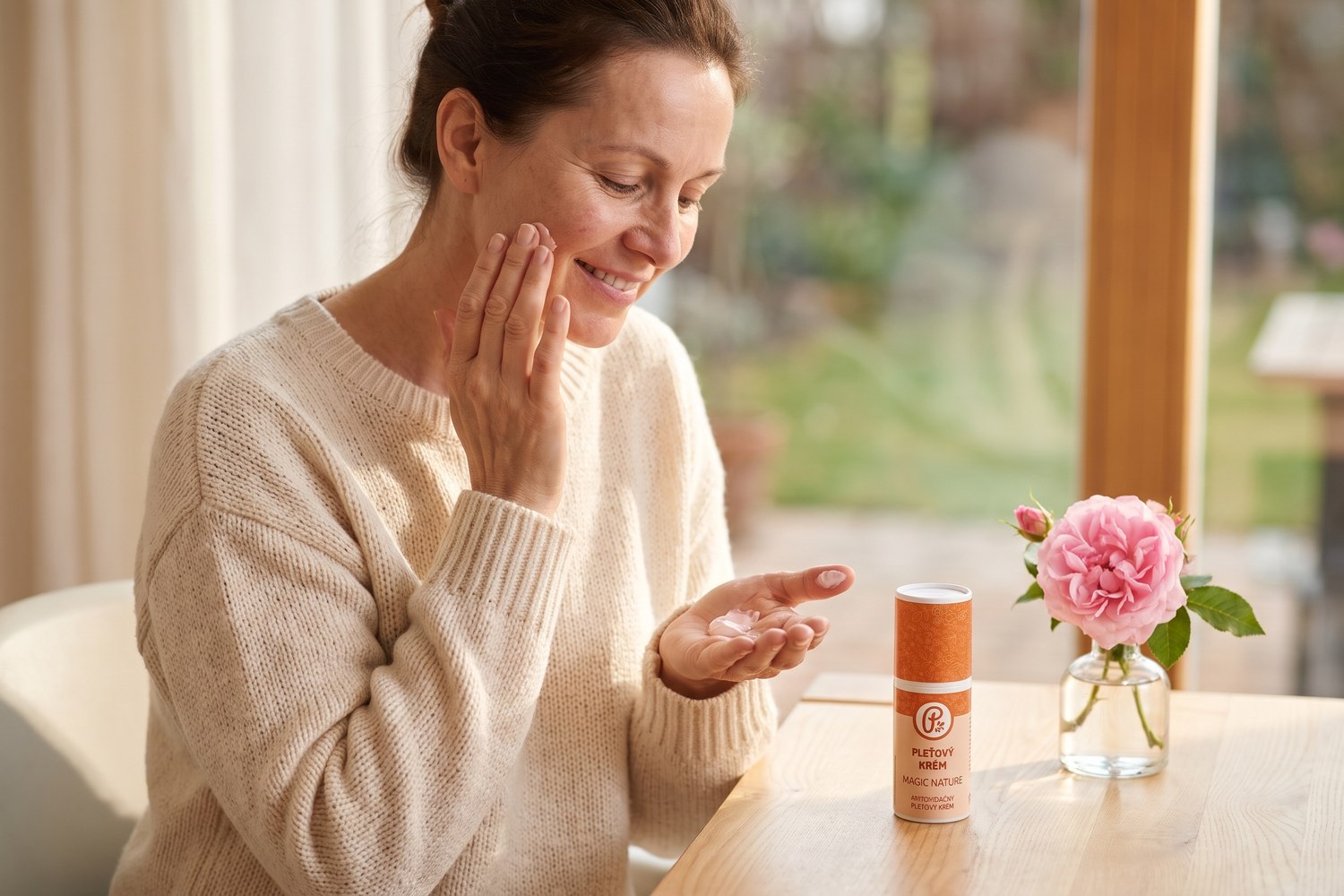
Apply it to clean skin, after a toner or serum, morning and evening. You will find the amount and the way of use on the label, and we stick to it. Give it a minute: warm the cream between your fingers, place it on your cheeks and gently press it outwards and upwards, without strong friction. The product pages of all three creams give face, neck and décolletage as the place of use. If your skin is sensitive, try it first on a small patch behind your ear or on your wrist. In the first days give it time and notice how your skin feels with it. Sooner or later a cream simply will not suit you, even if the ingredients look lovely on paper, and that is not a mistake, just information. If your skin troubles you for longer or irritation appears, talk to a doctor.
Did you know…
The ingredients of a cream are listed from the ingredient with the highest share to the lowest, so the first half of the INCI tells you the most about the cream.